
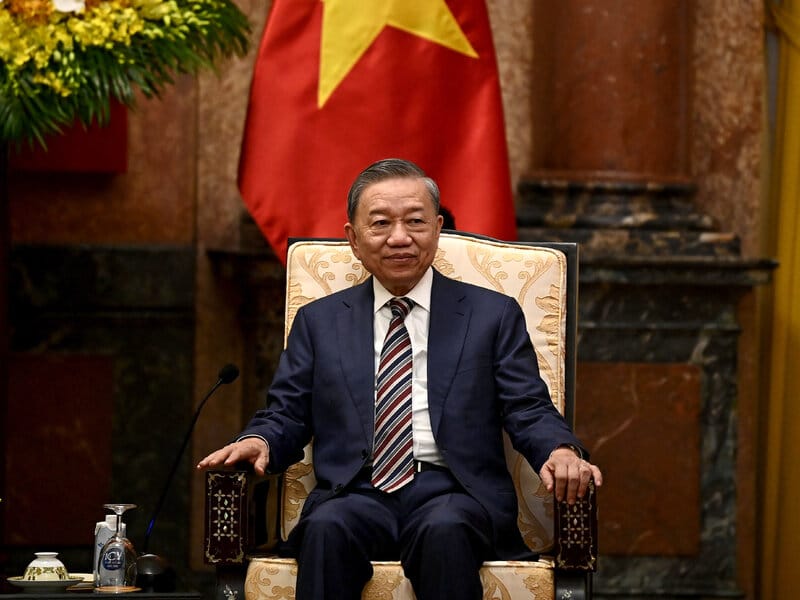
Vietnam’s Communist Party chief, To Lam, is seeking to consolidate his party leadership with the state presidency, a move that would more closely mirror China’s system under Xi Jinping, where the president also heads the ruling party. Officials said Lam, 68, aimed to secure both positions ahead of next week’s five-yearly party congress in Hanoi, where about 1,600 delegates will meet to choose new leaders and set policy directions.
Lam reportedly won backing to remain party chief at a December meeting, but sources gave mixed accounts regarding his presidential bid. While two indicated he had secured support, a third said the outcome was unclear. The final decision, however, rests with the congress delegates. Traditionally, Vietnam’s top two posts are separated, with the presidency largely ceremonial, though Lam temporarily held both roles for three months in 2024.
If successful, Lam would gain control over both party and state functions, while the military—currently holding the presidency—would retain broad autonomy in senior officer promotions. Officials said military leaders are negotiating “safeguards” to limit Lam’s authority. Observers note that some controversial economic initiatives under Lam, including credit expansion and a high-speed railway, faced obstacles ahead of the congress, possibly signaling concessions to other factions.
Read also: Vietnam Floods Claim More Than 90 Lives
Proponents argue combining the roles would align Vietnam with other communist states, including China, North Korea, Cuba, and Laos, strengthen Lam’s economic reform agenda, and bolster his diplomatic standing. Critics warn it could embolden a leader perceived as risk-prone and accelerate the expansion of the security apparatus. Carl Thayer, a Vietnam expert at the Australian Defence Force Academy, described the merger as a “natural outcome of streamlining Vietnam’s political structure,” noting Lam has already exercised some presidential powers through international engagements.
The congress, beginning January 19, will elect a new 200-member central committee, with many newcomers expected. The committee will choose the party chief and politburo, which will nominate the president, prime minister, and parliamentary speaker for legislative approval. Lam previously indicated the politburo will include 17–19 members, though the final composition depends on delegate votes on a pre-arranged shortlist. The outcome will determine whether Lam formally consolidates his authority across Vietnam’s party and state apparatus.