
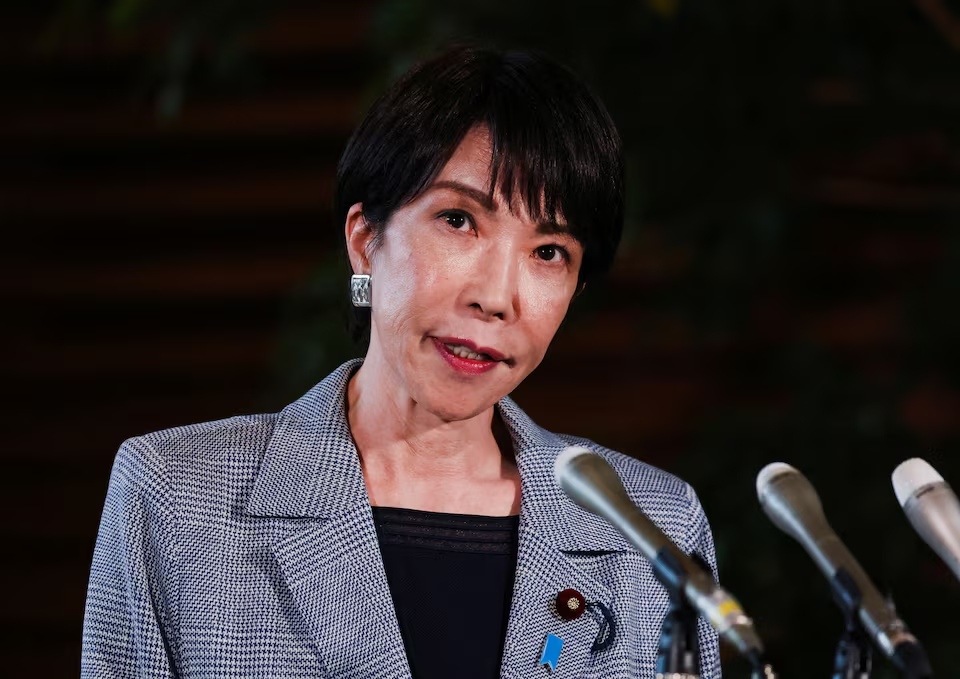
Prime Minister of Japan, Sanae Takaichi said she will call a snap national election on February 8, asking voters to back higher public spending, tax relief, and a tougher security posture that would further expand the country’s military capabilities.
Takaichi said parliament will be dissolved on Friday, triggering a vote for all 465 seats in the powerful lower house. The election will be her first major test since taking office in October as Japan’s first female prime minister.
Speaking at a press conference on Monday, Takaichi said she was tying her political future to the outcome. She told reporters she wanted voters to decide directly whether they trusted her to lead the country.
At the center of Takaichi’s platform is a proposed two year suspension of the eight percent consumption tax on food. She said the move would ease pressure on households, support job creation, and lift consumer spending.
Government estimates show the tax pause would reduce annual revenue by about five trillion yen, or roughly thirty two billion dollars. The prospect of looser fiscal policy pushed yields on Japan’s ten year government bonds to their highest level in twenty seven years earlier on Monday.
Rising prices remain the top concern for voters. A recent NHK poll found forty five percent of respondents cited the cost of living as their biggest worry, well ahead of diplomacy and national security.
The election also places Japan’s security direction under the spotlight. Takaichi’s administration plans to unveil a new national security strategy later this year after deciding to accelerate a military expansion that will lift defense spending to two percent of gross domestic product.
That level marks a sharp shift from decades of policy that kept defense outlays near one percent. Takaichi has not announced a new ceiling beyond that threshold, though pressure is mounting from regional tensions and calls from Washington for allies to contribute more to collective security.
Addressing those concerns, she pointed to China’s military activity near Taiwan and disputed islands in the East China Sea. She also cited the growing use of economic pressure through control of key supply chain materials.
Read Also: Japan South Korea Security Ties Gain Urgency Amid Tensions
Last week, China imposed restrictions on exports of certain dual use items destined for Japan’s military, including some critical minerals.
Takaichi’s Liberal Democratic Party and its coalition partner Ishin currently hold a combined 233 seats in the lower chamber. She said her goal is to retain a working majority after the election.
Calling an early vote allows Takaichi to capitalize on strong approval ratings and reinforce her position within the ruling party, while testing public support for a more assertive economic and security agenda.