
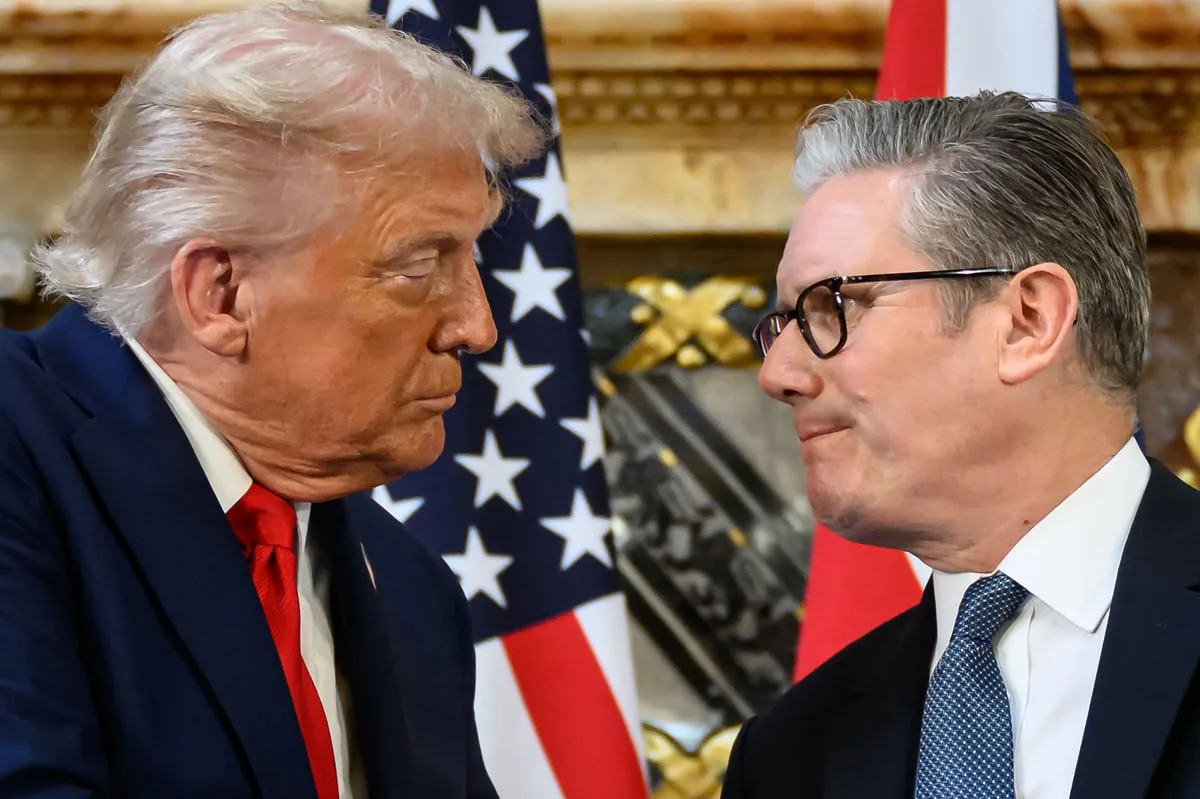
Only a day ago, Prime Minister Keir Starmer was urging “calm discussion” in dealing with the United States. By morning, that calm had been blown apart. President Donald Trump, in one of his familiar bursts of political spectacle, had turned his attention toward Britain—aiming his criticism squarely at Starmer and the UK’s decision over the Chagos Islands.
For Starmer, the moment is more than awkward. It is strategic. Since taking office, he has carefully built his foreign policy around being seen in Washington as reliable, steady, and discreet. He avoided public spats, resisted dramatic language, and made personal diplomacy with Trump a central pillar of Britain’s global posture.
That approach, at least until now, appeared to work. Trump spoke warmly of Starmer in public. Downing Street believed it enjoyed better access to the White House than many European capitals. Last year’s deal limiting the impact of Trump’s tariffs on the UK was widely promoted as proof that quiet cooperation paid off.
Then came Trump’s latest anger—first over Greenland, now over the Chagos Islands. On social media, he attacked Britain’s decision to hand the islands to Mauritius, a deal announced last year after years of legal and diplomatic pressure.
The British government is standing firm. Senior officials say the agreement was not only necessary but responsible. They note that it was welcomed at the time by both the United States and Australia—Britain’s partners in the Five Eyes intelligence alliance.
At the heart of the deal is Diego Garcia, a remote island that hosts a strategically vital military base used by both the UK and the US. For years, Britain faced mounting legal challenges over its claim to the Chagos Islands, raising fears that prolonged disputes could threaten the future of the base. Ministers argue that the agreement with Mauritius was designed precisely to avoid that risk and secure the base’s long-term operation.
But Trump’s sudden outrage changes the political weather. It forces Starmer to confront a question he has long tried to avoid: what happens when loyalty is not returned? Can a strategy built on quiet trust survive a partner who thrives on public confrontation?
Read Also: NYT Framing, Tinubu’s $9m, And Nigeria’s Silence—Intro
At home, Starmer is already under pressure, struggling through a difficult start in office. His relationship with Washington had been one of the few clear successes. Now, that success looks fragile.
The prime minister must decide whether to absorb the blow in silence, push back publicly, or attempt once again to soothe a volatile ally behind closed doors. Each option carries risks. Silence may look weak. Defiance may provoke more attacks. Diplomacy may no longer be enough.
The Chagos dispute is not just about distant islands. It is about whether Britain’s carefully balanced foreign policy can survive in an era where one tweet can undo years of quiet work.