
Members of Haiti’s Transitional Presidential Council have moved to push out Prime Minister Alix Didier Fils-Aime, openly challenging strong objections from the United States and adding another layer of uncertainty to the country’s fragile political transition.
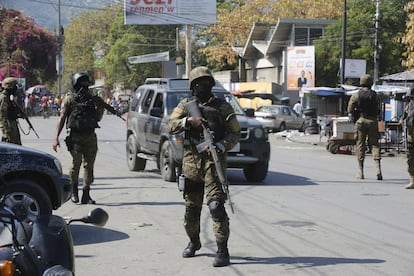
The declaration, made on Friday, underscores a growing power struggle between Port-au-Prince and Washington at a time when Haiti remains paralyzed by violence, institutional collapse, and delayed elections. Gang control over large parts of the capital and surrounding regions has repeatedly derailed plans to restore democratic rule, leaving interim authorities locked in constant dispute over legitimacy and authority.
Speaking at a press briefing, council member Leslie Voltaire defended the council’s position, stressing that it retains the right to reverse its own decisions. According to him, the same body that selected Fils-Aime in November 2024 has the authority to dismiss him and install new leadership. Voltaire said the council had worked closely with the prime minister for about a year and now intends to issue a fresh decree naming a replacement prime minister, a new cabinet, and a new president.
Several council members confirmed that five of the nine officials voted in favour of removing Fils-Aime, with a transition timeline of up to 30 days. However, the decision has not been published in Haiti’s official gazette, a procedural requirement before it can take legal effect. Until that step is completed, the prime minister technically remains in office.
The Transitional Presidential Council itself was created in 2024 as an emergency governing mechanism following years of turmoil triggered by the assassination of President Jovenel Moise in 2021. Rather than stabilising the political environment, the council soon became mired in internal disputes, controversies over appointments, and persistent allegations of corruption. Its credibility suffered further when it removed Prime Minister Garry Conille barely six months after its own formation, replacing him with Fils-Aime.
Read also: US Expands World Cup Travel Ban To Senegal And Ivory
Although the council was mandated to steer Haiti toward national elections, those plans repeatedly stalled. A presidential vote initially expected by February never materialised. Instead, officials now say a phased electoral process could begin in August, even as security conditions continue to deteriorate. The council’s mandate itself is due to expire on February 7, raising questions about what authority it will hold in the coming weeks.
Washington has reacted sharply. US Secretary of State Marco Rubio said he spoke directly with Fils-Aime and underscored the importance of his staying on to confront armed groups and restore order. Rubio also warned that the council must disband by its deadline, cautioning against what he described as corrupt actors manipulating the transition for personal gain.
The US embassy in Haiti reinforced that message through statements in French and Haitian Creole, signalling that politicians linked to gangs or instability could face serious consequences. Earlier warnings from the embassy framed any attempt by the unelected council to reshape the government as a threat to national security.
While the United States has not fully detailed its grievances with the council, it has already imposed visa restrictions on at least one Haitian official accused of backing criminal networks and obstructing anti-gang efforts. The escalating rhetoric highlights the deepening rift over who should guide Haiti through one of the most turbulent chapters in its modern history.