
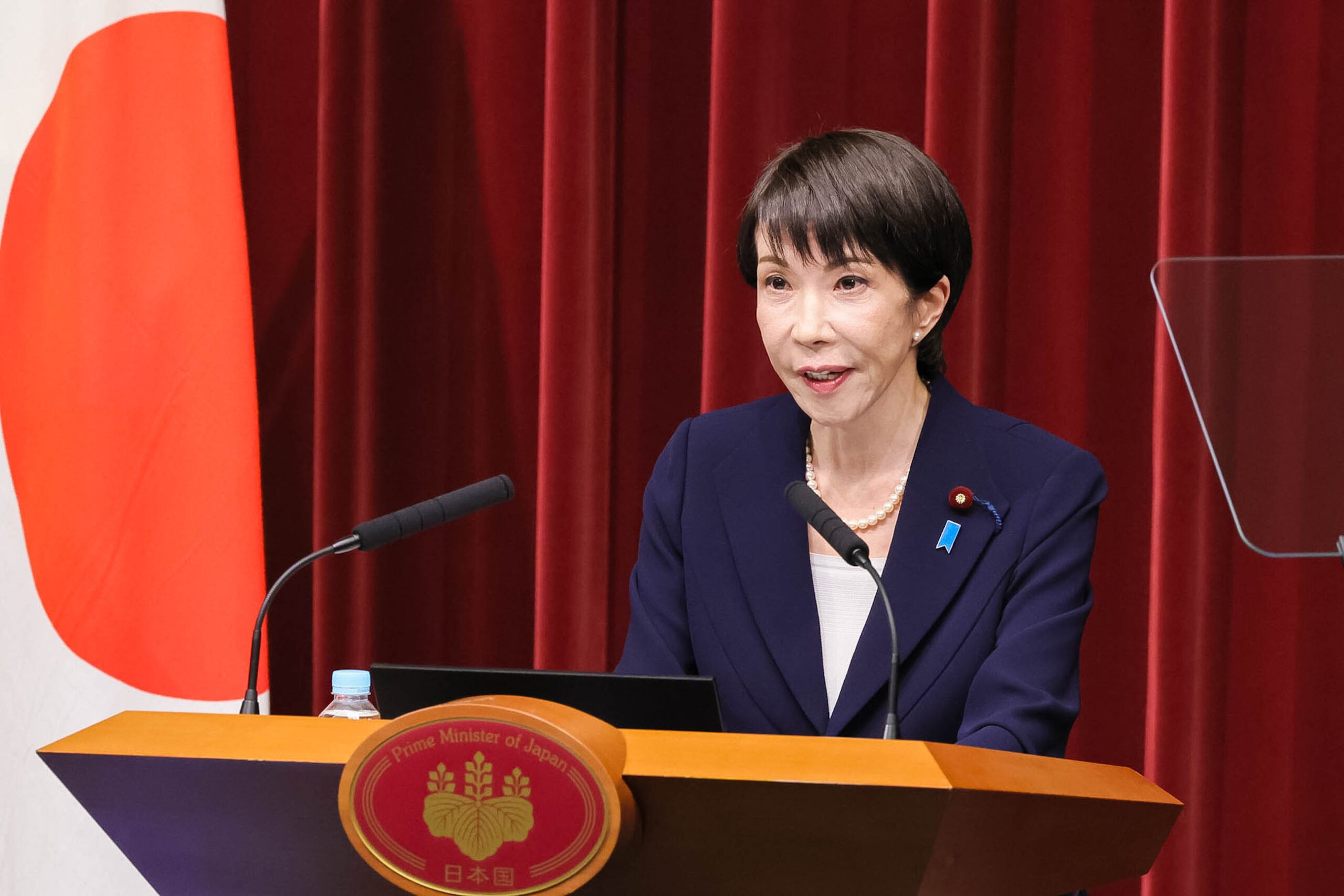
Japanese Prime Minister Sanae Takaichi has seen her public approval rating fall in a series of new opinion polls, weeks before a national election she has cast as a direct judgment on her leadership and economic strategy.
Polling released on Monday by major Japanese media outlets showed support for Takaichi’s administration declining across the board, raising questions about whether her personal popularity will be enough to secure a stronger mandate for her government.
A Nikkei newspaper survey found approval for Takaichi’s government had dropped to sixty seven percent, down from seventy five percent in December. It marked the first time her rating had fallen below seventy percent since she became Japan’s first female prime minister in October.
Separate polling by Kyodo News showed approval slipping to sixty three percent from sixty eight percent, while a Mainichi Shimbun survey recorded a sharper fall to fifty seven percent, a ten point drop from its previous reading.
The polls suggest that while Takaichi remains more popular than her party, voter confidence in her policy agenda may be softening as the election approaches.
Takaichi called a snap election for February eight to contest all four hundred sixty five seats in the powerful lower house. She has described the vote as a referendum on her stewardship of the world’s fourth largest economy and her plans for aggressive government spending.
Read Also: Japan Snap Election Puts Takaichi Agenda to Voters Test
Her Liberal Democratic Party and its coalition partner Ishin currently hold a fragile one seat majority. The prime minister has sought to turn her strong personal ratings into broader backing for expansionary fiscal policies aimed at offsetting rising living costs.
However, the Nikkei survey found that fifty six percent of respondents doubted that her proposed stimulus package would effectively ease household pressure. Market concerns that Japan could issue more debt to fund the measures have contributed to a rise in government bond yields.
Opposition parties have criticized the decision to call an election before lawmakers approve the country’s record seven hundred ninety three billion dollar national budget, accusing Takaichi of putting political advantage ahead of parliamentary process.
Read Also: Ex-PM Abe’s Assassin Gets Life In Prison, Japan Court Says
That criticism appears to be resonating with some voters. In the Mainichi poll, about two fifths of respondents said they were unhappy with the election timing, compared with fewer than one third who supported it.
Meanwhile, the prime minister enters the campaign leading a party that remains far less popular than she is personally. Recent polls place the Liberal Democratic Party at roughly thirty percent support.
Complicating the race further, the LDP has lost the backing of Komeito, a centrist party that ended its twenty six year alliance last year. Komeito has since aligned with the main opposition Constitutional Democratic Party of Japan, a move that weakens the LDP’s prospects in dozens of urban districts.
Political analysts say the election outcome may hinge on whether Takaichi can translate her personal appeal into renewed confidence in her party.
Tobias Harris, founder of political risk advisory firm Japan Foresight, described the vote as unusually uncertain.
“This will be the most unpredictable election in years,” Harris said in a recent report, adding that many LDP lawmakers now see their political futures tied closely to the prime minister’s performance.