
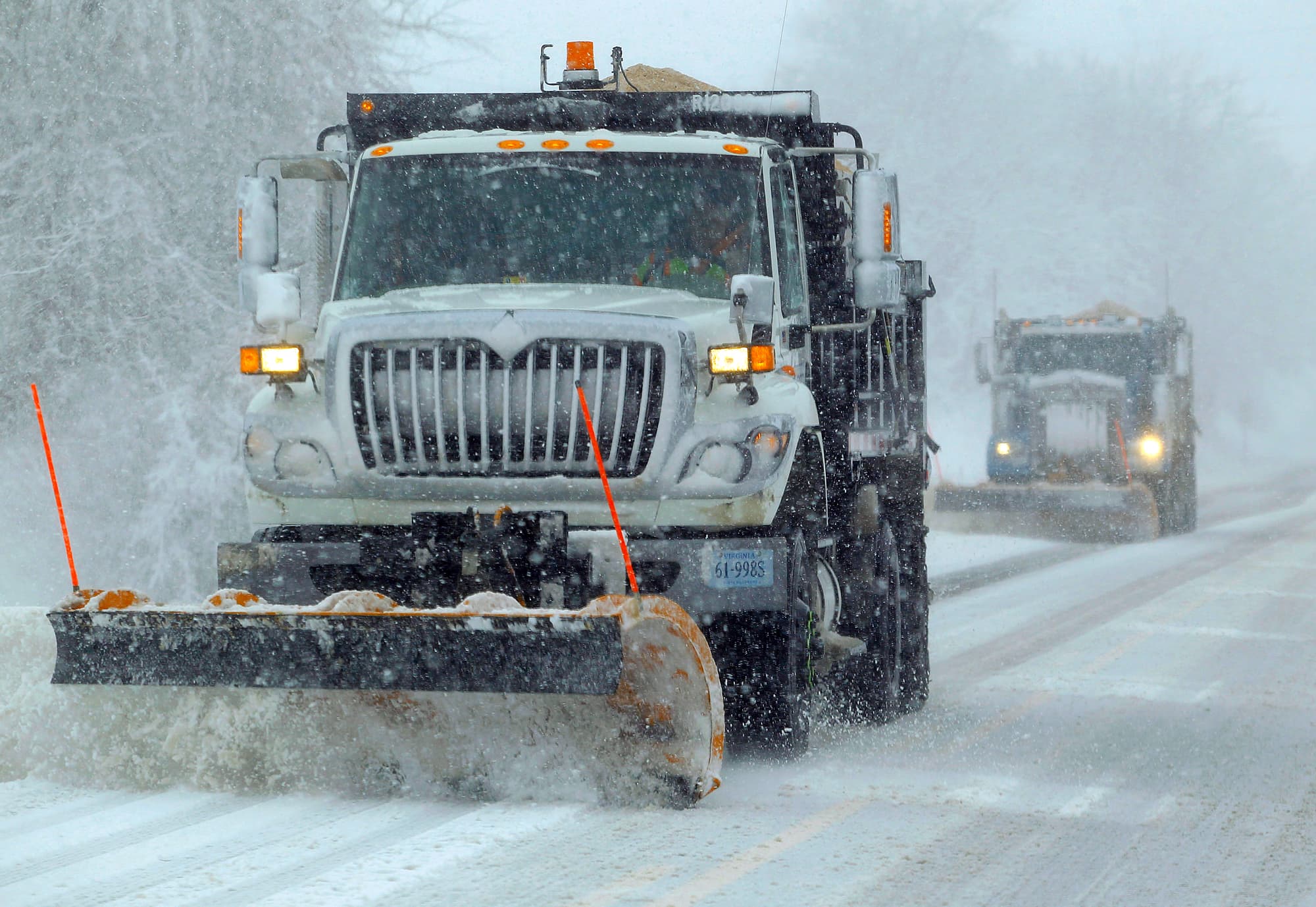
A powerful winter storm swept across a vast stretch of the United States on Sunday, unleashing a disruptive mix of heavy snow, sleet, and freezing rain from the Ohio Valley and mid South through the Northeast, while intense Arctic cold tightened its grip on regions east of the Rocky Mountains. The sprawling system created dangerous travel conditions, strained power infrastructure, and forced emergency responses at both state and federal levels.
Winter storm warnings covered much of the eastern third of the country, affecting an estimated 118 million people, as forecasters warned that the combination of precipitation and prolonged cold would lead to extended disruptions. At the same time, roughly 157 million Americans were advised to brace for extreme cold, with temperatures plunging below zero near the Canadian border and falling to near freezing as far south as the Gulf Coast. Strong winds compounded the danger, driving wind chill values in the northern Plains down to around minus 50 degrees Fahrenheit and increasing the risk of frostbite and hypothermia.
Since the storm began developing late last week, snowfall totals of a foot or more were recorded across parts of Colorado, Illinois, Indiana, Missouri, New Jersey, New York, and Pennsylvania. In New York, Governor Kathy Hochul activated National Guard units across New York City, Long Island, and the Hudson Valley to assist emergency crews and support storm response operations. The combination of snow, ice, and high winds severely disrupted air travel, with more than 11,000 flights canceled nationwide on Sunday alone. Ronald Reagan National Airport near Washington was effectively shut down, while airports serving cities such as New York, Philadelphia, and Charlotte saw the majority of scheduled flights grounded.
Read also: Snowstorm Paralyzes New York, Grounds Flights Nationwide Again
The storm’s impact on power systems was especially severe in the South, where freezing rain coated trees and power lines with thick layers of ice. At the height of the storm, more than one million homes and businesses across eight states lost electricity, stretching from Texas to the Carolinas. Tennessee was hit hardest, accounting for roughly one third of the outages. By Sunday night, hundreds of thousands of customers were still without power, as utility crews struggled to restore service amid hazardous conditions.
Road travel also became increasingly dangerous as heavy snow transitioned into sleet and freezing rain across parts of the mid Atlantic. Ice accumulation spread across interior areas of the East Coast, reaching as far south as Atlanta, as the storm system tracked through the Appalachian Mountains. President Donald Trump described the event as historic and approved federal emergency disaster declarations for a dozen states, while additional states and Washington, DC declared weather emergencies. The Department of Energy issued emergency orders allowing grid operators in Texas and the mid Atlantic to deploy backup generation resources to prevent widespread blackouts.
Although the main storm system was expected to move offshore by Monday, forecasters warned that another surge of Arctic air would follow, prolonging bitter cold and keeping ice locked in place. Officials cautioned that lingering ice loads could continue to damage power lines and infrastructure in the days ahead, even after snowfall ends.