
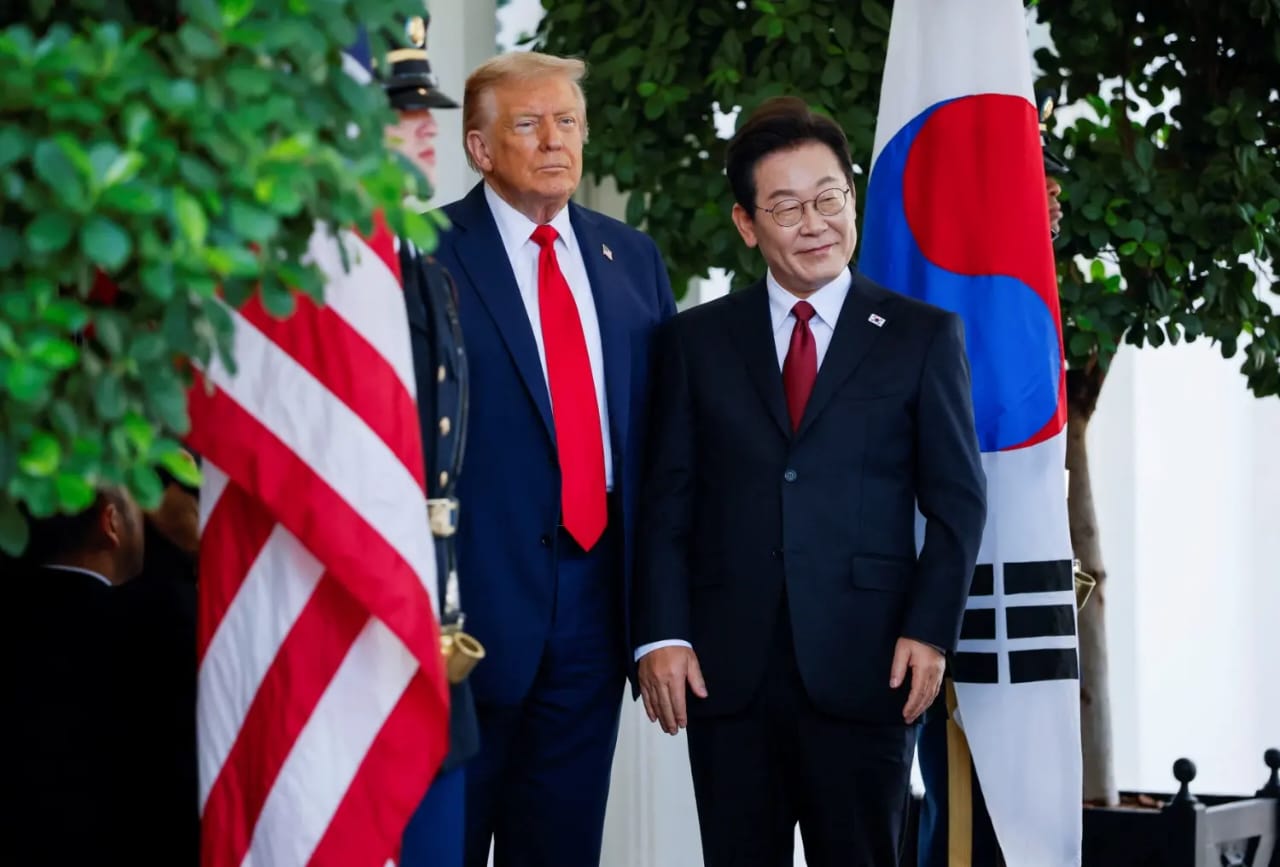
President Donald Trump said on Monday that he was raising tariffs on imports from South Korea to 25 percent from 15 percent, accusing the U.S. ally’s legislature of failing to follow through on a trade agreement reached last year.
In a post on social media, Trump said the Korean legislature had not enacted what he described as a historic trade deal, prompting him to order higher tariffs on autos, lumber, pharmaceuticals, and other goods covered by reciprocal duties. He said the move was necessary despite acknowledging that legislative approval was South Korea’s prerogative.
The decision comes as Trump faces growing voter frustration over affordability and the rising cost of living. Economists say tariffs imposed during his administration have contributed to persistent price pressures, with research indicating that U.S. consumers have absorbed most of the added costs through higher prices.
South Korea is one of the United States’ most significant trading partners, ranking among the top ten sources of imports. Each year, American companies and consumers import close to 150 billion dollars’ worth of South Korean goods, ranging from vehicles and electronics to industrial materials.
A spokesperson for South Korean President Lee Jae Myung said on Tuesday that Seoul had received no official notification from Washington and no detailed explanation of the tariff increase. The spokesperson said the government would convene a countermeasures meeting later in the day to assess its response. Trade Minister Kim Jung-kwan, who is currently in Canada, is expected to travel to the United States as soon as possible to hold talks with Commerce Secretary Howard Lutnick.
Markets reacted swiftly to the announcement. Shares of South Korean automakers Hyundai and Kia fell as much as six percent in early trading on Tuesday before recovering some of their losses.
Read also: White House Justifies Minneapolis Case Despite Video Proof
Trump first announced what he called a breakthrough trade deal with South Korea in July, although negotiations remained stalled for months over a U.S. push for a major investment commitment. During Trump’s Asia trip in October, he and President Lee finalized the agreement, which included a pledge by South Korea to invest 350 billion dollars in the United States. In November, both governments released a fact sheet outlining steps to implement the deal, including reduced tariffs capped at 15 percent on imports into the U.S.
The latest move follows several tariff threats by Trump that were not ultimately carried out, including proposed duties on Canada, European countries linked to Greenland disputes, and a threatened 100 percent tariff on Canadian goods. The Supreme Court is still reviewing the legality of Trump’s broader trade agenda, which the administration argues is necessary for economic security.