
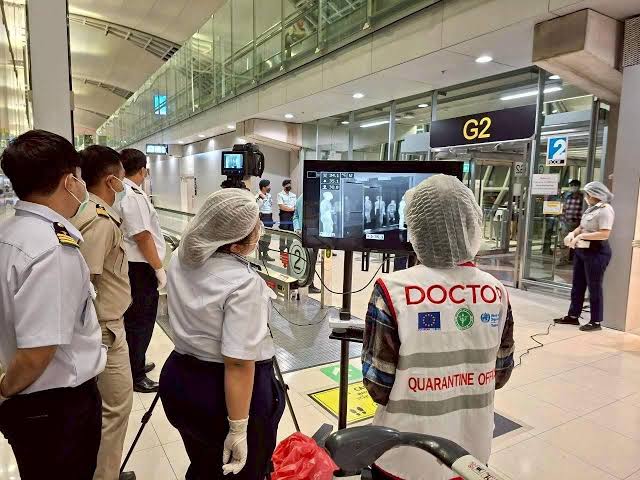
Authorities across Southeast Asia have moved swiftly to strengthen health screening and border controls after India confirmed two cases of the deadly Nipah virus, raising regional concerns about the risk of cross-border spread.
Singapore, Hong Kong, Thailand, and Malaysia have rolled out enhanced airport monitoring and surveillance measures in response to the infections, which were detected in eastern India late last month, according to public health officials and government statements.
The Nipah virus is classified by the World Health Organization as a priority pathogen due to its ability to cause rapid outbreaks and its high fatality rate, which ranges from 40% to 70%. There is currently no approved vaccine or targeted treatment, though several candidates remain in clinical development.
Health experts warn that Nipah poses a particular challenge because it can be transmitted from animals to humans—primarily through fruit bats and pigs—and can also spread directly between people through close contact.
Indian health authorities confirmed that the two cases were identified in the eastern state of West Bengal in late December. Both patients are health workers and are receiving treatment at a local hospital, a district health official told Reuters.
Read Also: India EU Trade Deal Creates Massive Free Trade Zone
In a statement issued Tuesday, India’s health ministry said officials had traced 196 contacts linked to the cases. None have shown symptoms, and all tested negative for the virus.
“Speculative and incorrect figures regarding Nipah virus disease cases are being circulated,” the ministry said, adding that enhanced surveillance, laboratory testing, and field investigations helped ensure the cases were contained quickly.
The reports prompted heightened vigilance in neighboring regions, including Southeast Asia and Hong Kong. Singapore’s Communicable Diseases Agency said on Wednesday that temperature screening would be introduced at Changi Airport for flights arriving from affected areas in India.
In addition, Singapore’s Ministry of Manpower said it is increasing health surveillance for newly arrived migrant workers from South Asia and has alerted primary care providers to remain vigilant for potential symptoms.
Other regional governments, including those in Malaysia and Thailand, have also reviewed screening protocols and public health preparedness, according to officials familiar with the measures.
Read Also: Air Charter Crash Claims Five, Including Maharashtra Chief
While no additional cases have been reported outside India, health authorities say the situation underscores the importance of early detection and cross-border coordination when dealing with highly infectious diseases.
Public health agencies across the region are expected to continue monitoring travelers and reviewing response plans in the coming weeks as India maintains heightened surveillance for further infections.