
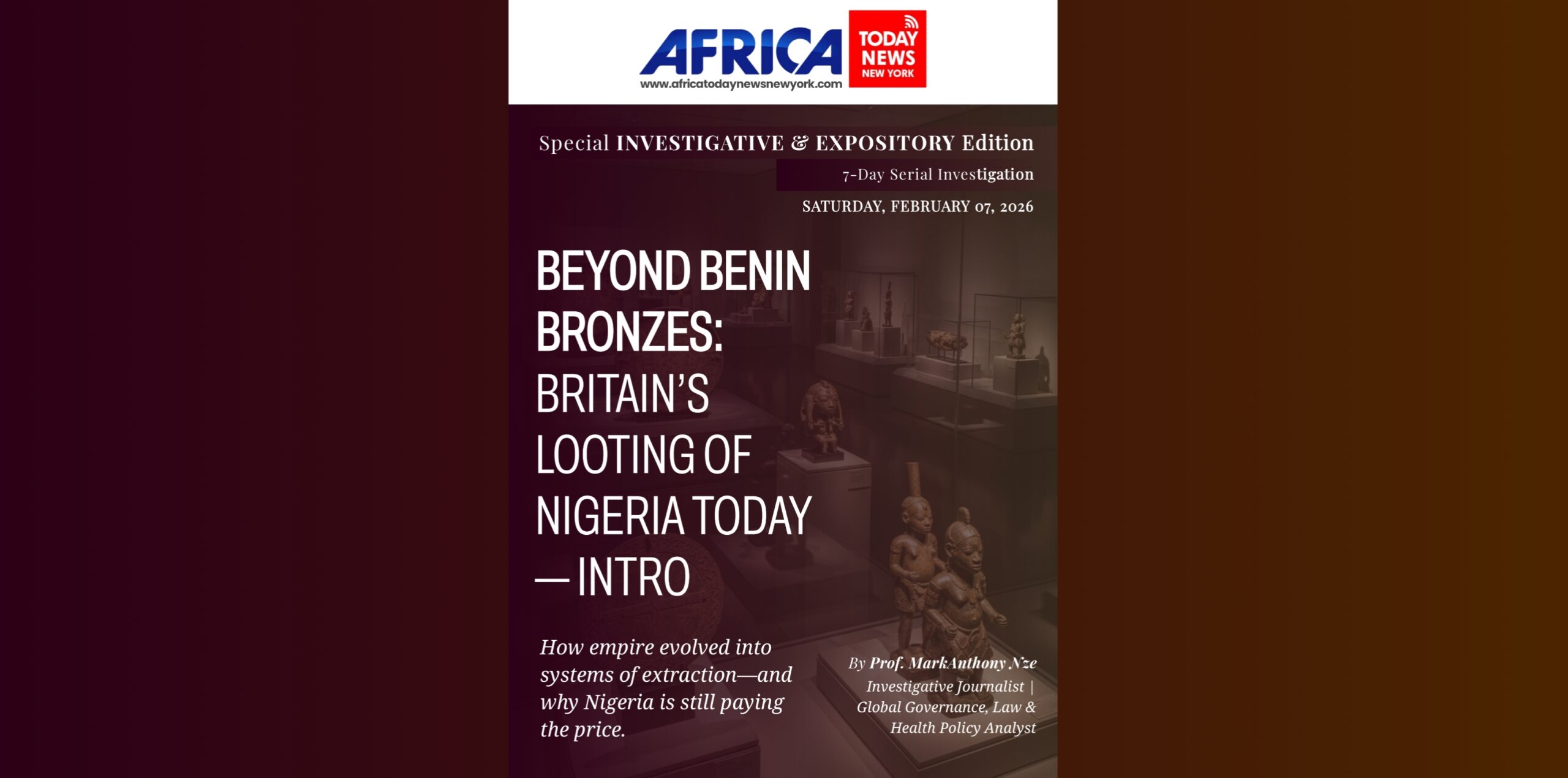
How empire evolved into systems of extraction—and why Nigeria is still paying the price.
By Prof. MarkAnthony Nze
Introduction — Looting Was Never the Exception
Start with the Benin Bronzes because they force honesty.
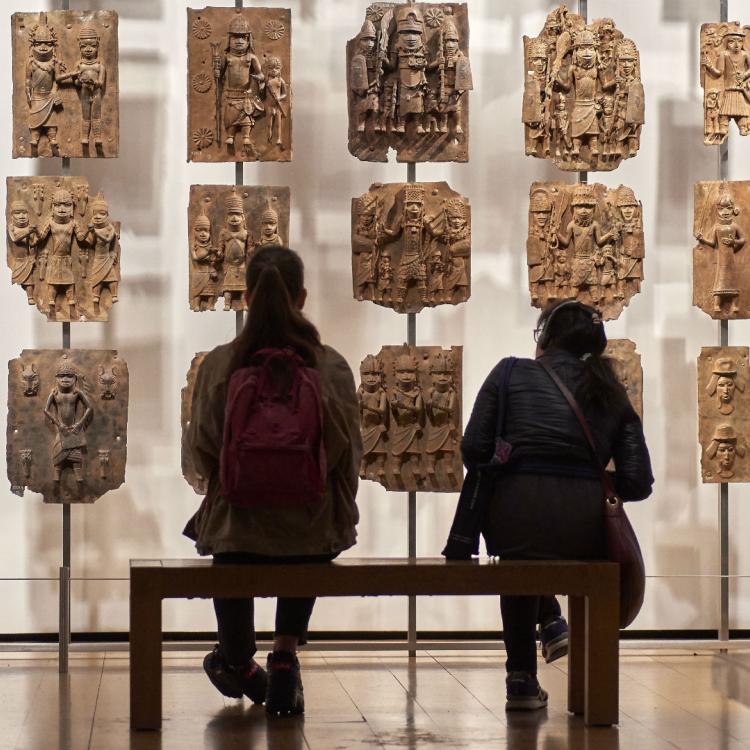
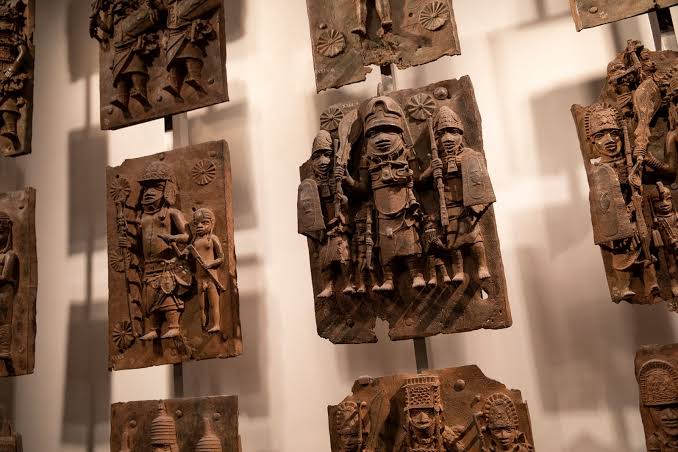
Not “complexity.” Not “shared history.” Not “the past.” A British-led military expedition sacked Benin in 1897 and carried away a civilisation’s archive in metal and ivory. That much is uncontested; it is why European institutions are now returning pieces, and why the returns still trigger fights over custody, authority, and the right to narrate what was done and what is owed (Associated Press, 2025; Reuters, 2025). The bronzes are not merely art objects. They are receipts—physical evidence that an empire once treated Nigerian value as removable property.
But if we stop at museums, we miss the more devastating truth: the bronzes were never the whole crime scene. They were the trophy case.
This report begins from a forensic premise: “looting” is not a metaphor. In policy terms, it is a recurring pattern of value transfer—a set of mechanisms that move wealth, risk, and decision-making power outward, while leaving the producing society with thinner margins, heavier liabilities, and diminished bargaining power. The language of conquest has largely been replaced by the language of contracts, compliance, and “partnership.” The direction of travel, however, often looks painfully familiar.
You can hear the public version of the relationship in official statements and diplomatic briefs: trade “worth about £7 billion,” new agreements to “boost investment,” a post-Brexit scheme presented as generous market access, and warm assurances that everything is balanced (UK Department for Business and Trade, 2026). You can also hear it in a different register—sharper, angrier, and closer to the street—where Nigerians describe the relationship as extraction with better manners, a modern continuation of the old arrangement (Africa Today News, New York, 2020; Africa Today News, New York, 2024a).
Both registers can be true at once: a relationship can be “mutually beneficial” in aggregate headlines while still being structurally unfair in how gains are distributed, where disputes are decided, who controls information, and where profits finally settle. That is why an investigative approach matters. It refuses to be hypnotised by totals. It interrogates terms.
Read also: Jesus And Muhammad Are Sacred—So Why Not Fela?
The shift from empire to systems
Classical colonial extraction was overt: take territory, impose tax and labour regimes, direct production outward. The contemporary version is less photogenic but often more durable: route value through standards, finance, and legal architecture—then call the outcome “the market.” Where empire once stationed administrators, it now relies on institutions: trading rules, corporate forms, secrecy vehicles, professional services, and dispute forums that tend to favour parties with deeper capital, better lawyers, and more stable currencies.
This is not a claim that Britain alone determines Nigerian outcomes. Nigeria has powerful domestic constraints—political capture, security crises, corruption, infrastructure deficits—many of them self-inflicted. But external systems can act as amplifiers: they can accelerate leakage, shelter proceeds, and reward behaviours that strip public value. When that happens, it is no longer enough to say, “Nigeria should fix itself.” A forensic investigator asks a more uncomfortable question: who profits from Nigeria remaining fixable—but never fixed?
The research community has increasingly given this question a vocabulary. UNCTAD’s work on illicit financial flows (IFFs) is especially important because it treats outflows not as moral anecdotes but as measurable development losses arising from corruption, tax abuse, trade misinvoicing, and other channels (UNCTAD, 2023). That framing matters: it shifts the conversation from “bad people stealing” to systems enabling leakage—including offshore opacity, weak beneficial ownership transparency, and professional intermediaries who know precisely how to make money look clean.
Tax Justice Network’s global assessment is blunt about the direction of responsibility: the architecture of tax abuse is not primarily built in poorer states; it is sustained by a small club of wealthier jurisdictions that shape rules and benefit from the flows (Tax Justice Network, 2021). That does not absolve Nigerian elites who loot their own country; it identifies the external plumbing that helps the loot survive.
And the UK, despite reforms, remains central to questions of opacity. Reuters reporting has documented lawmakers’ warnings that British property can still be owned anonymously via opaque trusts, even after transparency drives and new enforcement powers (Reuters, 2024). That matters for Nigeria because secrecy is not an abstract vice. It is the end-point of extraction: once wealth is hidden and parked, accountability becomes optional.
Read further: Zero To Revenue: Build A Business In 90 Days—Part 7
When “support” and “extraction” coexist
A relationship can include genuine support and still function as extraction. Consider the optics of health funding: the UK announces major contributions through global mechanisms aimed at malaria and disease control—undeniably valuable in human terms, particularly in high-burden settings (Africa Today News, New York, 2024b). Yet the same relationship can also be shaped by migration policies that attract Nigerian labor—especially in health systems under strain—while publicly acknowledging the tension around “brain drain” (Africa Today News, New York, 2022). The contradiction is not a scandal; it is a structural feature. Aid and recruitment can coexist because they answer different needs: one manages humanitarian optics and global commitments; the other meets domestic labour shortages.
A forensic lens does not sneer at health support. It asks whether support is designed to reduce dependence or merely to stabilise a dependent equilibrium. If health systems are funded in ways that do not build durable capacity—while the skilled workforce is simultaneously pulled outward—then “help” becomes, unintentionally or otherwise, a revolving door.
The “Benin” lesson: restitution isn’t the end, it’s the beginning
The global push to return looted cultural property has accelerated in recent years. The Netherlands’ return of 119 Benin objects is one example of how restitution is moving from moral debate into state practice (Associated Press, 2025). But the Reuters reporting on custodianship disputes inside Nigeria illustrates a second lesson: even when artefacts come home, the politics of who owns them, who displays them, and who benefits can be fierce (Reuters, 2025). Returns can heal; they can also reopen internal fractures if governance is unclear.
That is why the bronzes matter to this investigation beyond symbolism. They show three things at once:
Extraction had a clear origin in violence—the historical fact that cannot be negotiated away.
Value can remain trapped in foreign institutions for generations until pressure becomes unavoidable.
Even restitution can be structured—by law, by decree, by museum policy—in ways that decide whose authority counts.
Those are not museum problems. They are governance problems. And the same questions—authority, custody, rule-making—animate modern economic extraction too.
Nigeria’s present: reform under pressure, leakage under law
Nigeria is not frozen in time. It is reforming under punishing conditions: inflation shocks, foreign exchange stress, and fiscal constraints that make every percentage point of revenue matter (World Bank, 2024). In such conditions, leakage is not merely corruption; it is macroeconomic sabotage.
This is where “looting” becomes policy-grade. If public revenue is fragile, then the channels that drain it—tax abuse, profit shifting, misinvoicing, opaque ownership, and skewed contracts—are not side stories. They shape whether Nigeria can fund power, health, security, education, and industrial policy at scale. UNCTAD’s emphasis on measurement tools for IFFs is therefore not academic housekeeping; it is an instruction manual for states that want to stop bleeding in the dark (UNCTAD, 2023).
What this series will prove—and how
This report is written as a hybrid: the discipline of academic sourcing, the narrative clarity of investigative journalism, and the cautious precision of legal reasoning. It does not claim Britain “steals” in the simplistic sense of a hand reaching into a pocket. It argues something more defensible—and more damning: that UK-linked legal, financial, and institutional environments can function as extraction multipliers, and that the relationship is too often structured so Nigeria sells cheap value and buys expensive services—while disputes, data, and profits migrate to safer jurisdictions.
In practical terms, the series will map seven “live” mechanisms, each with its own evidence trail:
Cultural extraction and narrative control (how restitution is negotiated, delayed, and domesticated).
Trade architecture asymmetry (market access as headline; standards and services capture as reality).
Profit shifting and tax abuse (revenue loss structured through global rules) (Tax Justice Network, 2021).
Trade misinvoicing and measurement gaps (outflows hidden in invoices and valuation disputes) (UNCTAD, 2023).
Secrecy and asset parking (trusts and ownership opacity as end-points) (Reuters, 2024).
Contractual governance (how expertise, law, and arbitration shape outcomes long before a conflict arises).
Talent extraction (visa regimes and labour markets converting Nigerian training into foreign capacity) (Africa Today News, New York, 2022).
If the Benin Bronzes teach anything, it is this: theft can be legalised after the fact—through possession, institutional legitimacy, and time. Modern economic looting does not wait for time to do its work. It writes legitimacy into the transaction at the start.
That is why this introduction insists on the word “today.” Not because 1897 no longer matters—on the contrary, it matters because it inaugurated a method. But because the most consequential theft in Nigeria’s story is not only the artefacts behind glass. It is the daily conversion of Nigerian value into external balance sheets, under rules that present themselves as neutral while behaving as instruments.
The purpose of this investigation is to name those instruments, trace their routes, and specify the reforms—Nigerian, British, and international—that would make extraction harder, accountability faster, and partnership finally measurable by outcomes rather than rhetoric.
Professor MarkAnthony Ujunwa Nze is an internationally acclaimed investigative journalist, public intellectual, and global governance analyst whose work shapes contemporary thinking at the intersection of health and social care management, media, law, and policy. Renowned for his incisive commentary and structural insight, he brings rigorous scholarship to questions of justice, power, and institutional integrity.
Based in New York, he serves as a full tenured professor and Academic Director at the New York Center for Advanced Research (NYCAR), where he leads high-impact research in governance innovation, strategic leadership, and geopolitical risk. He also oversees NYCAR’s free Health & Social Care professional certification programs, accessible worldwide at:
https://www.newyorkresearch.org/professional-certification/
Professor Nze remains a defining voice in advancing ethical leadership and democratic accountability across global systems.
Selected Sources (APA 7th Edition)
Africa Today News, New York. (2020, August 24). How the British government has been stealing from Nigeria. https://africatodaynewsnewyork.com/2020/08/24/how-the-british-government-has-been-stealing-from-nigeria/
Africa Today News, New York. (2022, November 21). Real reason Nigerian visa applications are soaring – UK envoy. https://africatodaynewsnewyork.com/2022/11/21/real-reason-nigerian-visa-applications-are-soaring-uk-envoy/
Africa Today News, New York. (2024, April 26). Nigeria’s fight against malaria gets £1bn support from UK. https://africatodaynewsnewyork.com/2024/04/26/nigerias-fight-against-malaria-gets-1bn-support-from-uk/
Africa Today News, New York. (2024, May 6). Nigeria, UK trade relations currently worth £7bn – Envoy. https://africatodaynewsnewyork.com/2024/05/06/nigeria-uk-trade-relations-currently-worth-7bn-envoy/
Associated Press. (2025, June 19). Netherlands returns 119 looted artifacts known as Benin Bronzes to Nigeria.
Reuters. (2024, April 17). Opaque trusts still cloud British property ownership, lawmakers say.
Reuters. (2025, February 26). Nigeria’s museum agrees with royal ruler on custody of Benin Bronzes.
Tax Justice Network. (2021). The state of tax justice 2021.
UK Department for Business and Trade. (2026, February 2). Nigeria: Trade and investment factsheet.
United Nations Conference on Trade and Development. (2023). Counting the cost: Defining, estimating and disseminating statistics on illicit financial flows in Africa.
World Bank. (2024, October 17). Nigeria development update: Staying the course—Progress amid pressing challenges (Presentation).