
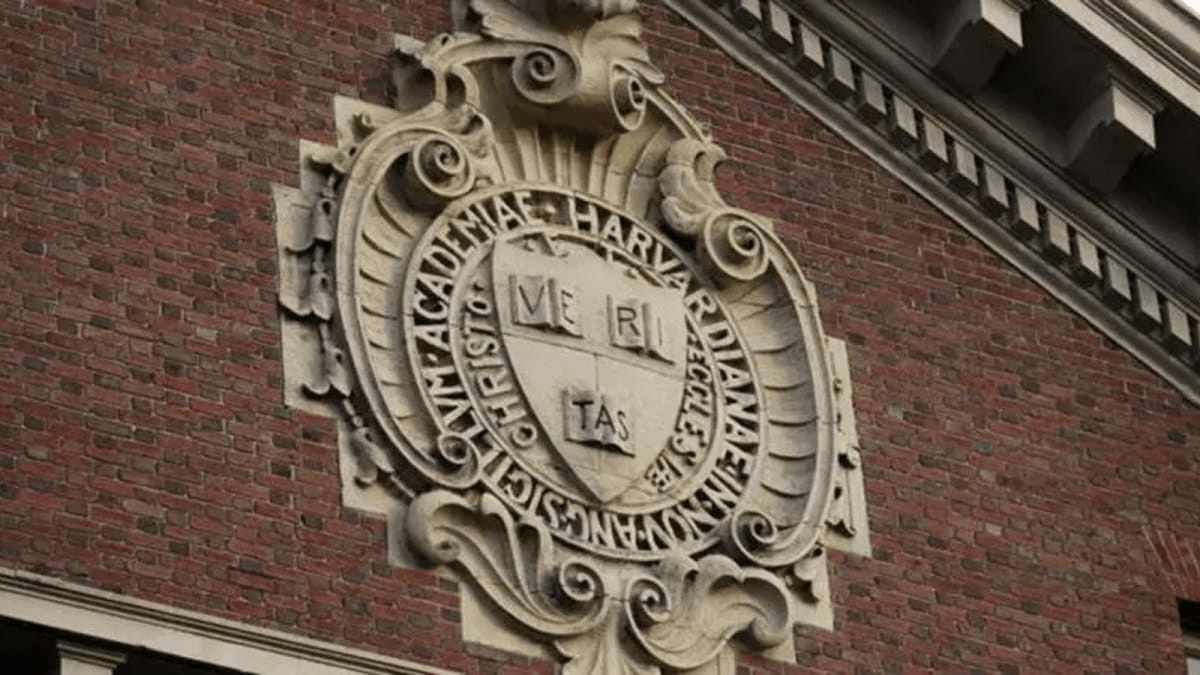
The United States Department of Defense has announced it will cut all formal academic ties with Harvard University, ending decades of cooperation that sent senior military officers to the Ivy League institution for advanced education and fellowships. The decision, which will take effect from the 2026–27 academic year, represents one of the most significant ruptures between the US military and elite academia in modern history.
The move was confirmed on Friday by Defense Secretary Pete Hegseth, who said the Pentagon would no longer fund or participate in graduate-level professional military education programs, fellowships, or certificate courses at Harvard. Officers currently enrolled will be allowed to complete their studies, but no new candidates will be sent once the policy takes effect.
In remarks delivered at the Pentagon, Hegseth framed the decision as a necessary realignment of military education priorities, arguing that elite universities had drifted away from preparing officers for the realities of modern warfare.
“For years, we sent our best officers to Harvard hoping they would gain strategic clarity,” he said. “Instead, too many returned with ideological frameworks that do not strengthen combat readiness or military cohesion.”
The announcement marks a sharp escalation in the Trump administration’s long-running campaign against what it describes as ideological activism within American institutions. The Pentagon’s leadership has increasingly argued that diversity, equity, and inclusion initiatives, along with what officials describe as “globalist” academic perspectives, have undermined the armed forces’ focus on lethality and discipline.
According to defense officials familiar with the internal review that led to the decision, Harvard was singled out due to its prominence and symbolic weight within the US education system. The review examined military-sponsored education across civilian institutions and concluded that certain programs no longer aligned with the Defense Department’s strategic needs.
A senior Pentagon official, speaking on condition of anonymity, said the department would redirect resources toward public universities, war colleges, and internal military academies that emphasize operational planning, command leadership, and applied strategy.
“This is not about rejecting education,” the official said. “It is about rejecting environments that prioritize political identity over warfighting.”
The Pentagon has historically maintained close ties with Harvard, particularly through the Kennedy School of Government, which has hosted generations of senior officers studying national security, public policy, and international relations. Alumni include former secretaries of defense, generals, and intelligence officials.
That relationship has come under strain in recent years, especially following campus protests related to the war in Gaza and broader debates over free speech and antisemitism. Defense officials privately cited Harvard’s handling of pro-Palestinian demonstrations, as well as its refusal to roll back DEI policies, as evidence of what they see as an ideological disconnect with the military’s institutional culture.
Harvard University responded cautiously to the announcement, confirming it had been notified of the Pentagon’s decision but declining to comment directly on the ideological critique.
“Harvard remains committed to academic freedom, rigorous debate, and educating leaders across all sectors of society,” a university spokesperson said. “We value the contributions of military officers who have studied here and will continue to engage constructively with public institutions where possible.”
The decision has triggered debate within defense and academic circles about the long-term consequences for civil-military relations. Critics argue that severing ties with elite universities risks isolating military leadership from broader intellectual currents and policy debates.
“This is a profound shift,” said Rosa Brooks, a former Pentagon official and professor at Georgetown University. “The military does not operate in a vacuum. Cutting off engagement with civilian academia could narrow perspectives at a time when warfare is increasingly complex and interdisciplinary.”
Read also: Trump, Walz Talk Over Minnesota ICE-Related Killing
Supporters of the move, however, say the Pentagon is correcting a longstanding imbalance. Several retired officers interviewed by US media said elite academic programs often prioritized theoretical frameworks over practical military leadership.
“There is a difference between studying war and preparing to fight one,” said Jack Keane, a retired four-star general and former vice chief of staff of the US Army. “The department is signaling that distinction very clearly.”
The Pentagon’s decision is expected to prompt a wider review of academic partnerships with other Ivy League institutions, although officials declined to confirm whether similar cuts were imminent. Internal Defense Department documents reviewed by US media suggest that education programs will increasingly be evaluated based on cost efficiency, relevance to operational needs, and ideological neutrality.
Hegseth has repeatedly referred to the Defense Department as the “War Department,” reviving an older term last used officially before 1947. The rhetorical shift reflects a broader effort by the administration to reframe the military’s mission in explicitly martial terms, prioritizing readiness for high-intensity conflict with near-peer rivals such as China and Russia.
As the policy moves toward implementation, the break with Harvard is a symbolic and substantive marker of how deeply political and cultural divisions are reshaping American institutions. Whether the decision strengthens the military’s effectiveness or narrows its strategic vision will likely be tested in the years ahead.