
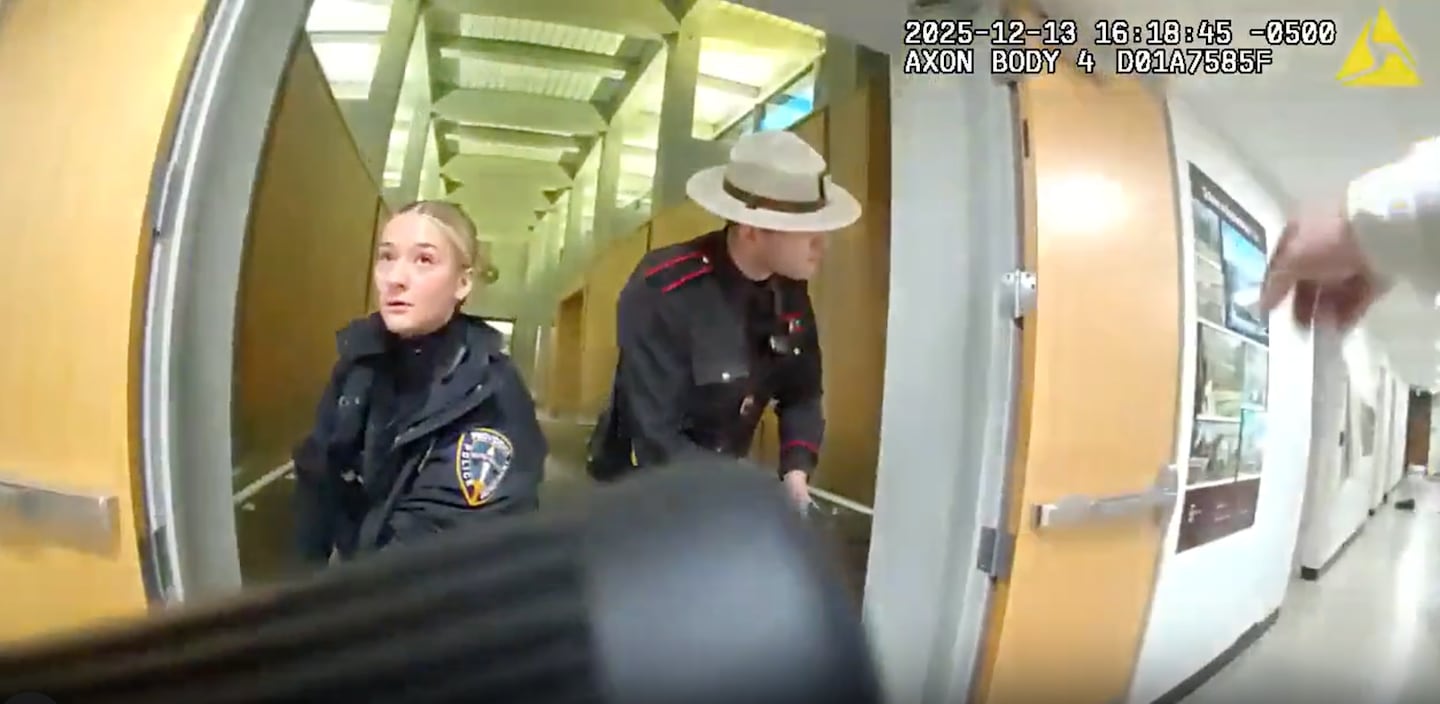
City officials in Providence on Monday released redacted police video and audio recordings from the December shooting at Brown University that left two students dead and nine others wounded, responding to public records requests while seeking to limit further distress to victims and their families.
The material, made public under Rhode Island’s Access to Public Records Act, includes emergency radio traffic, excerpts of campus and city police body-camera footage, and dispatcher communications from the initial response to the attack.
Officials said the release was delayed at the request of victims’ families until after a memorial service held on campus last week, and that graphic images and portions of audio were removed.
Providence Mayor Brett Smiley said the city had a legal obligation to disclose the records but sought to balance transparency with the potential harm their release could cause. “It is incredibly important to me that the city of Providence remains fully transparent, accountable and compliant with the state’s Access to Public Records Act,” Smiley said in a statement. At the same time, he said officials were aware that the footage and audio could be “harmful and traumatizing” for those still recovering from the attack.
News organizations in the United States and abroad began seeking access to police records shortly after the shooting, which occurred on Dec. 13 during a study session inside an academic building near Hope Street, on the edge of Brown’s campus.
Read Also: Trump Says He ‘Didn’t See’ Racist Clip In Shared Video
One of the earliest recordings released Monday captures a campus police officer contacting Providence police at 4:07 p.m. to report confirmed gunfire. “This is Brown police. We have confirmed gunshots at 184 Hope Street,” the officer says, adding that there was at least one victim whose location was not yet known. A follow-up call several minutes later relays a preliminary suspect description: a person dressed in black and wearing a ski mask, with no known direction of travel.
The city also published about 20 minutes of body-camera footage from the officer overseeing the initial response. The video, heavily edited to obscure sensitive scenes, shows officers entering and moving through the building amid uncertainty over whether the gunman was still inside. At various points, the footage is partially blocked by the officer’s arms or entirely blacked out, and long stretches of audio are muted.
Within the redacted segments that remain audible, officers can be heard coordinating efforts to secure the area, locate victims, and determine where evacuated students could be brought to safety. “Let’s get these rescues in, where are we staging the rescue?” the supervising officer asks at one point. He later warns colleagues to proceed cautiously, noting the shooter could still be present.
Read Also: Pentagon Severs Scholarly Links With Harvard University
Scattered personal belongings, including backpacks and gloves, are visible on the floor as officers search rooms and hallways.
Separate audio recordings released by the city capture police and dispatchers discussing reports of additional victims and a possible sighting of the suspect in another building nearby. One officer describes the scene as an active shooter situation with multiple injured people.
The newly released files also include portions of a police incident report that reiterate accounts previously summarized by authorities, describing how hospitalized victims reacted when shown photographs of the suspected gunman. According to the report, one victim became visibly distressed, recoiling and shaking while confirming the image matched the person who shot her. Another victim, the report says, paused, adjusted his breathing, and identified the person in the photo as the shooter he encountered in a hallway.
The Dec. 13 attack killed Ella Cook, a 19-year-old sophomore, and MukhammadAziz Umurzokov, an 18-year-old freshman. Nine other students were injured, some seriously. The shooting prompted a large-scale manhunt across several states and led Brown University to suspend classes temporarily.
Authorities identified the suspect as Claudio Neves Valente, 48, who had studied physics as a graduate student at Brown during the 2000–01 academic year. Investigators said Neves Valente also fatally shot Nuno F. G. Loureiro, a Massachusetts Institute of Technology professor, at Loureiro’s home in the Boston area shortly before the Brown attack. The two men had attended school together in Portugal in the 1990s.
Neves Valente was found dead several days after the shootings inside a storage facility in New Hampshire. Law enforcement officials have said his death did not appear to involve police action. During a search of the storage unit, FBI agents recovered an electronic device containing a series of videos in which Neves Valente confessed to the killings, according to the U.S. Justice Department. Authorities said he appeared to have planned the attack for years but did not articulate a motive in the recordings.
City officials said additional records could be released in the future if required by law, but emphasized that no further disclosures are currently scheduled. Investigations by state and federal authorities into the shootings have concluded, and no criminal proceedings are pending following the suspect’s death.