
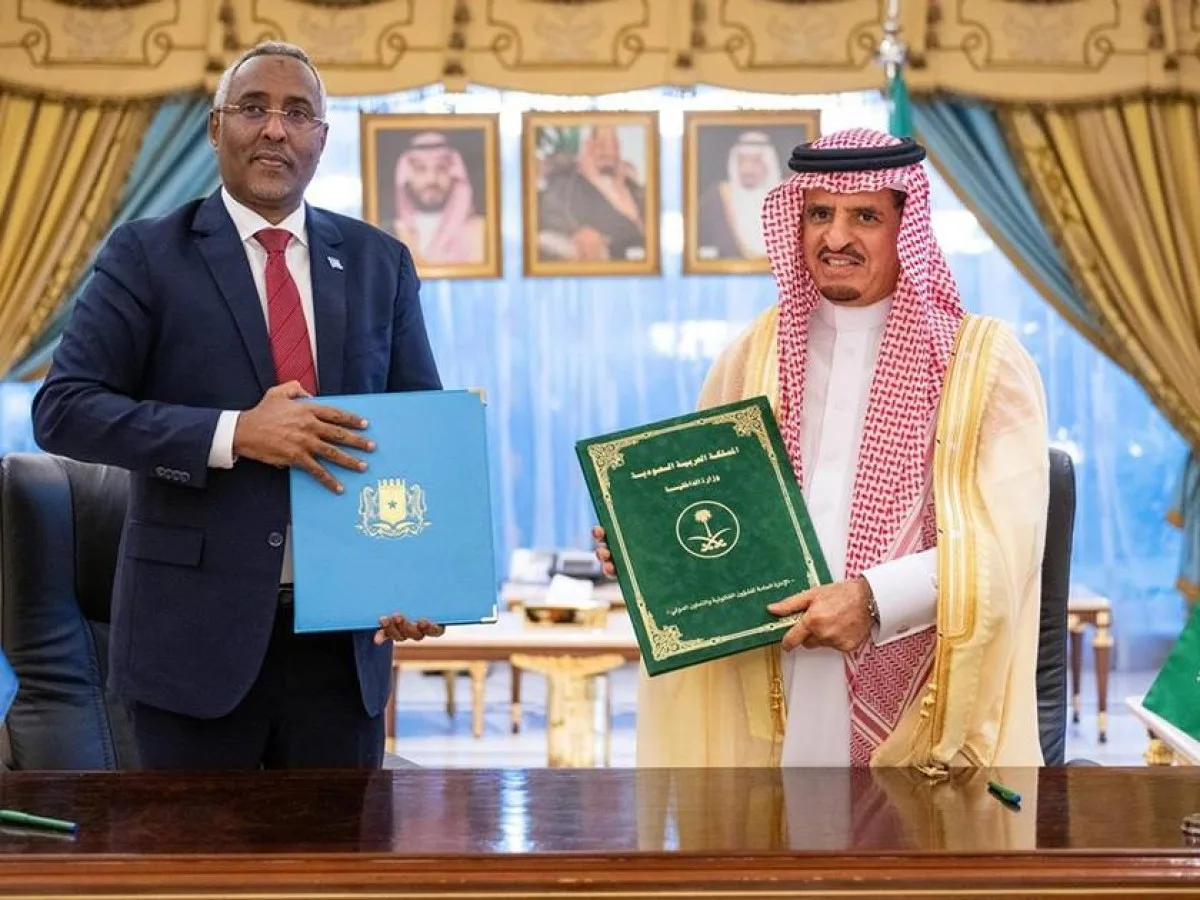
Somalia has formalised a military cooperation agreement with Saudi Arabia, weeks after signing a similar pact with Qatar, as Mogadishu seeks regional backing in response to Israel’s recognition of Somaliland.
The memorandum of understanding was signed on Monday in Riyadh by Somalia’s Minister of Defence Ahmed Moallim Fiqi and Saudi Defence Minister Prince Khalid bin Salman bin Abdulaziz. Somalia’s defence ministry said the agreement is intended to “strengthen the frameworks of defence and military cooperation” and covers multiple areas of shared strategic interest. Saudi officials confirmed the signing on social media but offered no further details.
Last month, Somalia concluded a defence pact with Qatar, focusing on training, knowledge exchange, and the development of military capabilities. The Qatari government said the agreement was designed to deepen defence partnerships and enhance security collaboration in ways that benefit both countries.
These moves follow Israel’s unprecedented recognition of Somaliland in December, a territory that declared independence from Somalia in 1991 but remains unrecognised internationally. Mogadishu has repeatedly rejected Somaliland’s bid for recognition and warned that Israel intends to establish a military base there.
Somali President Hassan Sheikh Mohamud said last week that the federal government “will never allow” any Israeli military presence in Somaliland. “We will confront any Israeli forces coming in, because we are against that and we will never allow that,” he told Al Jazeera. Earlier this year, a Somaliland official told Israeli media that the establishment of a base was under discussion, though no agreement had been reached.
Somalia’s outreach to Saudi Arabia and Qatar forms part of a broader strategy to strengthen support from Gulf and Arab partners. Both Riyadh and Doha are influential players in Red Sea and Horn of Africa security affairs, including issues such as piracy, maritime trade, and conflicts in neighbouring Yemen and Sudan.
Simultaneously, Somalia has severed its security and defence ties with the United Arab Emirates. Last month, Mogadishu cancelled agreements covering port operations, military cooperation, and security arrangements, citing actions by Abu Dhabi that it said undermined national unity and independence. Reports suggest the UAE had a role in facilitating Israel’s recognition of Somaliland.
The UAE has longstanding ties with Somaliland, including a 30-year concession at the port of Berbera through the Dubai-based firm DP World. Abu Dhabi declined to join an Arab-Islamic condemnation of Israel’s move but later issued a joint statement with the African Union affirming support for Somalia’s territorial integrity.
Somalia’s realignment occurs amid escalating tensions between Saudi Arabia and the UAE. In December, Riyadh said its forces intercepted what it described as a UAE weapons shipment intended for Yemen’s Southern Transitional Council, a separatist faction. Saudi Arabia also supported calls for the withdrawal of Emirati forces from Yemen, which Abu Dhabi denied.
Read also: Dubai Arrest After Shooting Of Russian General Alexeyev
Regional disputes extend to Sudan, where the UAE has been accused of backing the paramilitary Rapid Support Forces in their three-year conflict with the Sudanese Armed Forces. Saudi Arabia, allied with Khartoum, condemned RSF attacks on civilians in the Kordofan region and criticised unspecified foreign interference supplying weapons and fighters. Sudan has filed a case against the UAE at the International Court of Justice, alleging “complicity in genocide” against the Masalit community, a charge the UAE has dismissed as a “cynical publicity stunt.”
Within this complex geopolitical landscape, Somalia’s new defence agreement with Saudi Arabia appears aimed at reinforcing Mogadishu’s sovereignty and territorial integrity while bolstering its capacity to address internal and regional security challenges. Analysts say the pact may involve intelligence sharing, logistics support, and training, as well as cooperation on border and maritime security, though specifics remain undisclosed.
Officials in Mogadishu indicated that the next steps would include forming joint committees to outline operational details and timelines. Follow-up meetings with Riyadh are expected in the coming weeks to formalise programmes and implement the provisions of the agreement.
The Saudi and Qatari pacts complement ongoing efforts by Somalia to strengthen its military and diplomatic ties amid rising pressure from both separatist movements and regional rivalries, while countering external influences perceived to undermine national unity.