
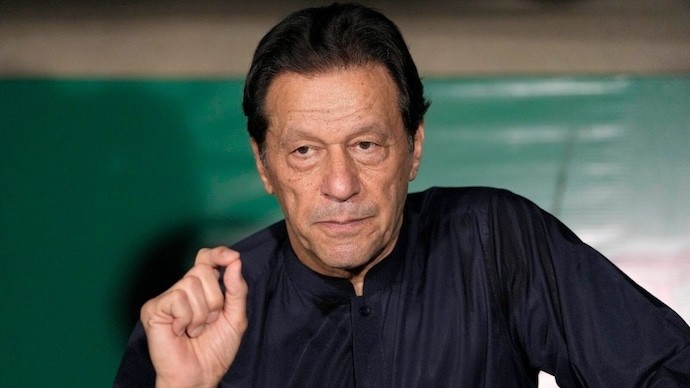
Pakistan’s Supreme Court has ordered an urgent independent medical examination of jailed former Prime Minister Imran Khan after a court-appointed lawyer reported that he has lost 85 percent of the vision in his right eye following what the report described as months of deliberate neglect by prison authorities.
Barrister Salman Safdar, appointed by the Supreme Court as amicus curiae, conducted a two-hour interview with Khan at Rawalpindi’s Adiala Jail on February 10 before submitting a detailed seven-page report to the court on Wednesday, triggering an immediate judicial response that has deepened a political crisis surrounding the former prime minister’s detention.
A medical report dated February 6 diagnosed Khan’s condition as “right central retinal vein occlusion,” a blood clot that can cause catastrophic retinal damage when left untreated. An ophthalmologist from the Pakistan Institute of Medical Sciences Hospital in Islamabad confirmed the diagnosis after eventually being called in. Despite receiving an injection and limited treatment, Khan retains only 15 percent functional vision in the affected eye. Khan told Safdar that he had reported persistent blurred and hazy vision to jail authorities since October 2025 but that no action was taken. He subsequently suffered a sudden and complete loss of sight in his right eye before medical intervention was finally arranged. Safdar observed that Khan was “visibly perturbed and deeply distressed,” with watery eyes throughout their meeting.
The Supreme Court responded Thursday by ordering authorities to constitute a medical team to conduct an examination, with a full report due by February 16. The court also instructed jail authorities to allow Khan to speak with his children.
Read Also: Imran Khan Sentenced To 17 Years In New Corruption Case
The report raised concerns extending beyond the eye injury. Khan told Safdar he had been denied access to his lead counsel and full legal team for five months. His sisters and immediate family members had also been barred from visiting. Only after the removal of the previous jail superintendent last month was Khan permitted to meet his wife, Bushra Bibi, who is also imprisoned on separate charges, for 30 minutes each Tuesday.
Khan’s son Kasim Khan posted on social media that his father’s vision loss was “the direct consequence of 922 days of solitary confinement, medical neglect and the deliberate denial” of basic healthcare. Senior political analyst Benazir Shah said the government had mishandled the situation from the start, “first by concealing the news until it was reported by a local English newspaper, then by dismissing it as a routine matter, and ultimately by performing a procedure without” adequate transparency.
Khan’s Pakistan Tehreek-e-Insaf party demanded immediate access to independent specialists of Khan’s choosing, full restoration of family visitation rights, and unrestricted contact with his legal team. The party reserved the right to initiate legal proceedings against officials over his declining health.
“We demand immediate and transparent implementation of the court’s order, unrestricted access to qualified specialists of his choice, and an end to tactics that risk his life under custody,” PTI said in a statement.
PTI alleged that the former superintendent of Adiala Jail, Abdul Ghafoor Anjum, bore direct responsibility for the deterioration in Khan’s health. Anjum was removed from his position last month. The government has not publicly detailed the reasons for his removal.
Khan, 73, is among Pakistan’s most consequential and polarizing political figures. The former national cricket captain and World Cup winner became prime minister in 2018 before being removed through a no-confidence vote in 2022 that he attributed to military orchestration and foreign interference, accusations the army and Washington both denied.
He was arrested in August 2023 and has since accumulated multiple convictions across dozens of cases spanning corruption, state secrets, and marriage validity challenges. He is currently serving a 14-year sentence. His party maintains that every case against him is politically motivated and engineered to eliminate him from Pakistan’s political landscape permanently.
Read Also: Pakistan Court Jails Journalists For Life Over Imran Khan
The military has not publicly commented on the latest health revelations. Government Information Minister Attaullah Tarar acknowledged earlier this month that Khan had undergone a 20-minute eye treatment procedure at a hospital, describing it as routine. He did not address the extent of the vision loss or the months of alleged inaction that preceded the procedure.
PTI has warned of renewed street protests if the Supreme Court’s medical directives are not fully implemented. The party, which emerged as the single largest in the 2024 general elections before a coalition government was formed without it, has retained strong popular support despite the prolonged crackdown on its leadership and organizational infrastructure.
Khan has consistently maintained through his lawyers that he seeks no special treatment, only “the basic necessities essential for his survival.” Whether the Supreme Court’s intervention produces substantive improvements in his medical access or remains a procedural exercise will determine the next phase of a constitutional standoff that has no precedent in Pakistan’s troubled democratic history.
The court’s February 16 deadline for the medical board report will be closely monitored by human rights organizations, international governments, and millions of Pakistanis who consider Khan’s imprisonment a critical test of the country’s judicial independence.