
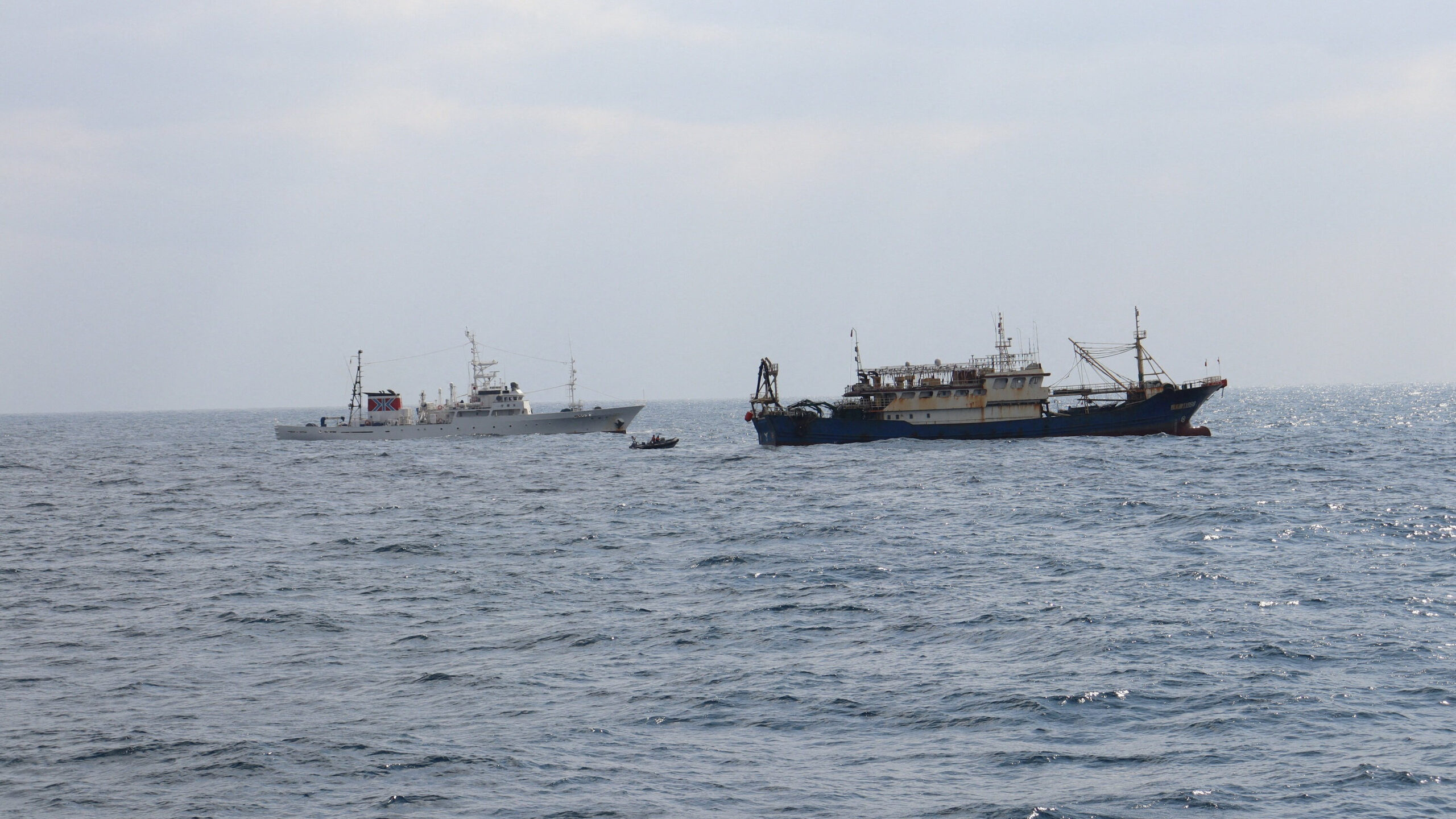
Japanese authorities have detained a Chinese fishing vessel that attempted to evade inspection in waters off Nagasaki Prefecture, marking the first seizure of a Chinese boat by Japan’s fisheries agency since 2022.
The incident occurred in Japan’s exclusive economic zone in the southwestern part of the country on Thursday, and the vessel’s captain, a 47-year-old Chinese national, was arrested, officials said.
“The vessel’s captain was ordered to stop for an inspection by a fisheries inspector, but the vessel failed to comply and fled,” the Fisheries Agency said in a statement.
The boat carried 11 people in total, and Japanese media described it as a “tiger net fishing boat” capable of operating with a high catch capacity.
Authorities said the seizure underscores Japan’s commitment to enforcing its maritime fishing regulations.
“We will continue to take resolute action in our enforcement activities to prevent and deter illegal fishing operations by foreign vessels,” Chief Cabinet Secretary Minoru Kihara said on Friday.
Japan’s move comes amid rising tensions with Beijing over regional security and diplomatic disputes, though China has not yet issued an official response to the latest seizure.
The incident takes place against a backdrop of strained bilateral relations that intensified last November, when Japanese Prime Minister Sanae Takaichi said Tokyo could consider military intervention if China attempted to take Taiwan by force.
China maintains that Taiwan is part of its territory, a position it has asserted repeatedly, and has not ruled out the use of force to achieve what it terms “reunification.”
Beijing characterized Takaichi’s comments as “egregious” and summoned Tokyo’s ambassador, warning Chinese citizens to reconsider travel and study in Japan.
Read Also: Japanese Shares Surge Following Takaichi’s Major Win
The diplomatic tensions had immediate economic repercussions, including a sharp decline in Chinese tourism to Japan and negative impacts on Japanese companies involved in retail and hospitality sectors.
As the dispute deepened in the latter part of 2025, China repeatedly urged Takaichi to retract her remarks and cautioned Tokyo against “playing with fire.” Cultural exchanges were also affected.
Japanese artists touring China had performances canceled, and the release of several Japanese films was postponed. Japan’s two giant pandas, previously hosted for exhibition purposes, were returned to China last month.
The maritime seizure highlights ongoing disputes over fishing rights and maritime enforcement in the East China Sea, where Japan and China both assert jurisdiction over rich fishing grounds.
Japan’s exclusive economic zone, defined under the United Nations Convention on the Law of the Sea, extends 200 nautical miles from its coastline, and the country routinely conducts inspections to prevent illegal, unreported, and unregulated fishing.
Japanese authorities did not specify the exact location within Nagasaki Prefecture where the vessel was intercepted, citing security and operational considerations.
Officials confirmed that standard enforcement procedures were followed, including warnings issued by fisheries inspectors before boarding.
The captain is being held pending further investigation and potential prosecution under Japanese fisheries law, which can carry fines, vessel confiscation, and other penalties.
Analysts say that although the seizure involves a routine fisheries enforcement action, it occurs at a sensitive time in Sino-Japanese relations, which have been shaped by historical grievances, territorial disputes, and competing strategic interests in the region.
Japan has repeatedly emphasized that enforcement operations are conducted strictly under domestic law and international maritime norms, while China has sometimes criticized such actions as interference in its fishing activities.
In recent years, Japanese authorities have occasionally detained foreign vessels for similar violations, but the last reported seizure of a Chinese vessel took place in 2022.
Read Also: Japanese Student Suicides Reach Record High In 2025
According to the Fisheries Agency, the arrested vessel was capable of large-scale operations, making enforcement against illegal fishing a high priority.
Inspectors are also monitoring the broader area for additional vessels that may be operating without proper authorization.
Officials in Japan have stressed that maritime security and fisheries management are separate from broader geopolitical tensions, though such incidents often draw attention in diplomatic circles.
The government has underscored that legal enforcement actions are taken to protect natural resources and ensure compliance with national regulations, rather than to provoke international disputes.
The detained captain faces investigation by local prosecutors, and Japanese authorities are expected to issue a formal statement on the vessel’s status and potential penalties in the coming days.
Meanwhile, diplomatic officials from both Tokyo and Beijing have yet to publicly comment on whether the seizure will affect ongoing bilateral communications or negotiations over fisheries management and regional security.
Japanese authorities have reiterated their position that enforcement actions in the exclusive economic zone are routine but firm.
The Fisheries Agency said it will continue monitoring foreign vessels and conducting inspections to prevent illegal activities, signaling that similar operations could occur if other vessels do not comply with orders to stop.