
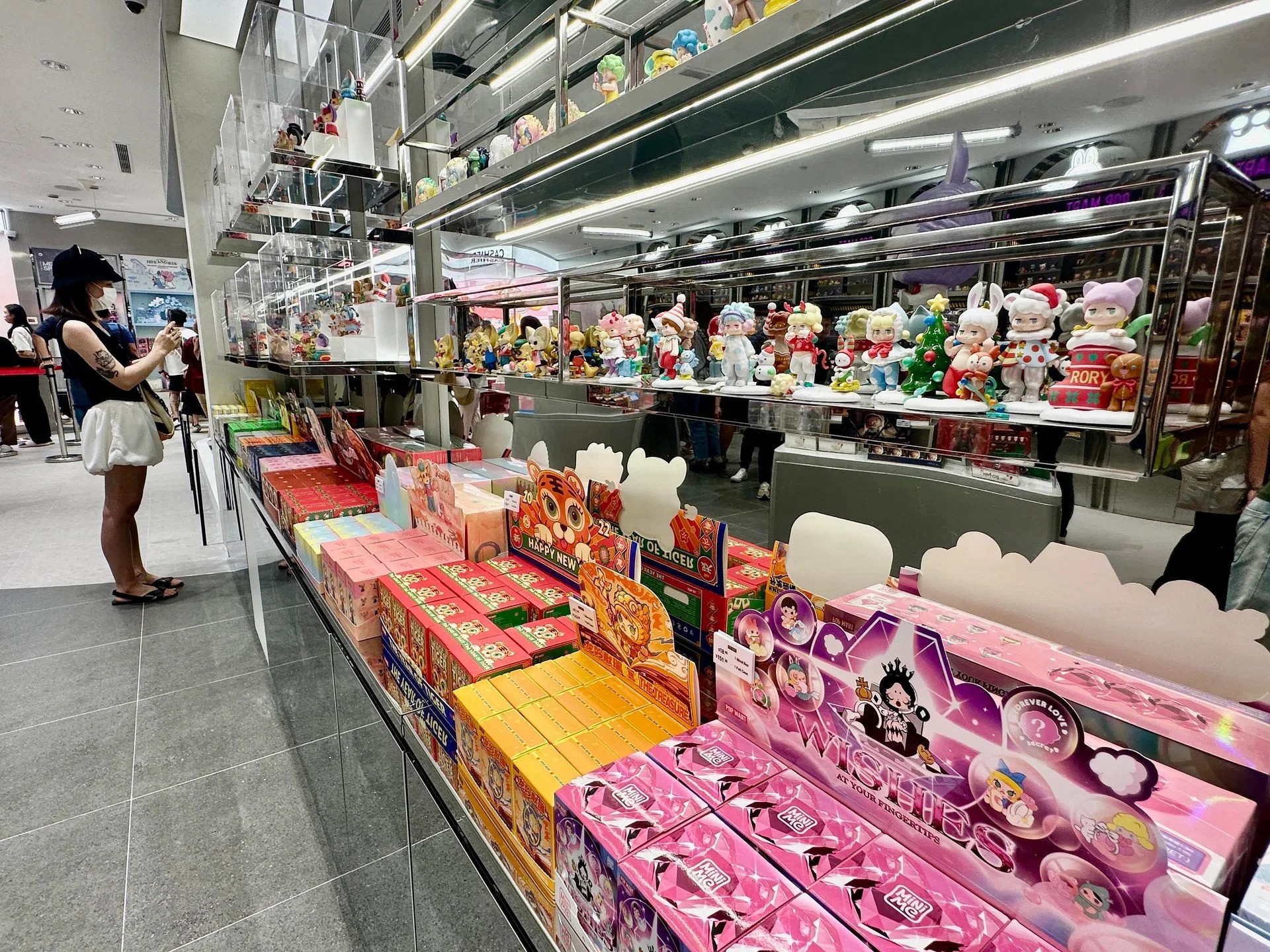
Singapore is drafting legislation to regulate the sale of blind box products, the government announced Thursday, positioning the city-state among the first jurisdictions in the world to formally address the gambling-like mechanics that have made mystery collectibles one of retail’s fastest-growing and most controversial categories.
Home Affairs Minister K. Shanmugam, who also serves as Coordinating Minister for National Security, confirmed in a written parliamentary reply on February 12 that the Ministry of Home Affairs and the Gambling Regulatory Authority had studied the issue and decided to introduce regulations stipulating the conditions under which blind boxes may be offered, to better manage gambling inducement risks.
The announcement followed a parliamentary question from Workers’ Party Member of Parliament Dennis Tan, who asked whether the government intended to mandate standardized disclosure of odds and probability ranges for blind box and gacha products sold in Singapore.
“The regulations are being drafted,” Shanmugam said. “The member’s suggestion to have mandatory and standardised odds and probability disclosure will be among the points that will be considered for the regulations.”
Within days of the announcement, two key bills were introduced for First Reading in Parliament, the Gambling Control Bill and the Gambling Regulatory Authority of Singapore Bill, marking the formal transition from policy planning to legislative process. A public consultation period is expected to follow, giving industry participants and consumer advocates an opportunity to respond to the draft provisions before finalization.
Blind boxes are sealed retail packages containing mystery figurines or collectibles from a branded series, with buyers unable to identify their specific item before purchase. The appeal lies partly in the randomness itself, which manufacturers and marketers have long exploited by making certain figures rare or exclusive, creating secondary markets where sought-after items trade at multiples of their retail price.
Read Also: Singapore Driver Arrested in Fatal Chinatown Crash
The phenomenon has generated enormous commercial success for toy makers. Pop Mart International, the dominant player in the segment, has opened at least six outlets across Singapore from the Orchard shopping district to suburban malls, and hosts an annual exhibition in the country that draws hundreds of visitors. Premium tickets to the 2025 event sold for as much as S$208.
Digital variants of the same mechanic, commonly called gacha systems in mobile games and online applications, similarly rely on randomized rewards to drive repeated spending, and have been regulated in varying degrees across several Asian jurisdictions.
Consumer and mental health advocates have warned for several years that blind box purchases share structural characteristics with gambling, particularly in their effect on younger buyers whose neurological development makes them more vulnerable to reward-seeking compulsion.
Shawn Soh, lead counsellor at the counselling and intervention department of social service agency TOUCH Community Services, said the mechanics of blind box purchases could rapidly escalate into compulsive behavior. “The increasing normalisation of chance-based games and activities like blind box purchases poses a significant concern, especially for children and youths. These purchases introduce the thrill of uncertainty and the potential for reward, which can quickly escalate into compulsive behaviour,” he said.
Soh warned that the neurological response triggered by anticipation and surprise was particularly powerful and potentially habit-forming. “The dopamine hit involved in blind boxes can trigger a powerful reward system in the brain, which can be highly addictive. Failing to get that one rare item can also trigger anxiety and depression.”
Read Also: Nipah Virus Screening In Asia Intensifies After India Cases
Singapore’s existing regulatory architecture already has a mechanism that could encompass blind box products. Under the Gambling Control Act, certain lower-risk gambling services such as lucky draws may operate under a class licence regime, which does not require a formal application to the Gambling Regulatory Authority. The authority has indicated that conditions specific to mystery box products will be published once the regulatory framework is finalized.
The move reflects broader international concern about the marketing strategies deployed by the blind box industry. Several countries have introduced or are considering disclosure requirements, age restrictions, or outright bans on certain formats. China, the largest market for such products and the home of industry leader Pop Mart, introduced guidance in 2021 requiring sellers to disclose the probability of receiving specific items and prohibiting sales to children under eight.
Consumer advocates and policymakers in multiple jurisdictions have raised concerns that the scheme resembles gambling, particularly where buyers pay for a chance to obtain higher-value or rare items, with no guarantee of what they will receive in return for their money.
Singapore has historically maintained a tightly regulated gambling environment. The city-state operates only two licensed casinos, both opened in 2010, and applies strict controls on advertising, entry levies, and problem gambling support services. Extending that regulatory philosophy to blind box products would align with the government’s established approach to activities that generate psychological risk alongside commercial activity.
No timeline has been provided for when the draft regulations will be released for consultation or enacted into law. The Gambling Regulatory Authority said further details on the class licence conditions for mystery boxes would be provided at a later date.