
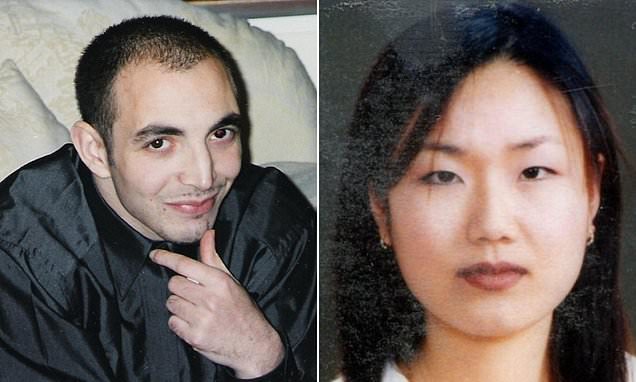
More than two decades after a South Korean student was fatally stabbed on a street in Bournemouth, fresh scrutiny is converging on the conduct of the original investigation. New findings indicate that critical elements of the prosecution’s case against Omar Benguit may have been constructed on testimony police knew to be unreliable—raising serious questions about the safety of his conviction and the integrity of the process that led to it.
Benguit has spent 23 years in prison for the 2002 murder of Jong-Ok Shin, a young South Korean student known as Oki, who was attacked while walking home from a nightclub in the seaside town. Her death reverberated beyond Dorset. Bournemouth’s economy relies heavily on international students, and the killing generated diplomatic sensitivity, with South Korean authorities pressing for swift justice.
The case that ultimately secured Benguit’s conviction in 2005—at a third trial after two juries failed to reach verdicts—rested heavily on witness testimony. There was no CCTV footage or forensic evidence directly linking him to the scene. Instead, prosecutors relied on accounts from individuals, many of them drug users, who claimed to have seen Benguit before and after the attack.
The most consequential testimony came from a woman identified for legal reasons as BB. She told the court she had been driving Benguit and two other men on the night of the murder. According to her account, she stopped the car after they passed Shin. The men exited the vehicle and attempted to persuade the student to attend a party. When she refused, BB alleged, Benguit stabbed her.
That narrative placed Benguit at the scene and attributed to him the fatal act. Yet it was not without complications. BB had a documented history of making false allegations. Her version of events contradicted Shin’s dying account, in which she reportedly described being attacked by a single masked assailant. BB also changed her story over time. In earlier statements, she accused two other men before naming Benguit in a third interview.
New evidence now suggests police were aware of contradictions that undercut BB’s claims. Investigators reviewed CCTV footage during the original inquiry that failed to corroborate key elements of her timeline.
In her final statement, BB said she had stopped at a BP garage on Charminster Road before picking up Benguit and the others. A review of CCTV cameras from the area reportedly found no footage of her, the car, or the men she described. Similarly, BB claimed she drove the group to what was then known locally as a crack house approximately a mile away after the stabbing so they could clean up. A camera positioned across the road captured other individuals entering and leaving that property. Yet no footage showed BB’s vehicle or the men she implicated.
Despite these apparent inconsistencies, her testimony remained central to the prosecution’s case. Supporting witnesses reinforced parts of her narrative by describing Benguit’s alleged movements before and after the crime.
Thirteen of those witnesses have since said police pressured them to embellish statements or give false evidence in court. Two additional individuals have now come forward with similar claims, bringing the total number of key prosecution witnesses whose accounts have been undermined or discredited to fifteen.
Read Also: Warner Bros Considers Reviving Paramount Acquisition Talks
Leanne, who was 17 at the time of the investigation, previously admitted she lied during the trial. She has described being placed in the back of a police car and presented with a pre-written statement. According to her account, officers altered sections as they questioned her, shaping the document into what she says was largely their language rather than her own recollection.
“I was a kid,” she recalled. “I was petrified.” She has maintained that the final statement bore little resemblance to her independent memory of events.
Other witnesses describe similar experiences. Police initially interviewed five individuals who had been at the crack house on the night of the killing. At first, they all denied seeing Benguit there. Months later, when re-interviewed, each changed their account in a consistent way. All five said they had seen Benguit that night and that he was covered in blood.
That revised testimony proved pivotal at trial.
One of those witnesses had already admitted lying in court. Two more have now said they were pressured to adjust their statements. Andi Miller, one of the crack house witnesses, has alleged that police leveraged knowledge of numerous thefts he had committed—offences he says were never prosecuted—to secure his cooperation.
“They had me bang to rights on jobs,” he said. He has suggested that the implicit threat of charges left him feeling compelled to provide a version of events that satisfied investigators.
Family members and associates of the remaining two crack house witnesses have told reporters the couple have privately admitted to giving false testimony.
The cumulative effect is stark. The prosecution’s case depended almost entirely on witness accounts. With no forensic or CCTV evidence tying Benguit to the murder scene, the reliability of those testimonies was critical. If the statements were shaped under pressure—or if exculpatory material was not fully disclosed—the foundation of the conviction becomes fragile.
Phone records have also emerged suggesting Benguit may have had an alibi that contradicted BB’s account. It is alleged that this material was not properly advanced during the trial process.
Retired detective chief inspector Brian Murphy, who participated in more than 200 murder investigations, reviewed the new material and called for scrutiny by the Independent Office for Police Conduct. In his assessment, the conviction appears unsafe and warrants urgent review.
Benguit’s barrister, Des Jenson, has framed the implications in stark legal terms. If officers coerced witnesses into fabricating or altering testimony, he said, it would amount to manufacturing evidence and perverting the course of justice.
Dorset Police have defended the original inquiry, describing it as “thorough, detailed and very complex.” They have not directly addressed allegations that officers deliberately framed Benguit.
Read Also: Coney Island Gets $1M Business District Under Mamdani Plan
The broader context underscores the stakes. The killing of an international student in a town dependent on global enrolment generated intense public and diplomatic pressure. Rapid resolution would have been viewed as essential to restoring confidence. Yet the justice system’s obligation extends beyond securing convictions; it rests on safeguarding fairness and evidentiary integrity, even under scrutiny.
For Benguit, who had a history of drug use and prior knife offences, the profile may have made him an expedient suspect. For critics of the investigation, that background risked shaping perceptions before facts were conclusively established.
More than twenty years on, the case stands at a crossroads. The emerging accounts do not in themselves overturn a conviction. They do, however, raise substantive concerns about disclosure, witness handling, and investigative conduct.
In jurisdictions where rule of law is foundational, the durability of justice depends not merely on verdicts but on the processes that produce them. If those processes were compromised, correction becomes not an act of charity, but a constitutional necessity.
As calls mount for an independent review, the central question is no longer confined to what happened on a Bournemouth street in 2002. It is whether the system that delivered judgment in 2005 can withstand the evidentiary challenges now laid before it.