
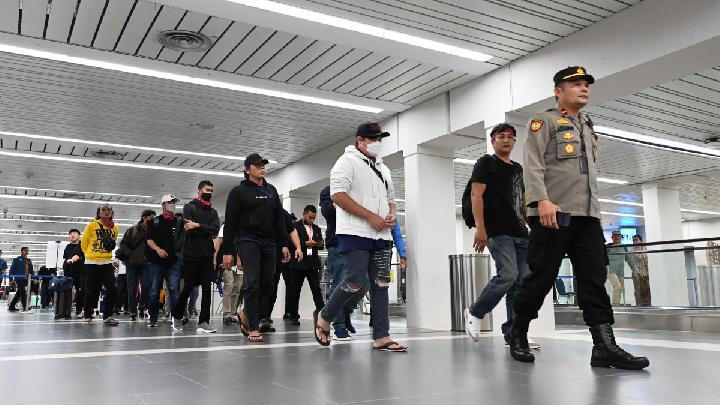
JAKARTA/PHNOM PENH — Indonesia has begun repatriating nearly 3,600 of its citizens from Cambodia following a crackdown on online gambling and scam operations, the Indonesian embassy in Phnom Penh said.
The return process, organized in phases, is scheduled to continue until March 4. The first group of 743 Indonesians was due to depart on Sunday.
Since January 30, around 225 Indonesians had returned independently, the embassy noted. All repatriations require citizens to register with the embassy and undergo preliminary assessments to determine whether they are victims of human trafficking.
As of Sunday, embassy officials reported that none of the 3,595 Indonesians assessed had been identified as trafficking victims.
The evaluations employed tools developed by Indonesia’s Ministry of Foreign Affairs in partnership with international organizations, including the International Organisation for Migration (IOM). Embassy officials said the process also adhered to national human trafficking regulations and laws.
Many of the Indonesians who presented themselves at the embassy were found to be without valid passports and had received fines from Cambodian immigration authorities, the embassy said.
Read Also: Indonesia Prepares Troop For Possible Gaza Deployment
Indonesia’s ambassador to Cambodia, Santo Darmosaumarto, told the Jakarta Globe that all returnees would undergo additional screening upon arrival in Jakarta. “The embassy will ensure that once they arrive in Jakarta, they will be subject to follow-up examinations by the relevant authorities,” he said.
Individuals linked to online scam activities are expected to face legal proceedings. The embassy has intensified coordination with Indonesian law enforcement to ensure that any returnees with alleged criminal involvement are promptly investigated.
Santo said embassy teams are continuing to collect data, verify legal records, assess cases, and issue travel documents to facilitate the repatriation process.
On February 5, Rinardi, director-general for protection at the Indonesian Migrant Workers Protection Agency, said the government plans to lease several planes to accelerate the return effort, rather than relying solely on commercial flights. “These chartered planes will be used specifically to bring them home,” he said.
The Indonesian repatriations come in the wake of a wider Cambodian crackdown targeting regional cybercrime networks.
Between January 16 and 20, more than 1,400 Indonesians reportedly left cyberscam operations in Cambodia and sought assistance from their embassy in Phnom Penh.
Similar enforcement actions have affected other foreign nationals. Seventy-three South Koreans were repatriated after being accused of participating in online scams that allegedly defrauded more than 800 compatriots of roughly US$33 million.
Cambodian authorities have deported approximately 3,375 foreigners in a week-long operation against online scams since February 1, according to the General Department of Immigration in Phnom Penh, as reported by Camboja News. Police detained a total of 3,575 individuals from nine nationalities, including citizens of China, South Korea, Japan, the United States, the Philippines, Pakistan, India, and Russia.
The crackdown forms part of a broader trend. In the past eight months, Cambodia’s justice ministry reported that 14,041 foreign nationals were deported.
Meanwhile, the Commission for Combating Online Scams in Phnom Penh said about 130,000 people left the country between January and early February 2026.
Indonesian authorities emphasized that the repatriation process aims to distinguish between individuals who may have been coerced into criminal networks and those who voluntarily participated.
Read Also: Indonesia West Java Landslide Death Toll Rises To 49
Embassy officials said preliminary assessments combine interviews, documentation checks, and cross-referencing with international databases to ensure that each case is evaluated according to national and international standards.
While most returnees were found not to be trafficking victims, the embassy noted that legal accountability remains under review for those allegedly involved in online scams. Authorities warned that individuals linked to illegal activity could face prosecution upon returning to Indonesia, including fines or criminal charges.
The phased repatriation is intended to manage the logistics of returning thousands of citizens while maintaining safety and legal oversight.
Embassy teams are responsible for issuing travel documents, arranging flights, and coordinating with Indonesian immigration and law enforcement agencies to complete follow-up procedures once returnees arrive in Jakarta.
Santo Darmosaumarto emphasized that the Indonesian government is committed to ensuring that citizens return safely while upholding the rule of law.
The embassy continues to maintain a helpline and on-site support for Indonesians in Cambodia seeking repatriation, including those without valid travel documents or who require verification for legal matters.
Cambodian authorities have attributed the surge in deportations to the proliferation of online gambling and scam operations targeting both regional and international victims.
The government’s measures have included large-scale arrests, immigration enforcement, and coordination with foreign embassies to repatriate affected individuals.
Indonesian officials have underscored that the repatriation process is ongoing and will continue in stages until the full cohort of nearly 3,600 citizens has returned.
Each returnee will undergo follow-up examinations and legal assessment upon arrival, according to the embassy, ensuring compliance with both Indonesian law and international human trafficking regulations.