
Afghanistan’s Taliban government said on Tuesday that it had released three Pakistani soldiers captured during border clashes in October, in a move mediated by Saudi Arabia amid strained ties and closure between the two neighbours.
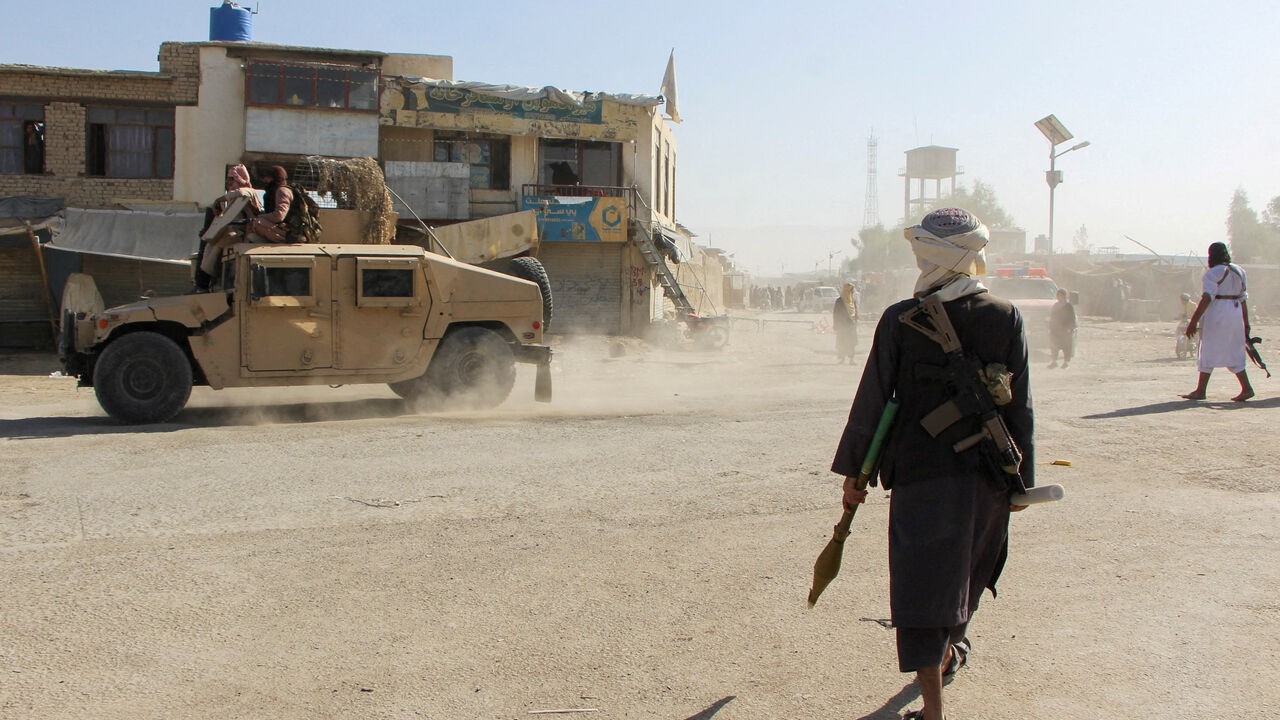
The Taliban said the soldiers were captured on Oct. 12 during fighting along the Afghanistan-Pakistan border. The three were handed over to a Saudi delegation, Taliban spokesman Zabihullah Mujahid said in a statement. Officials said the soldiers, captured during clashes last October, were handed over to a Saudi delegation visiting Kabul earlier this week. The release comes months after the worst cross-border fighting since the Taliban returned to power in 2021. Dozens were killed in October clashes, after which both sides agreed to a fragile ceasefire but failed to secure a longer-term political understanding. Satellite imagery of a Taliban military compound in Spin Boldak showed that it had suffered significant damage during the clashes. Heavy fighting resumed on 15 October, with both sides accusing the other of initiating the violence. The fiercest fighting occurred around Spin Boldak, where civilian casualties were reported.
The decision was taken “in respect of the holy month of Ramadan, the month of divine mercy and forgiveness,” and in response to what the Taliban described as a request from “the brotherly country of Saudi Arabia,” Mujahid said. He said the release was in line with the Taliban government’s policy of maintaining “positive relations with all countries” and came ahead of the Muslim holy month of Ramadan.
From 11 to 19 October, a large-scale conflict erupted between Afghan and Pakistani troops on the border after Pakistani airstrikes on TTP targets in Kabul triggered Taliban retaliation. This conflict was the largest since the Taliban came to power in 2021. After mediation by Qatar, Turkey and Saudi Arabia, the two sides announced a ceasefire ten days later. As per the agreement, the Afghan government agreed to cease support for groups that carry out attacks against Pakistan, notably the Pakistani Taliban, while both sides would “refrain from targeting each other’s security forces, civilians, or critical infrastructure.”
Pakistan later announced “precision” airstrikes inside Afghanistan, which Afghan locals and media said hit Kabul and military sites in Kandahar, while the Taliban attributed the Kabul explosion to an oil-tanker blast. The Taliban accused Pakistan of targeting civilians in Paktika, while Pakistan rebutted that the strikes targeted militants belonging to the Hafiz Gul Bahadur Group, a faction of the TTP.
Read Also: Pakistan Wedding Suicide Bombing Kills Seven
On 19 October, Qatar announced that both the Afghan and Pakistani governments agreed to a ceasefire after extensive talks in Doha, with mediation from Saudi Arabia, Qatar and Turkey. After mediation by Qatar, Turkey and Saudi Arabia, the two sides announced a ceasefire ten days later. On 29 October, after the first round of peace talks held in Istanbul failed, Pakistan threatened to ‘obliterate’ the ruling Taliban government. Pakistan’s Information Minister Attaullah Tarar stated that the dialogue “failed to bring about any workable solution,” despite mediation by both Turkey and Qatar. Pakistani Defence Minister Khawaja Asif stated that Afghan negotiators backpaddled on an agreement. An Afghan official said that Pakistan made “unreasonable demands” during the talks and did not address Afghan concerns regarding alleged cross-border airspace violations.
It also referred to one round of last year’s negotiations between the Taliban and Pakistani delegation in Saudi Arabia. Last year, Taliban and Pakistani representatives held two rounds of talks in Istanbul, one in Doha and another in Saudi Arabia. The first round in Doha resulted in a temporary cease-fire, but subsequent negotiations failed to produce a lasting agreement. Since then, the border crossings between the two countries remain shut to transit and trade, leaving heavy financial losses to investors. Key border crossings between Afghanistan and Pakistan have been periodically shut amid the tensions, disrupting trade and movement across the 2,600-kilometer frontier.
Read Also: Afghanistan: Death Toll Soars As Flash Floods Kill Over Seven
Pakistan accuses Afghanistan’s Taliban rulers of harbouring militants who stage attacks inside Pakistan, a charge Kabul denies. Pakistan has repeatedly called on the Taliban to take action against Tehrik-e-Taliban Pakistan, the Pakistani Taliban, whose militants Islamabad says operate from Afghanistan’s territory.
The Taliban deny that the group has a presence in Afghanistan. A United Nations monitoring team, however, has reported that Tehrik-e-Taliban Pakistan has about 6,000 fighters based in the country.
TTP has been responsible for some of the most devastating attacks in Pakistan, targeting churches, schools, and notable figures like Malala Yousafzai, who survived an assassination attempt in 2012 for advocating women’s education against Taliban restrictions. Following the Taliban’s takeover in Afghanistan in 2021, TTP has become more aggressive, as its leaders and fighters are based in Afghanistan. After ending a cease-fire with the Pakistani government in late 2022, TTP has intensified its attacks, causing casualties among Pakistani soldiers and police.
In response to the death of three local cricketers in Paktika Province, the Afghanistan Cricket Board (ACB) withdrew from a T20I tri-nation series between the Afghanistan, Pakistan, and Sri Lanka national cricket teams which was set to be hosted in Pakistan. Despite Afghanistan’s withdrawal, the Pakistan Cricket Board (PCB) announced that Zimbabwe would replace Afghanistan, simply stating that it had been notified of “Afghanistan’s inability” to partake in the series.
Pakistan’s Foreign Ministry did not immediately respond to a request for comment on the soldiers’ release. No timeline has been provided for the reopening of border crossings or for further diplomatic talks between the two governments.