
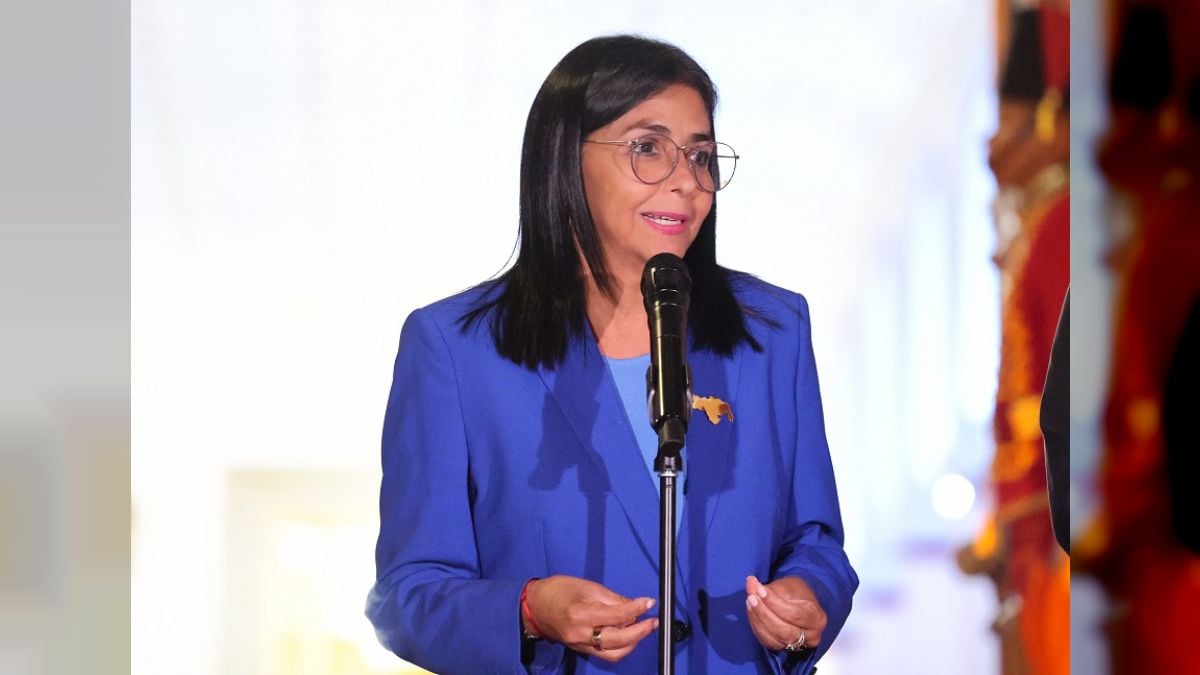
Spain’s foreign minister pressed the European Union on Friday to lift sanctions against Venezuela’s interim president Delcy Rodríguez, arguing that the passage of a limited amnesty bill by the country’s National Assembly and the release of hundreds of people classed as political prisoners represented sufficient movement to warrant a diplomatic signal from Brussels, a call the EU Commission declined to endorse directly but did not dismiss.
The appeal by Foreign Minister José Manuel Albares, made to reporters in Barcelona, came one day after the Venezuelan legislature passed the amnesty law unanimously and Rodríguez signed it into immediate effect. The legislation grants clemency to individuals jailed in connection with political protests and episodes of civil conflict between 2002 and 2025, including demonstrations that followed disputed elections and the failed coup attempt against President Hugo Chávez in 2002. Courts are required to review each case within a legally defined period before amnesty is granted, introducing a judicial filter that civil society organisations say could limit and delay the law’s practical reach.
“Sanctions are never an end in themselves,” Albares said. “They are a means to achieve ends so that this broad, peaceful and democratic dialogue can take place.” He said the EU should “send a signal that Venezuela is heading down the right path in this new phase.”
The EU Commission declined to respond directly to his proposal. Spokesperson Anouar El Anouni said only that Brussels stood “ready to use every tool at our disposal in our toolbox to support a transition towards democracy in Venezuela,” phrasing that neither accepted nor rejected Madrid’s position.
Rodríguez assumed the presidency not through an election or a constitutional succession following natural causes, but after United States military forces struck Caracas in a nighttime raid on January 3, seized then-President Nicolás Maduro and his wife Cilia Flores, and transported them to New York, where both were indicted on narco-terrorism, cocaine importation, and weapons charges. Venezuela’s Supreme Court ordered Rodríguez, who had served as Maduro’s vice president since 2018, to assume the presidency in an acting capacity on the same night. The assault lasted less than 30 minutes and drew immediate international legal objections, with UN officials and international law experts stating that the operation violated the UN Charter and Venezuela’s sovereignty. Maduro and Flores have pleaded not guilty.
Rodríguez’s position since then has been one of profound geopolitical delicacy. She has been simultaneously navigating the expectations of a Trump administration that carried out the raid and immediately began laying out demands, including that Venezuela cut ties with China, Russia, Iran, and Cuba, and prioritise US companies for oil production contracts, while managing the loyalties of a domestic political class whose ideological formation was built on anti-American resistance.
Read Also: IMF: Venezuela Economy, Humanitarian State ‘Quite Fragile’
In late January she told oil workers in Puerto La Cruz: “Enough already of Washington’s orders over politicians in Venezuela,” her most pointed public rebuke of US pressure yet, delivered to a domestic audience while she was still navigating formal normalisation with the same administration.
As of February 17, Venezuelan authorities confirmed that 444 political prisoners had been released since the announcement of the prisoner release programme, though the NGO Foro Penal said more than 600 remained detained. The Drug Enforcement Administration, however, had previously designated Rodríguez as a “priority target” in 2022 on suspicion of having significant impact on drug trafficking, a designation that complicates any clean European narrative of democratic transition under her leadership.
Human rights organisations have been consistent in their assessment of the amnesty law. While welcoming the measure in principle, groups including Foro Penal and others working in Venezuela have said it falls short of reaching the full population of political prisoners, excludes senior opposition figures under various legal provisions, and introduces a judicial review mechanism that could delay or prevent release for many individuals even where the law technically applies.
Some opposition representatives who voted for the text acknowledged publicly that not all sectors would be satisfied with it. Caracas maintains that those in detention were convicted of criminal rather than political offences, a position it has maintained consistently throughout successive administrations.
The EU sanctions that Spain is now seeking to ease were introduced in two phases. An arms embargo and ban on surveillance equipment were imposed in 2017 following regional elections that Brussels said were marred by irregularities. In 2018, targeted economic sanctions were applied against eleven senior officials, including Rodríguez in her capacity as Maduro’s vice president, on grounds that they bore responsibility for human rights violations and the undermining of democratic institutions and the rule of law. Lifting those sanctions would require a consensus decision among EU member states, a procedural bar that means Spain cannot act unilaterally and that historically sceptical northern European governments would need to be brought along.
Read Also: Advocacy Chief Reports 104 Venezuelan Dissidents Released
Families of prisoners expressed cautious hope, while civil society groups warned that the law’s exclusions could leave key opposition figures unaffected and fuel continued grievance among Venezuelans critical of the government. A parliamentary commission is to be established to oversee implementation, though no deadline or enforcement mechanism for that body was specified in the legislation.
No EU response to Spain’s specific proposal was expected before a scheduled review of sanctions policy in the coming weeks. Whether the broader membership is prepared to move at the pace Madrid is proposing remains to be determined.