
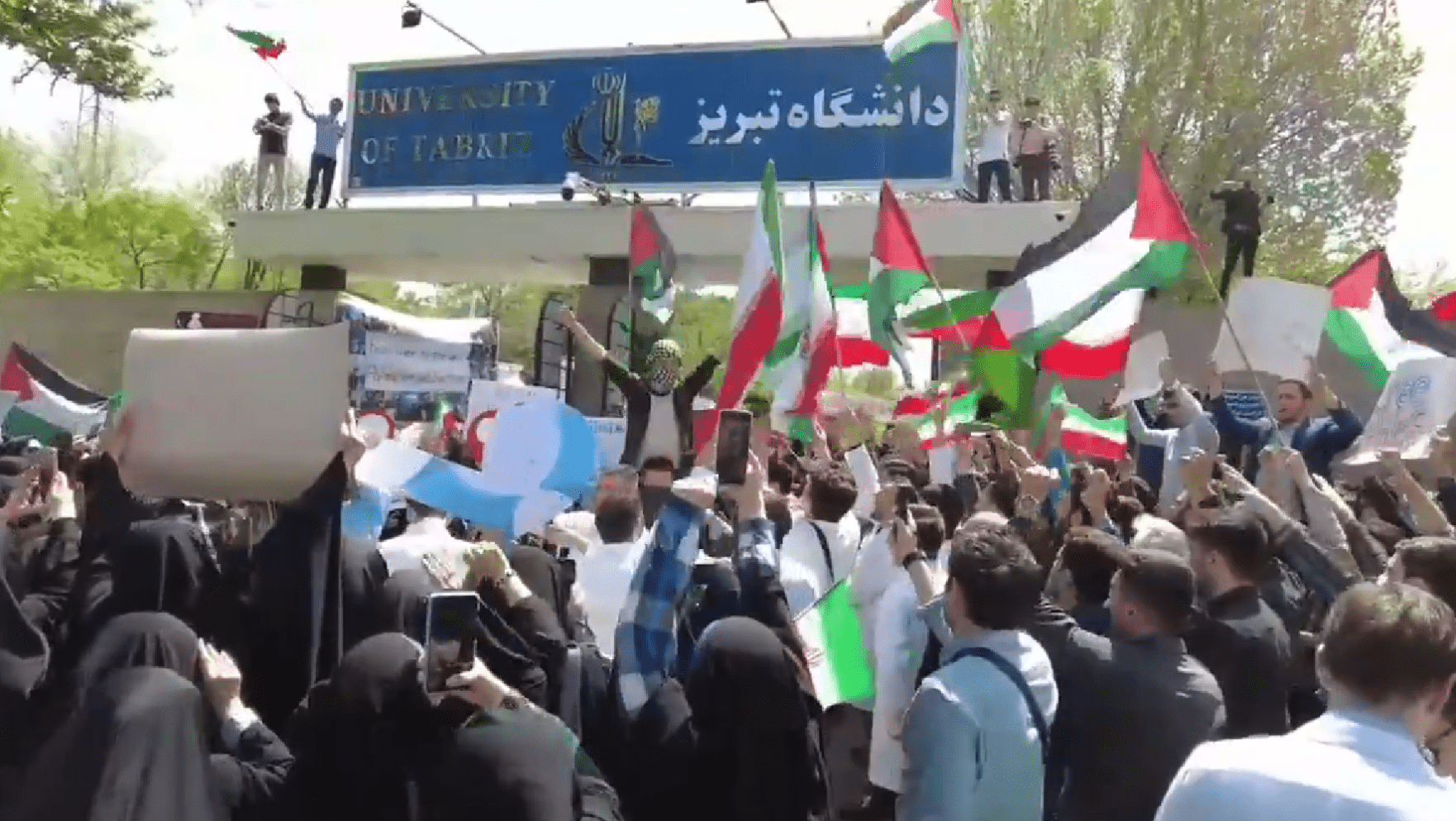
Students at various Iranian universities staged anti-government protests on Saturday, which represented the first mass protests since a deadly crackdown by security forces last month.
Footage and images from various campuses in Tehran and other Iranian cities confirm that protests took place, with some clashes between protesters and supporters of the government.
At Sharif University of Technology in Tehran, protesters were observed marching through campus while chanting anti-government slogans such as “death to the dictator,” which referred to Iran’s Supreme Leader Ayatollah Ali Khamenei.
Video footage from the BBC confirmed clashes between the student protesters and pro-government groups in the vicinity.
There were similar reports of clashes at Amir Kabir University of Technology, where students also chanted anti-government slogans, as well as at Shahid Beheshti University, where images confirmed a sit-in.
In Mashhad, Iran’s second-largest city in the northeastern part of the country, students were reportedly gathered on campus chanting slogans for “freedom” and encouraging others to demonstrate for their rights.
The authorities had not yet commented on whether there were any arrests made during the protests, which were organized to pay tribute to those who lost their lives in the mass protests in January.
The unrest that broke out last month, which began with economic complaints, has grown into a nationwide protest and is now the biggest anti-government movement since the 1979 Islamic Revolution.
Read Also: Iran Signals Deal Within Reach As US Military Pressure Mounts
At least 6,159 people were killed during this time, including 5,804 protesters, 92 children, and 214 government-affiliated individuals, according to the US-based Human Rights Activists News Agency (Hrana).
However, Iranian officials claimed that over 3,100 people had been killed, most of whom were security personnel or bystanders who were allegedly attacked by “rioters.”
The latest campus protests took place against the backdrop of increased tensions between Iran and the United States.
In the past few weeks, the United States has escalated its military presence in the region.
United States President Donald Trump has expressed his consideration of a limited attack on Iran, although he clarified that a final decision on whether to go ahead with a military strike would be made “over the next, probably, 10 days.”
In the earlier part of the week, officials from the United States and Iran held talks in Switzerland over Tehran’s nuclear program.
Both sides reported progress in their talks to limit Iran’s nuclear ambitions. The United States and its European allies have expressed fears that Iran could be developing nuclear weapons, although Iran has denied the allegations.
The Iranian government has reportedly been making preparations for different possibilities, including a military conflict with the United States.
Exiled opposition parties have called for foreign intervention, appealing to Trump to take action against the hardline government, although other opposition groups have opposed foreign military intervention.
Social media trends related to the protests represent a disputed narrative. There have been reports of disinformation campaigns by both pro-government and opposition groups, aiming to shape both local and international views of the protests.
Read Also: Iran Conducts Overnight Raids Amid Nationwide Protests
Authentic videos and images from campuses represent some of the most widely verified information available about the extent and nature of the protests.
Besides Tehran and Mashhad, there have been reports of protests at other universities in Iran, although information is still limited. There have been reports that organizers have called for more protests on Sunday.
The protests and sit-ins seem to be peaceful in some areas, with intermittent clashes between students and government supporters in the capital.
The larger context of the unrest is the extent of public discontent in Iran. There have been reports that economic pressures, such as rising inflation and unemployment, fueled the initial protests in January.
The subsequent repression by security forces, with the use of lethal force against protesters, has been widely condemned by human rights groups.
However, despite continued diplomatic efforts with regards to the nuclear programme, the Iranian government is currently facing a series of challenges on multiple fronts.
While the Iranian government appears to be addressing both internal instability and the threat of external conflict, information on these developments is currently limited.
The student-led protests that took place on Saturday are significant in that they mark a return to activism following the events of January.
The size and level of organization of the protests, as well as the fact that both pro- and anti-government groups were in attendance, indicate the complex nature of Iranian society.