
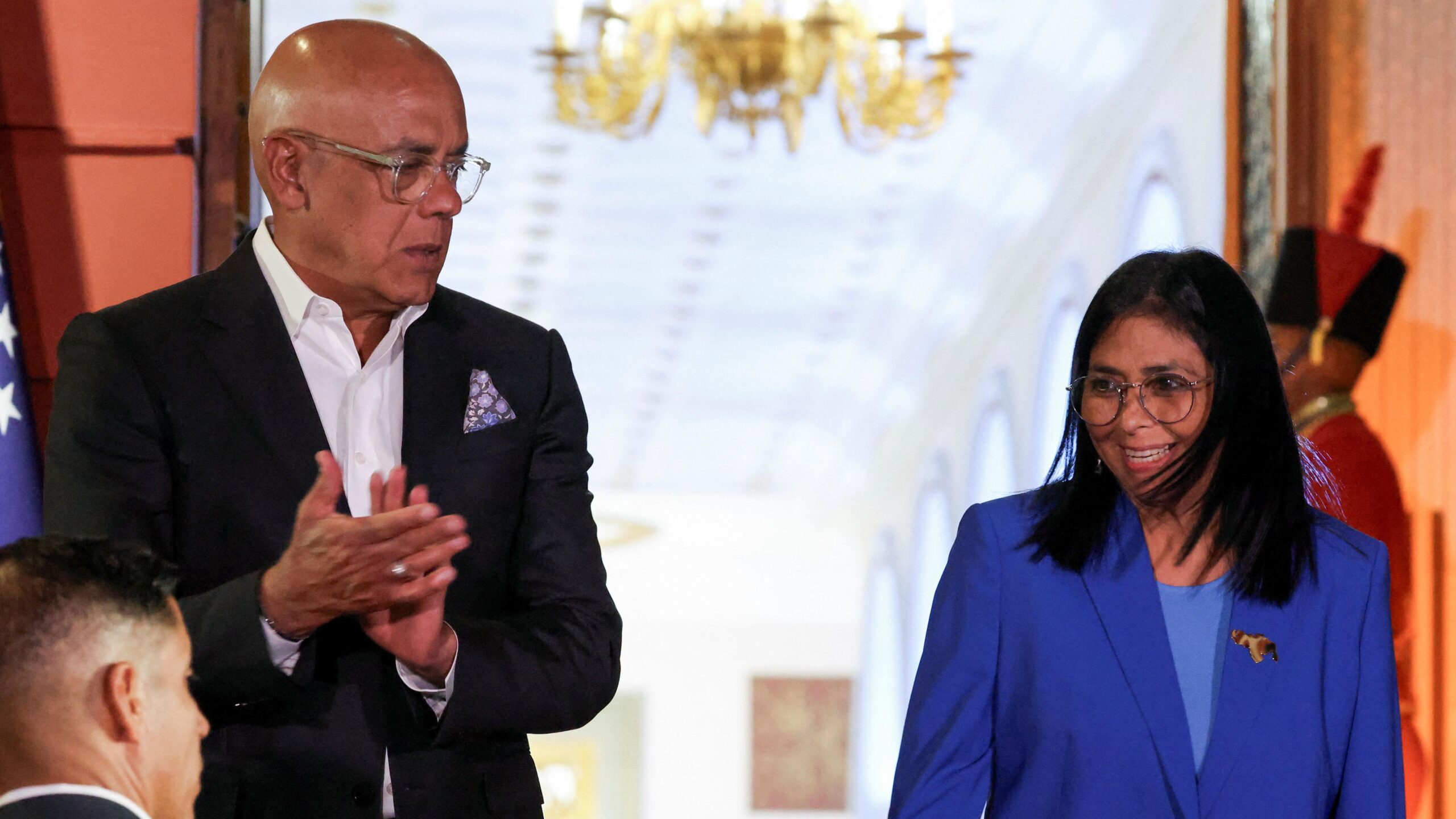
Over 1,500 inmates who have been detained for political reasons in Venezuela have applied for amnesty under the newly approved law, according to authorities on Saturday, as the Venezuelan government continues to implement the mass release of prisoners announced several weeks ago following the arrest of former Venezuelan President Nicolás Maduro by U.S. forces.
Venezuelan National Assembly President Jorge Rodríguez told reporters in Caracas that 1,557 applications had been received since the law came into effect earlier this week, with judicial authorities processing the applications “immediately.”
“Hundreds of inmates have already been released,” Rodríguez said, adding that the new law could benefit up to 11,000 inmates, including those serving sentences under alternative laws such as parole or house arrest.
The amnesty law, which was passed unanimously by lawmakers and signed into effect by interim President Delcy Rodríguez on Thursday, is a major shift in policy for the Venezuelan government, which had long denied claims by opposition forces and international bodies that political prisoners existed in the country.
According to government sources, the law aims to address cases that date back to periods of political unrest in Venezuela since 1999, involving activists, journalists, opposition politicians, and other people who have been arrested during protests or for alleged plots against the Venezuelan government.
People who have been convicted of serious crimes such as murder, drug trafficking, or security-related crimes are not eligible for amnesty.
The move comes on the heels of a sharp deterioration in Venezuela’s political crisis following a raid by U.S. forces in Caracas on Jan. 3, which led to the capture of Maduro.
Since then, the Venezuelan government has been urged by the U.S. to hasten the release of political prisoners, but the Venezuelan government has insisted that those arrested were tried and convicted for criminal acts, not political expression.
Maduro is currently detained in the United States together with his wife, Cilia Flores, awaiting trial for drug trafficking and weapons charges.
Read Also: Spain Urges EU To Ease Venezuela Sanctions After Amnesty Vote
He pleaded not guilty and claimed he was a “prisoner of war,” as quoted from his lawyers’ statements by international news outlets.
In the days that followed his arrest, Venezuelan authorities announced that they would release a “significant number” of inmates as a gesture of goodwill.
The new amnesty law codifies this by providing a legal framework through which inmates must apply to courts hearing their cases. Amnesty is not automatic, and courts have been given a specific time frame to decide on petitions.
Opposition leaders have praised the release of some prisoners while criticizing the exclusions contained in the law. One of the main beneficiaries is opposition politician Juan Pablo Guanipa, who had been arrested and whose case had attracted the attention of international observers.
Guanipa, a supporter of opposition leader María Corina Machado, had previously criticized the law for failing to include some categories of prisoners.
Lawyers and human rights organizations have pointed out that the law excludes people accused of encouraging foreign military intervention in Venezuela, a clause that critics believe may target some opposition leaders.
The government has not yet clarified whether Machado, a Nobel Peace Prize winner who is currently abroad, would be eligible for amnesty under the law.
Another disputed aspect of the law is related to military officers who participated in previous uprisings against the Maduro government. It is estimated that dozens of military officers are not eligible for the pardon, at least not under the current conditions.
Read Also: Rubio Senate Testimony on Venezuela Policy Draws New Scrutiny
Human rights organizations, such as the Venezuelan Foro Penal, have argued that by restricting the scope of the pardon, the government is undermining the very purpose of the law, which is national reconciliation.
The organizations have demanded that the pardon be extended to all prisoners who are being held for political reasons, irrespective of the charges leveled against them.
The Venezuelan government has dismissed these complaints, saying that the law is a “balance between reconciliation and legal accountability.” During the discussions on the proposed law, members of the ruling party made it clear that the law should not be seen as a means of providing impunity to those who committed crimes.
The amnesty also applies to persons who had been previously subjected to judicial restrictions instead of imprisonment, and courts are now able to remove such restrictions to grant full freedom, according to Rodríguez.
The government has not given a comprehensive timeline for the processing of all applications but stated that more releases are expected in a few weeks as courts consider applications.