
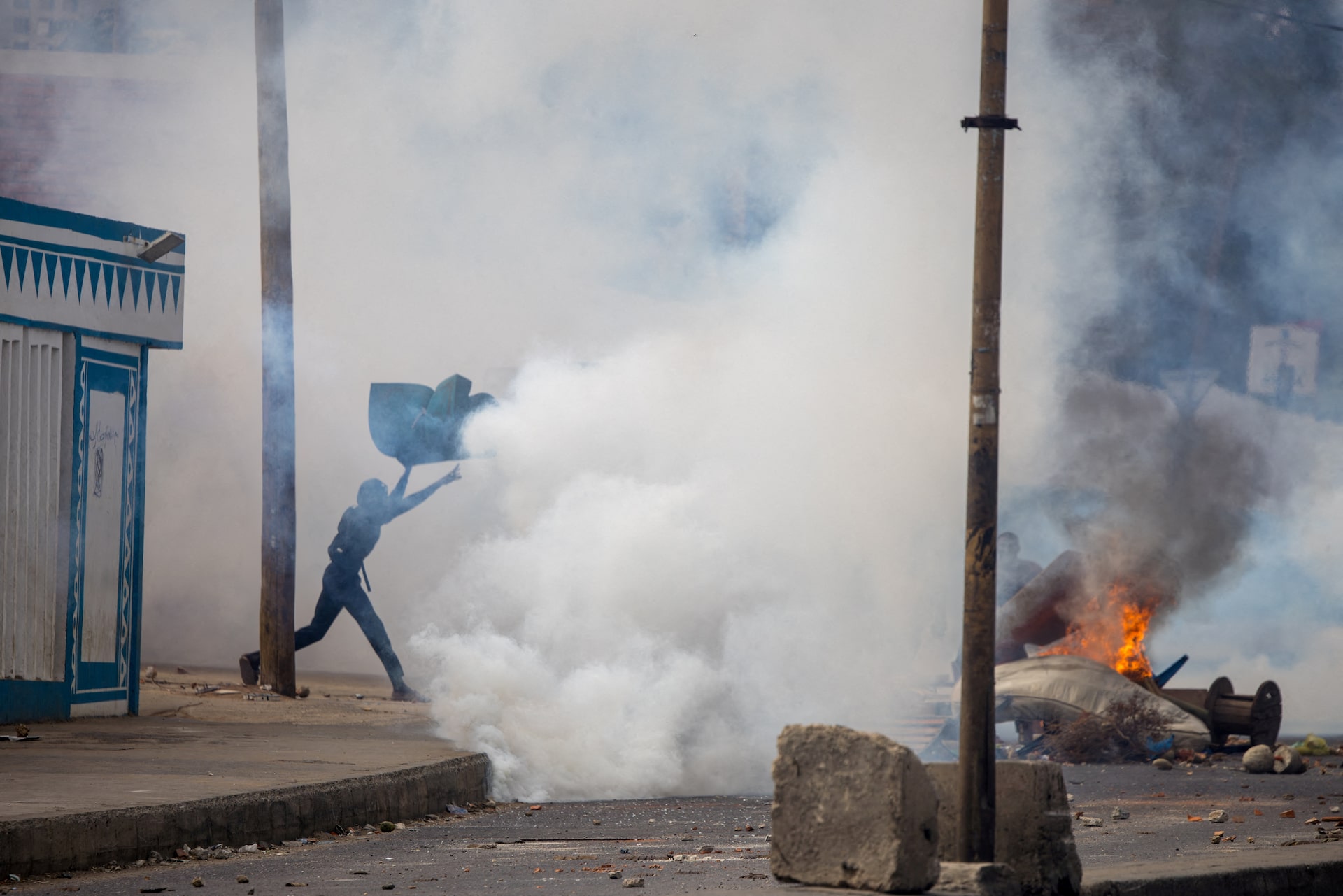
Senegal’s authorities deployed force to break up student demonstrations at the nation’s most prominent university this month, resulting in the death of at least one student and dozens injured, according to reports by eyewitnesses, student leaders, and the government itself.
The incident marks the escalating conflict between young citizens of Senegal and their government, which is facing financial challenges and growing disenchantment among its people.
Amadou Bilo Diallo, aged 23 and a student of journalism at the university, recounted his experience of hiding with his five roommates and several friends in a dormitory when police raided the building and struck the students with batons and shields.
Though Diallo was injured on his head and feet, he managed to escape death.
However, others were more badly injured, with some being hospitalized after jumping from the higher floors of the building to escape the fire that started during the raid.
Abdoulaye Ba, a second-year dental surgery student residing in the same building with Diallo, was killed by the police during the raid.
There was nothing we could do,” Diallo said.
“They were men in uniform – we couldn’t resist, we couldn’t fight back.” Pathe Baila Barry, one of Diallo’s classmates, described being beaten during the raid and said he was surprised by the level of force used. Video footage verified by Reuters shows police beating individuals outside one of the student residence buildings while other officers look on.
The interior minister, Mouhamadou Bamba Cisse, justified the police operation, arguing that it was necessary to protect property and prevent the planned ransacking of a restaurant on campus.
Read Also: Senegal Condemns Jail Terms For Fans Over AFCON Final
Over 100 students were arrested during the raids on student dormitories, according to official reports. The university remains closed over two weeks after the raid.
The students’ protests were based on issues surrounding financial aid.
It has been noted that the first-year students did not receive the whole amount of the financial aid to which they were entitled.
For instance, students received only 75,000 CFA francs ($135) on average over the last few months instead of the regular amount of 155,000 CFA francs.
Government documents obtained by Reuters indicate that the budget for higher education for 2026 allocated 78.8 billion CFA francs ($142 million) for student financial aid, which is 11% less than what was allocated in 2024.
The government has argued that it has not failed to pay the financial aid to the students but has instead adjusted the payment plan.
Onlookers and researchers attribute the unrest to larger economic and political issues.
Senegal’s government is dealing with a serious debt crisis after finding out that the former government had falsely reported about $13 billion in loans.
The debt-to-GDP ratio in Senegal rose to 132% in 2024 compared to 78% in 2023, leading the International Monetary Fund to put on hold a $1.8 billion loan program.
Senegal’s new President, Bassirou Diomaye Faye, who was elected in 2024 after youth-led protests led to the ousting of his predecessor, has focused on repaying loans to international lenders rather than making changes to domestic spending, according to his advisors.
“Managing a state is like managing your own bank account,” said Aminata Toure, a senior adviser to Faye. “Sometimes you have to focus on priorities; that doesn’t mean that you are not interested in the rest.”
The government has been under pressure from opposition politicians to restructure debt, and public expenditure has come under the spotlight, especially in education and social welfare.
Other economic pressures add to the students’ list of complaints. In 2025, the government imposed a 1% tax on cash transactions in supermarkets and a 0.5% tax on bank transactions.
Teachers’ unions have called nationwide strikes over employment, wage inequalities, and taxation issues.
Read Also: US Expands World Cup Travel Ban To Senegal And Ivory
The number of people in formal employment has fallen, with the ministry of economy reporting a 5.2% fall in the number of people in formal employment between October 2024 and October 2025.
The construction industry has been hit hard, with the government halting several projects to review previous contracts; most of these reviews are still pending.
Oumar Gueye, a representative of the National Union of Construction Workers, said, “We are at more than 17,000 direct job losses in the formal sector.”
The incident at the university has heightened the level of mistrust between students and the government.
The students’ association, which represents the students of the medicine, pharmacy, and dentistry faculties, where Ba studied, has also questioned the government’s version of the death.
The public prosecutor, Ibrahima Ndoye, said that preliminary investigations had shown that Ba died after jumping from the fourth floor of the window.
However, the students’ association does not agree with the government’s story and is demanding that the case be fully investigated.