
More than two thousand people have been released from prison or freed from court supervision in Venezuela following the passage of a controversial amnesty law, a senior lawmaker said Monday, as authorities attempted to signal political easing after months of upheaval.
Jorge Arreaza, who heads the legislative commission overseeing the measure’s implementation, announced that 177 detainees had walked out of jail while 2,021 others previously under legal restrictions were granted full freedom.
The announcement came during a joint appearance with interim president Delcy Rodriguez at the presidential palace.
The legislation, approved last week, covers participation in protests and certain violent incidents stretching across more than two decades, from 2002 to 2025. Tribunals are required to review applications within fifteen days once filed.
Government officials presented the move as a step toward reconciliation. Authorities have long rejected accusations that Venezuela holds political prisoners, insisting those jailed were prosecuted for criminal acts rather than dissent.
In practice, many of the newly freed individuals had been detained after demonstrations or charged under broad offenses such as terrorism or treason.
Human rights organisations disagree sharply with the government’s portrayal. Advocacy groups say the law leaves hundreds of political detainees behind and omits key protections. It does not restore confiscated assets, cancel bans from public office, or overturn sanctions imposed on independent media outlets. Activists also note that exiled opposition figures must return to Venezuela in person to benefit, a condition many view as unrealistic given fears of re-arrest.
Read also: ‘El Mencho’ Death Triggers Wave Of Violence Across Mexico
More than three thousand petitions have already been filed by lawyers seeking amnesty for clients, Arreaza said.
Legal rights organisation Foro Penal reported that over thirty inmates were released Monday from the Rodeo detention facility near Caracas, adding to others freed during the weekend.
Its tally indicates more than 460 prisoners have been released since January 8, a figure that excludes individuals transferred from prison into house arrest or reporting requirements.
Some prominent opposition figures have experienced an uncertain path to freedom. Politician Juan Pablo Guanipa was released, detained again, then later removed from house arrest restrictions. Lawyer Perkins Rocha remains confined to his home. Others freed include opposition leader Freddy Superlano, Rafael Tudares, who is related to former presidential candidate Edmundo Gonzalez, and activist Javier Tarazona.
Read also: Trump To Deliver Second-Term State Of The Union
The partial amnesty comes at a politically sensitive moment. Analysts see it as part of a broader diplomatic repositioning after the capture of President Nicolas Maduro earlier this year, a development that reshaped Venezuela’s internal power structure and complicated relations with Washington.
For years, opposition politicians, journalists, and dissident security officials have faced criminal charges they and their families describe as arbitrary.
Rights groups argue detention has frequently been used as a tool to silence critics rather than enforce public order. Government representatives deny that characterization.
The law itself contains language stating it applies only to individuals who have ceased the actions classified as crimes. That clause may exclude activists who remain politically active abroad, a detail that has heightened suspicion among opposition groups.
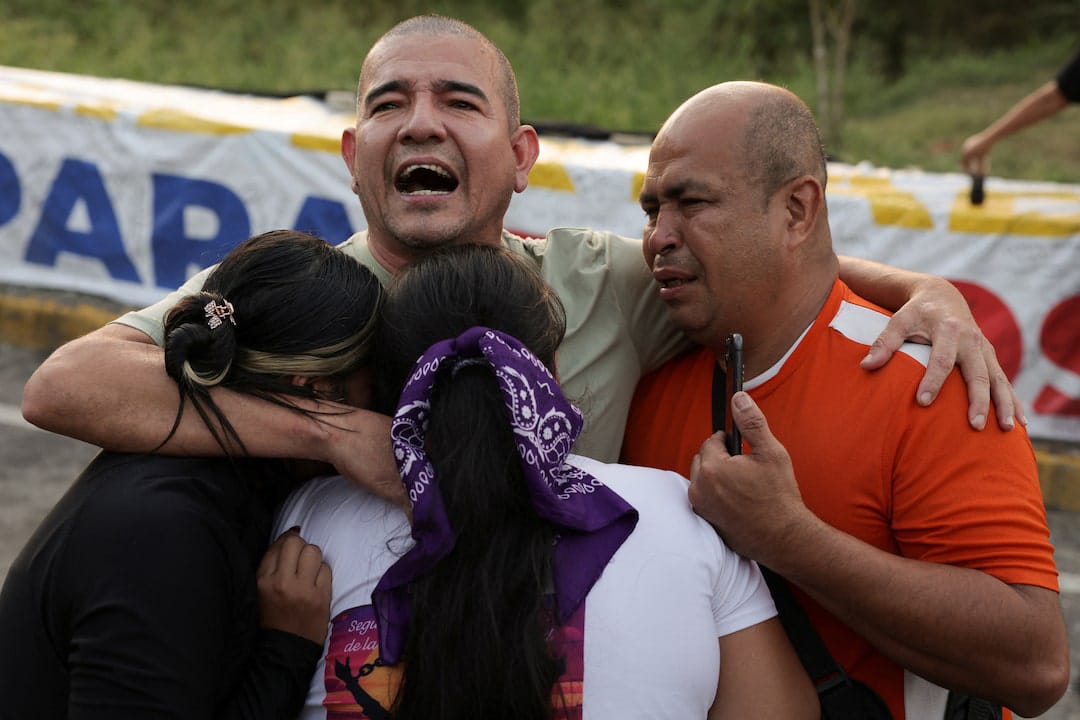
Even so, some families welcomed the releases as a rare moment of relief after years of uncertainty. Outside detention facilities, relatives gathered to receive freed prisoners, many emerging after prolonged legal proceedings and repeated court delays.
Observers say the real test will not be the number of people released but whether authorities continue arrests tied to political activity. If detentions resume at previous levels, critics argue the amnesty could amount to little more than a temporary gesture.
Diplomats and analysts are watching closely because the measure intersects with international negotiations and sanctions policy.
Any sustained reduction in political detentions could influence Venezuela’s external relations, especially with countries considering renewed economic engagement.