
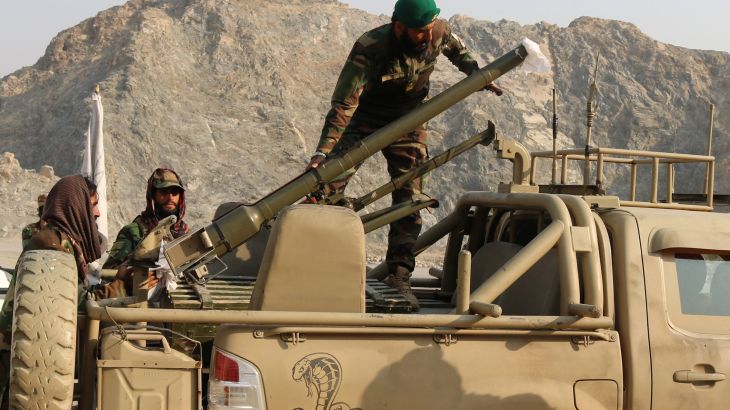
A fragile ceasefire along the 2,600-kilometre frontier separating Pakistan and Afghanistan has unraveled with alarming speed, giving way to one of the most serious military escalations between the two neighbours in recent years. Air strikes, drone attacks, and cross-border shelling have replaced the tenuous calm brokered last October, raising the spectre of a sustained confrontation in a region already marked by volatility.
The latest cycle of violence began on the evening of 26 February, when Afghanistan’s Taliban authorities announced a coordinated offensive against Pakistani military positions near the border. According to statements from Taliban officials, operations commenced at approximately 20:00 local time across a broad arc of eastern Afghan provinces, including Nangarhar, Nuristan, Kunar, Khost, Paktia and Paktika. These provinces sit opposite Pakistan’s north-western Khyber Pakhtunkhwa region, an area long afflicted by militant activity.
Islamabad moved swiftly. Pakistani officials said Taliban fighters had “miscalculated and opened unprovoked fire” on multiple locations inside Pakistan. The response, they insisted, was immediate. Within hours, Pakistan launched aerial bombardments targeting sites in the Afghan capital, Kabul, as well as in Kandahar and Paktika—provinces adjacent to the contested frontier.
As events unfolded into Friday morning, reports of further exchanges surfaced near the Torkham crossing, a strategic transit point linking Peshawar in Pakistan with Jalalabad in Afghanistan. Journalists on the ground described renewed fighting in the vicinity, underscoring the symbolic and economic weight of the crossing, which handles significant commercial and civilian traffic.
Precise casualty figures remain contested. Neither side’s claims have been independently verified. Taliban spokesman Zabihullah Mujahid asserted that Afghan forces had inflicted heavy losses on Pakistani troops and captured several soldiers—an account firmly rejected by Islamabad. Pakistani officials countered with their own figures, claiming that 133 Taliban fighters had been killed and more than 200 wounded by late Thursday evening. As in previous confrontations, narratives diverge sharply, with both governments insisting the other initiated hostilities.
Pakistan’s Prime Minister, Shehbaz Sharif, declared that his country’s forces were capable of “crushing” their adversaries. The defence minister went further, characterising the situation as “open war.” On the Afghan side, a Taliban military spokesperson signalled that while the group would retaliate against attacks, it did not intend to initiate clashes at this stage. The rhetoric on both sides suggests hardening positions rather than diplomatic accommodation.
Read Also: Starmer Suffers Humiliation As Greens Take Labor Heartland
Adding to the complexity, the Taliban administration claimed it had conducted air strikes within Pakistan using drones launched from Afghan territory. Pakistan’s Information Minister Atta Tarar said security forces had thwarted small drone attacks in Abbottabad, Swabi and Nowshera. The expanding use of aerial assets—manned and unmanned—marks a significant evolution in cross-border tactics.
This escalation follows months of deteriorating relations. The ceasefire agreed in October, after a week of deadly clashes, was facilitated by mediation efforts from Turkey and Qatar. That truce proved brittle. Islamabad has repeatedly accused the Taliban government of harbouring anti-Pakistan militants responsible for attacks on Pakistani soil, including a recent suicide bombing at a mosque in Islamabad. Kabul denies these allegations, maintaining that Afghan territory is not being used to threaten neighbouring states.
The mutual recriminations have been accompanied by periodic air strikes. Earlier this week, Pakistan conducted overnight raids in Afghanistan that Taliban authorities say killed at least 18 people, including women and children. Islamabad insists its operations are directed exclusively at militant targets, not civilians. Kabul, in turn, accuses Pakistan of indiscriminate attacks.
What distinguishes the current round of Pakistani bombardments, according to regional analysts, is the apparent targeting of Taliban government facilities rather than solely non-state militant groups. Michael Kugelman of the Atlantic Council noted that this shift signals a more direct challenge to the Taliban regime itself. If sustained, such a strategy risks transforming episodic skirmishes into a more structured interstate confrontation.
The strategic asymmetry between the two countries is clear. Pakistan is a nuclear-armed state with a significantly larger and more technologically advanced military. Afghanistan’s Taliban authorities, by contrast, command a force shaped by decades of insurgency warfare. Analysts generally consider a conventional war unlikely, given the imbalance of capabilities and the economic constraints facing both sides. Yet Afghanistan’s Taliban leadership has deep experience in guerrilla tactics, and prolonged cross-border instability could manifest in asymmetric forms rather than traditional battlefield engagements.
The international response has been cautious but urgent. United Nations officials have called for immediate de-escalation. Iran, which shares borders with both nations, has offered to mediate. Iranian Foreign Minister Abbas Araqchi invoked the ongoing month of Ramadan, appealing to principles of restraint and solidarity within the Islamic world. China, which maintains strategic partnerships with both Islamabad and Kabul, urged calm. Foreign ministry spokeswoman Mao Ning called on both sides to exercise restraint and avoid further escalation.
Saudi Arabia, a longstanding ally of Pakistan, has also engaged diplomatically. The Saudi foreign minister met his Pakistani counterpart to explore avenues for reducing tensions. For Riyadh, Beijing and Tehran alike, stability along the Afghanistan-Pakistan frontier intersects with broader regional concerns, including counterterrorism, trade corridors and energy connectivity.
For Africa and other regions observing from afar, the implications extend beyond bilateral grievances. Pakistan’s internal security challenges, Afghanistan’s fragile governance structure, and the interplay of regional powers underscore how unresolved border disputes can escalate rapidly in environments of mutual distrust. The Torkham crossing alone is a reminder that borders are not merely lines on maps; they are arteries of commerce, migration and political symbolism.
Read Also: Pakistan Declares ‘Open War’ As Jets Strike Kabul Targets
The trajectory from here remains uncertain. Taliban rhetoric about “relentless attacks” suggests determination to resist perceived aggression. Islamabad’s framing of the situation as a decisive confrontation indicates readiness for sustained military pressure. Diplomatic channels remain open, but they are operating against a backdrop of hardened narratives and mutual suspicion.
Absent a renewed mediation effort with credible guarantees, the risk is not necessarily a formal declaration of war, but a prolonged cycle of retaliatory strikes that entrenches hostility. In a region where armed movements, state actors and external powers intersect, even limited escalations carry the potential for wider destabilisation.
For now, both governments face a critical choice: reinforce the architecture of de-escalation painstakingly assembled last year, or allow tactical exchanges to evolve into a deeper and more unpredictable conflict.