
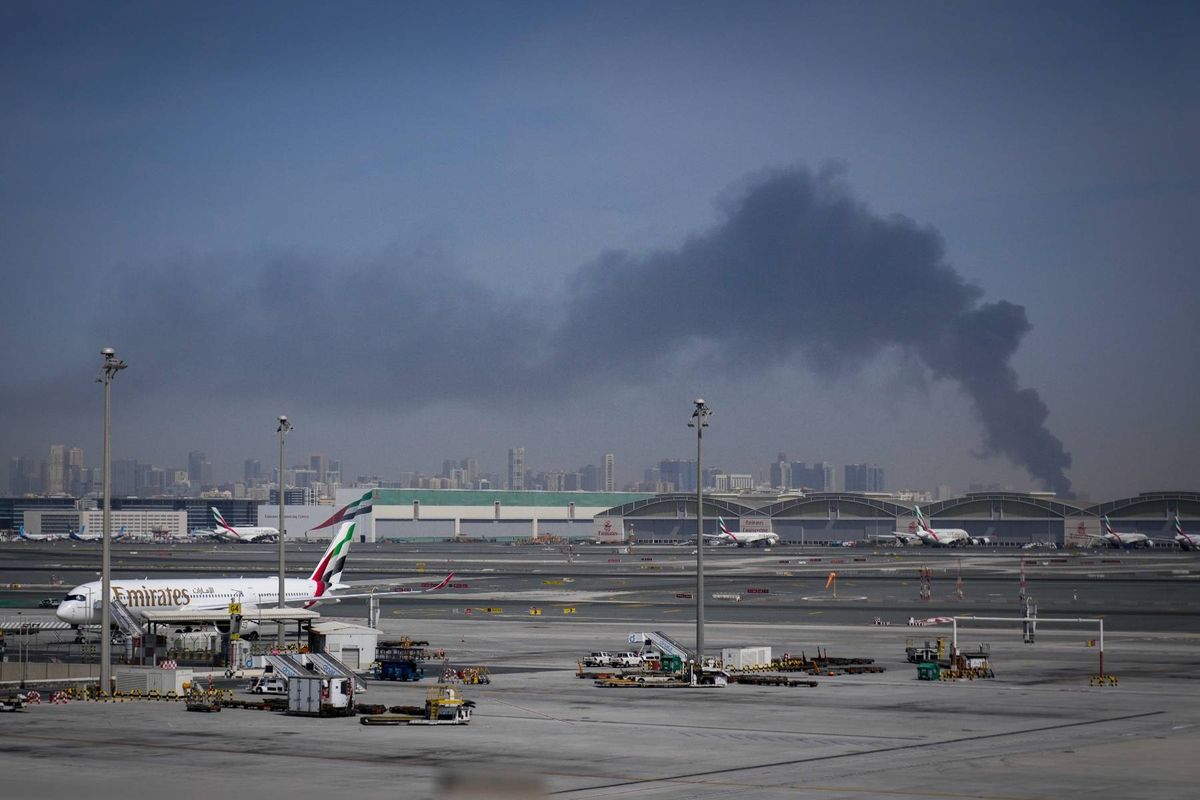
As the Middle East air travel disruption crisis intensifies following Iranian military strikes, over 100,000 Britons have contacted the UK government regarding their location, with the British government preparing contingency plans for the crisis while urging citizens to remain in place.
The UK’s foreign secretary, Yvette Cooper, stated that the British government was dealing with a rapidly developing crisis that involved hundreds of thousands of people located across the Middle East, with many individuals unable to leave the region due to the closure of airspace, which has resulted in the disruption of commercial flights.
While addressing various BBC programs on Monday, Cooper stated that approximately 102,000 individuals had contacted the crisis monitoring program, which aimed at keeping communication with the public regarding the developing crisis.
It is estimated that there are around 300,000 British citizens currently in countries across the Gulf region, ranging from residents to tourists and even those who are merely making mid-journey flight connections.
The registration process will enable the Foreign Office to send out safety information and coordinate further assistance should the situation worsen.
Read Also: UK Approves US Use Of Military Bases For Strikes On Iran
The Foreign Office has asked British citizens across countries such as Bahrain, Israel, Kuwait, the Palestinian territories, Qatar, and the United Arab Emirates to register with the new system due to the continuous attacks resulting from Iran’s retaliation across all these countries.
According to Cooper, there are many stranded individuals who are currently unsure of what to do as airports across all countries have suspended operations, leading to the cancellation of flights.
She described the situation as “deeply stressful” and encouraged those affected to follow instructions from local authorities, which are mostly to shelter indoors or shelter in place.
The government’s plan has been to ensure coordination with airlines and airports and regional governments while keeping an eye out to see if air travel can resume safely.
“We are in close contact … with the travel industry, with airline companies and airports and also with the governments in the region,” she said. “And we will certainly inform people of the latest developments.”
Past emergencies have prompted the government to prioritize the restoration of air travel rather than immediate government-organized evacuations.
Air travel across the Middle East has been significantly affected since Iran began strikes targeting areas associated with the United States and its allies after military action by the United States and Israel.
Countries hosting United States military bases, including Bahrain, Qatar, Kuwait, the United Arab Emirates, and Iraq, have all been affected by attacks or security alerts.
The flight cancellations are now being felt beyond the region.
According to data obtained from Cirium, a company that provides aviation analytics, almost half of the scheduled flights from London Heathrow Airport to Middle Eastern destinations were canceled on Sunday alone.
Some of the prominent airlines, including British Airways and Virgin Atlantic, have suspended flights or are diverting planes to avoid the affected area.
Read Also: UK Warns EU “Made In Europe” Plan Risks Trade Damage
In the region, the operations of local airlines have been suspended.
Qatar Airways announced on Monday that all flights are suspended, and Emirates announced that flights to and from Dubai will not resume until at least Tuesday morning because of safety concerns.
On the ground, the effects of the strikes have been felt in civilian facilities.
There has been damage to parts of Dubai, including luxury hotels and surrounding areas of Dubai International Airport, which is the busiest airport in the world in terms of international passenger traffic.
In the neighboring city of Abu Dhabi, airport facilities have been damaged too. One person has been killed, and 11 others injured since the conflict escalated.
Among those who cannot leave the airport are Layla Hamood and her husband Matthew McGinn, a British couple who were on a honeymoon holiday with their three-year-old son.
In a telephone interview from Dubai, Hamood explained that the family had stayed within the hotel since the attacks began. “It’s been terrifying to be honest.
The bombing hasn’t stopped. We can hear the missiles.” Hamood went on to explain that the travelers were unaware of how they might depart the country. “We’re in a limbo, we don’t know how we can get home.”
The British government has been unwilling to make definite statements regarding the evacuation of travelers from the Middle Eastern countries.
Instead, they emphasize the fact that the situation is changing.
Foreign Office sources indicate that planning for evacuation is under way should the commercial flights remain unavailable for a long time.
The registration drive follows a similar model to those undertaken in previous international crises, enabling the government to rapidly locate citizens, disseminate advice on personal security, and facilitate assistance if necessary.