
Britain has approved the use of certain UK-controlled military bases by the United States for what Prime Minister Keir Starmer called “defensive strikes” targeting Iranian missile sites, in what appears to be a major change in the UK’s involvement in the ongoing events in the Middle East amid heightened tensions in the region.
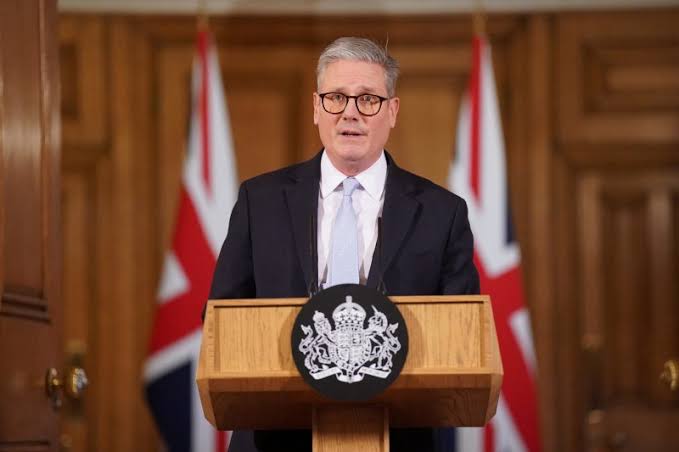
In a televised address to the nation on Sunday, Prime Minister Starmer announced that the UK approved the request by the US to use certain UK-controlled military bases to target Iranian missile sites in what he called a defensive move to protect UK personnel, citizens, and allies in the region from Iranian missile strikes.
The UK, according to the Prime Minister, did not engage in the initial strikes by the US and Israel targeting Iranian sites in the region.
“The United States has requested permission to use British bases for that specific and limited defensive purpose,” Starmer said, referring to efforts aimed at destroying missile launch infrastructure before weapons could be fired.
He added that the government considered the move consistent with international law under the principle of collective self-defence.
British officials, who requested anonymity, said that American forces would mainly use the RAF Fairford airbase in southwest England and the joint British-American base on the Indian Ocean island of Diego Garcia, which has traditionally been used by long-range bombers.
Read Also: Starmer Suffers Humiliation As Greens Take Labor Heartland
The government had previously refused to grant permission for the use of the bases, according to reports from last month, but changed its position due to the escalation of attacks in the region.
The news was announced just before a drone attack on the RAF Akrotiri airbase, which is one of the largest British airbases in Cyprus, just after midnight local time on Sunday.
The Ministry of Defence said that the attack resulted in minor structural damage and did not cause any injuries.
The source said that officials are trying to determine from where the drone was launched.
The strike came as the British government fears that the war is spreading beyond Iran and Israel, with some of the countries hosting Western military forces
Iranian retaliatory strikes in the past few days have targeted areas across the Gulf, including Bahrain, Qatar, Kuwait, the UAE, and Iraq, according to regional and Western officials.
Starmer said that the British aircraft, which have been deployed in the region, have been involved in intercepting some of the incoming threats as part of defensive patrols that have been requested by the governments of the Gulf.
The UK, he said, is not involved in any offensive military action.
“Our partners in the Gulf have asked us to do more to defend them and it’s my duty to protect British lives,”
British officials have estimated that approximately 200,000 UK citizens are present in the broader Middle East.
The Foreign Office has advised citizens in various nations, including Bahrain, Israel, Kuwait, Qatar, the UAE, and the Palestinian territories, to notify them of their presence so they can receive emergency alerts.
Contingency plans are being made in case the airspace closure in the Middle East continues, officials have said.
The government has released an outline of its legal reasoning late Sunday night.
The reasoning is based on the argument that supporting the military action of allies can be legitimate if it is seen as a necessary and proportionate response to an armed attack.
The reasoning is based on the argument that the use of self-defence is the only viable option.
However, the government has not explicitly endorsed the legality of the original US-Israeli strikes on Iranian territory.
Read Also: Starmer Faces Calls To Quit As Second Aide Resigns
The Defence Secretary, John Healey, said previously that it was the US’s responsibility to explain the legal basis for its own activities, though at the same time raising the concerns shared by all Western countries over Iran’s military capabilities.
“We share… the primary aim of all allies in the region and the U.S. that Iran should never have a nuclear weapon.”
The move has sparked a political storm at home. Conservative Party leader Kemi Badenoch said the government was “hesitating” and that the government was “not willing to take a stronger line” against Iran.
Liberal Democrat leader Ed Davey said the government should be subject to scrutiny by Parliament.
He said that Parliament should be able to “vote on whether foreign troops should be able to operate from our soil.” Zack Polanski, the co-leader of the Green Party, said the government was “engaging in another illegal conflict in the Middle East.”
Reform UK leader Nigel Farage said the government’s move was “overdue” but criticised Labour leader Starmer.
U.S. President Donald Trump, interviewed by the Telegraph, complained about the timing of the British move, saying that the process “has taken far too long” and that concerns over the move’s legality might have been the holdup.
Mr. Trump has indicated that U.S. troops might be needed to utilize the British bases if Iran does not negotiate over its military program.
Starmer stated that the government has learned from other conflicts, including the Iraq War, in determining the extent of British involvement in the conflict.