
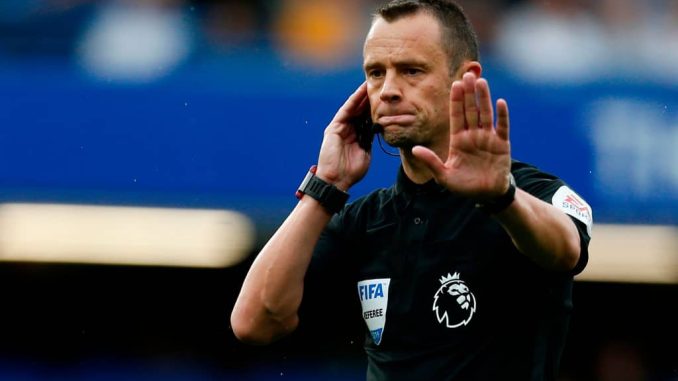
Global football’s regulatory architecture is preparing for its most consequential procedural shift in years. The International Football Association Board (IFAB), the body responsible for determining the Laws of the Game, has approved a series of amendments that will take effect on 1 June 2026 — in time for implementation at the 2026 FIFA World Cup and throughout the 2026/27 domestic season worldwide.
The decision signals not merely technical adjustment but institutional recalibration. Football’s lawmakers are responding to mounting concerns about time management, officiating consistency, and the persistent friction between human judgment and video intervention. The reforms touch core areas of match administration: disciplinary review, restarts, substitutions, and the interpretation of offside — one of the sport’s most contested principles.
At the center of the reforms lies an expansion of Video Assistant Referee (VAR) authority. Beginning in June 2026, VAR will be permitted to intervene in two additional scenarios: corner-kick decisions and second yellow cards that result in dismissal.
Historically, VAR review has been confined to goals, penalty incidents, direct red cards, and cases of mistaken identity. Corner decisions, despite their potential to influence scoring outcomes, have remained beyond review. Under the new framework, officials will have recourse to video evidence when determining whether the ball last touched an attacker or defender before crossing the goal line.
More significantly, VAR will now be allowed to assess second yellow card decisions. At present, VAR cannot intervene when a referee issues a second caution, even though such a decision results in a sending-off. That limitation has drawn criticism from clubs and analysts who argue that the consequences — playing with ten men — are too severe to preclude technological oversight. The reform addresses that inconsistency while carefully preserving the referee’s central authority.
Read Also: Americans Told To Flee More Than Dozen MidEast Nations Now
Time discipline forms the second pillar of IFAB’s reforms. A visible five-second countdown will be introduced for throw-ins and goal kicks. Once a player is in position to restart play, the clock will begin. Failure to release the ball within the allotted time may result in turnover of possession or other sanctions, depending on the specific competition’s implementation guidelines.
The objective is clear: reduce deliberate delays that disrupt match rhythm. In recent years, time-wasting tactics have increasingly drawn scrutiny, particularly in high-stakes tournaments where marginal advantages carry outsized impact. By formalizing a countdown mechanism, IFAB aims to standardize enforcement across leagues and confederations.
Substitutions will also fall under stricter temporal regulation. Teams will be given a 10-second window to complete player changes once the substitution process begins. While substitutions themselves are not new to time management debates, the codified countdown introduces uniformity. The measure is designed to limit prolonged delays during tactical changes, particularly late in matches.
Yet the most conceptually significant reform concerns the offside rule — long a flashpoint in modern football’s technological era.
Former Arsenal manager and current FIFA executive Arsène Wenger has advocated what he terms a “daylight” offside interpretation. Under this proposal, an attacker would be considered onside if any part of their body capable of scoring remains level with the defender. Only clear separation — visible “daylight” between attacker and defender — would trigger an offside call.
The current system, particularly under VAR scrutiny, has often reduced offside decisions to millimetric measurements. Critics argue that the spirit of the rule — preventing goal-hanging — has been overshadowed by forensic line-drawing that penalizes marginal body positioning.
IFAB has approved the daylight model for trial in Canada beginning in April 2026. The testing phase will allow regulators to assess practical implications before any permanent adoption. Canada’s selection as the trial venue reflects its role as co-host of the 2026 World Cup, alongside the United States and Mexico, positioning North America as a laboratory for procedural innovation ahead of the global tournament.
Collectively, these reforms reveal an evolving philosophy within football governance. The sport’s custodians are attempting to reconcile three competing imperatives: technological precision, entertainment value, and procedural fairness.
For global audiences — including Africa’s vast and deeply invested football public — the changes carry tangible implications. African players, coaches, and referees participating in the 2026 World Cup will operate under these revised standards. Domestic leagues across the continent, depending on confederation adoption timelines, may also integrate the new laws during the 2026/27 season.
The introduction of countdown mechanisms could alter match tempo across competitions where time management has historically been loosely enforced. Meanwhile, expanded VAR oversight may reduce controversies that have sometimes fueled post-match disputes in African club tournaments and international fixtures.
From a governance perspective, IFAB’s decision underscores the body’s continuing effort to modernize without fundamentally altering the sport’s character. Football’s global reach — spanning elite European leagues to grassroots pitches in Lagos, Nairobi, and Johannesburg — demands regulatory clarity that travels across contexts. Uniform implementation remains critical to preserving competitive integrity.
Read Also: Dangote Industrial Expansion Eyes Steel, Energy, Ports
The 2026 World Cup will therefore serve not only as a sporting spectacle but as a proving ground for football’s next regulatory era. With VAR authority broadened, restart timing strictly monitored, substitutions standardized, and the offside rule potentially recalibrated, the tournament may mark a structural inflection point.
For administrators and analysts, the question is whether these measures will simplify the game or introduce new layers of procedural complexity. Supporters of reform argue that clarity and consistency ultimately enhance fairness. Skeptics caution that excessive regulation risks interrupting natural flow.
What remains certain is that football’s lawmakers are signaling responsiveness to modern pressures. The Laws of the Game, often perceived as static, are in fact living instruments — periodically adjusted to preserve equilibrium between tradition and evolution.
When the whistle blows in June 2026, the world will not only witness a World Cup; it will observe the first global test of football’s revised constitutional order.