
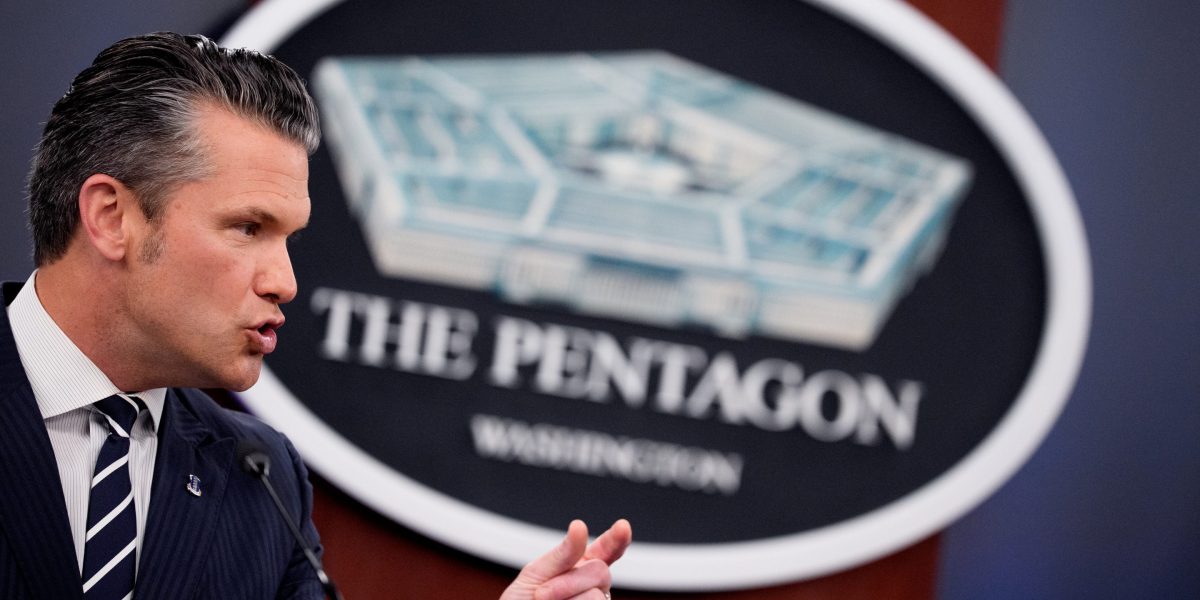
The United States will pursue anyone who kills or threatens American lives regardless of location, the Pentagon’s chief said Monday, issuing a stark warning as fighting with Iran entered its third day following the death of Supreme Leader Ayatollah Ali Khamenei in weekend airstrikes.
Secretary of Defense Pete Hegseth told a news conference in Washington that President Donald Trump does not hesitate when American personnel face danger and that the administration would hunt down those responsible without apology. His remarks came hours after a fourth US service member died from injuries sustained in Iranian missile attacks on military installations across the Gulf.
Hegseth accused Tehran of stalling during months of negotiations while secretly reloading its missile arsenal and preparing for confrontation. He said the Trump administration had exhausted diplomatic options before launching Saturday’s strikes, which killed Khamenei and destroyed targets across Iran.
“President Trump puts America and Americans first. He doesn’t hesitate and neither do our troops,” Hegseth said. “If you take the lives of Americans, threaten Americans anywhere on earth, we will hunt you down without apology and without hesitation.”
The defense secretary said Iran’s leadership had focused on building proxies, missiles and what he described as deeply buried nuclear facilities rather than investing in peaceful development.
He questioned why a country claiming peaceful nuclear ambitions would construct installations underneath mountains.
Hegseth referenced Operation Midnight Hammer, a June campaign he said obliterated Iran’s nuclear program. He claimed Washington warned Tehran at the time that any attempt to rebuild would be met with even harsher retaliation. According to Hegseth, senior administration officials including Secretary of State Marco Rubio, special envoy Steve Witkoff and adviser Jared Kushner pursued repeated diplomatic initiatives that Iran ignored.
Read also: Middle East Violence Batters Yen, Euro Over Fuel Concerns
“They tried, over and over and over again, earnest attempts at peace,” he said. “The former regime had every chance to make a peaceful and sensible deal, but Tehran was not negotiating. They were stalling, buying time to reload their missiles.”
Iran has disputed American characterizations of the diplomatic process, saying Washington imposed unrealistic demands while threatening military action. Tehran has accused the United States and Israel of targeting civilian infrastructure and killing hundreds of non-combatants in strikes that have hit more than 130 cities across the country.
The conflicting accounts reflect broader disagreements over what led to the current escalation. American officials say Iran threatened US forces and refused to abandon its nuclear ambitions despite offers of sanctions relief and normalized relations. Iranian officials say Washington sabotaged negotiations by insisting Tehran dismantle its defensive capabilities while providing no security guarantees.
Hegseth’s remarks suggested the Pentagon anticipates sustained operations rather than a quick resolution. His language—emphasizing relentless pursuit of those who threaten Americans—signals an approach that could keep US forces engaged in the region for an extended period.
Whether Iran will back down or escalate further remains uncertain. The country’s temporary leadership council has vowed to continue retaliatory strikes until American and Israeli forces cease their offensive, setting the stage for a prolonged exchange that has already drawn in neighboring countries and disrupted global energy markets.
Britain authorized the United States to use its military bases for strikes against Iranian missile sites Monday, a decision that could expand the conflict’s geographic scope.
Prime Minister Keir Starmer said the move was necessary for collective self-defense but limited to neutralizing specific threats.
The mounting American casualties—now four dead with others seriously wounded—may complicate the administration’s messaging that the operation is proceeding according to plan. Trump has said the conflict could last weeks, though Israeli Prime Minister Benjamin Netanyahu has sought to reassure allies it will not become an endless war.
Read also: Americans Told To Flee More Than Dozen MidEast Nations Now
Hegseth did not provide details about ongoing operations or specify which Iranian targets remain on the Pentagon’s list. His focus on Iran’s nuclear program suggests that facilities related to uranium enrichment and weapons development remain priorities despite the June strikes he described as having reduced the program to rubble.
Iran has rebuilt portions of its nuclear infrastructure since previous rounds of attacks and sabotage, according to International Atomic Energy Agency reports. Whether the current campaign will permanently dismantle those capabilities or merely delay them depends on the scope of strikes and Iran’s determination to reconstitute what it loses.
The defense secretary’s warning that the United States will pursue threats anywhere extends the potential battlefield beyond the Middle East. Iranian assets and personnel operate across multiple continents, and proxies aligned with Tehran maintain presence in Latin America, Africa and parts of Asia.