
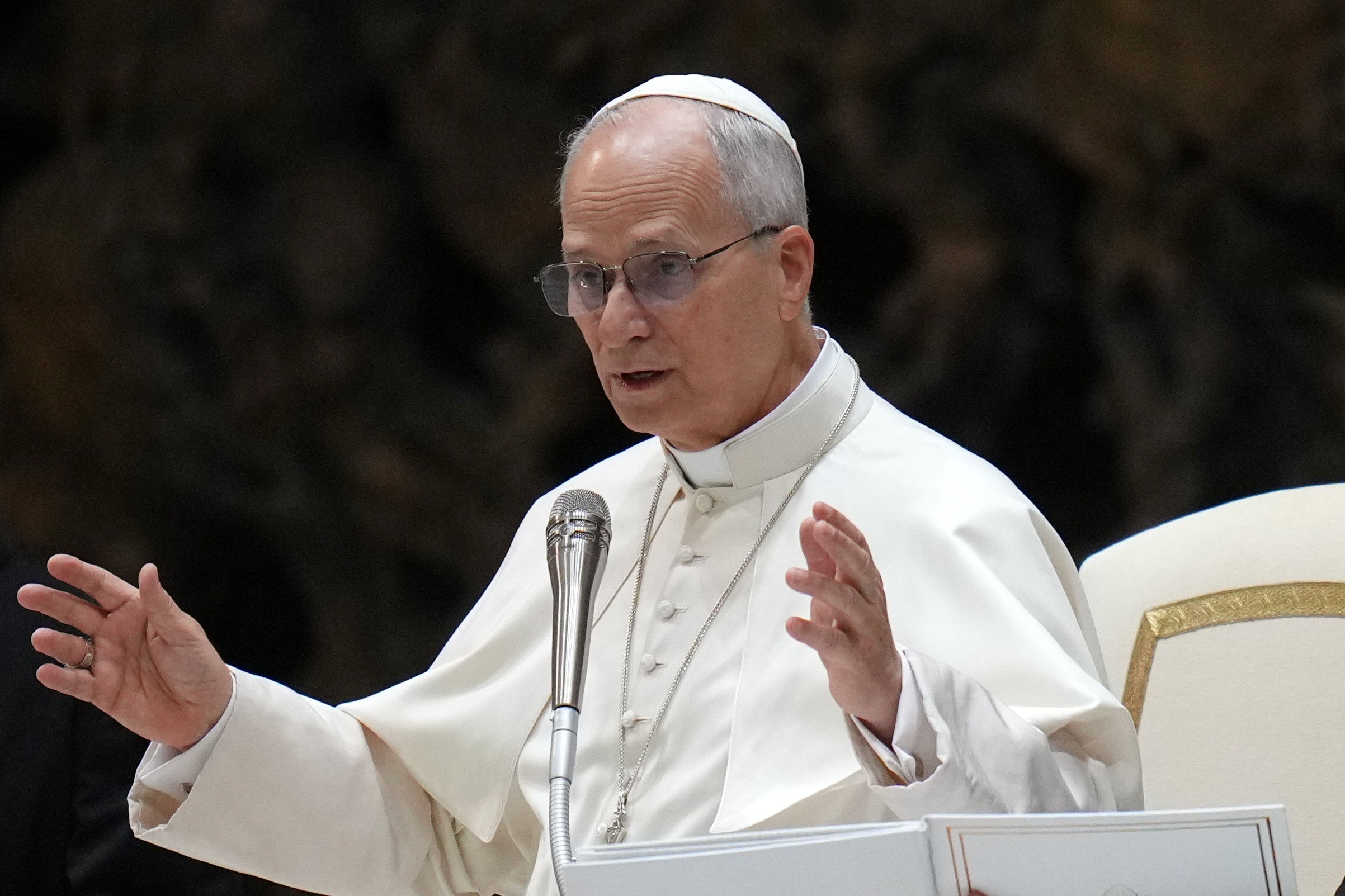
Pope Leo XIV escalated the Vatican’s response to the US-Israeli military campaign against Iran on Thursday, releasing a pre-recorded monthly video prayer whose call for nations to “renounce weapons and choose the path of dialogue and diplomacy” resonated with particular force on the conflict’s sixth day, one day after Cardinal Pietro Parolin, the Holy See’s secretary of state and top diplomat, issued the most direct condemnation of the campaign offered by any senior religious leader since the strikes began, warning that recognition of a right to preventive war risked setting “the entire world on fire.”
The Thursday prayer video was recorded as part of Pope Leo’s standing monthly prayer intention programme, in which the pontiff releases a video each month to invite Catholics worldwide to pray for a specific intention. His intention for March, set months before the conflict began, is “for disarmament and peace,” specifically that nations move toward effective disarmament, particularly nuclear disarmament, and that world leaders choose dialogue and diplomacy instead of violence. In the full text of the prayer, the pope asked: “Lord, enlighten the leaders of the nations, so they may have the courage to abandon projects of death, halt the arms race, and place the lives of the most vulnerable at the centre. May the nuclear threat never again dictate the future of humanity.”
The Vatican did not immediately respond to a question about when the video was recorded or whether its content had been adjusted in light of the conflict.
The video was the fourth distinct papal statement on the war in six days. Pope Leo first addressed the conflict at the Angelus in St Peter’s Square on Sunday, March 1, less than 24 hours after Ayatollah Ali Khamenei was killed in the opening salvos. Speaking before thousands of Romans and pilgrims, he said he was following events “with profound concern” and warned the world faced “the possibility of a tragedy of enormous proportions.” He appealed to all parties “to assume the moral responsibility of halting the spiral of violence before it becomes an irreparable abyss,” and prayed that “diplomacy may regain its role and promote the good of the peoples who yearn for peaceful coexistence founded on justice.”
On Tuesday, the fourth day of the conflict, Leo spoke briefly to journalists gathered outside the papal retreat at Castel Gandolfo.
“Pray for peace,” he said. “Work for peace. Less hatred, hatred in the world is constantly increasing.” He called on people everywhere “to truly strive to promote dialogue and seek solutions, to resolve problems without weapons.”
The sharpest institutional statement came from Cardinal Parolin on Wednesday. In an interview with Vatican News, the Holy See’s secretary of state said the US-Israeli strikes undermined international law and that no state possessed a recognised right to launch preventive wars.
Read Also: Vatican Declines Trump’s ‘Board Of Peace’ Invitation
“If states were to be recognised as having a right to preventive war … the entire world could risk going up in flames,” Parolin said, an unusually direct rebuke of a named military campaign from the Vatican’s most senior diplomat, delivered while the strikes were still ongoing. The statement was notable for naming the legal category being contested rather than confining itself to the humanitarian register of the papal addresses. No response had been issued by Washington or Jerusalem as of Thursday afternoon.
The pope also mentioned troubling developments along the India-Pakistan frontier and called for an urgent return to dialogue — the conflict there involving two nuclear-armed states adding a separate dimension to the Vatican’s broader disarmament concern.
The human consequences of the conflict for Christian communities in the region have drawn specific Vatican attention. In Israel, the Home Front Command banned public gatherings, closing synagogues, mosques, and churches. The Old City of Jerusalem — home to the Western Wall, Al-Aqsa Mosque, and the Church of the Holy Sepulchre — was largely closed to non-residents. Christian clergy celebrated Mass before nearly empty pews. Benedictine monks and pilgrims sheltered together at Tabgha, the traditional site of the multiplication of the loaves and fishes. In Erbil, Chaldean Archbishop Bashar Warda closed schools, including the Catholic University of Erbil, while missiles were intercepted overhead. Regina Lynch, executive president of Aid to the Church in Need International, warned that another prolonged conflict could push vulnerable Christian minority communities in Iraq and Syria “beyond the limit of survival.”
Read Also: Cardinal Caught With Phone During Secret Papal Conclave
Pope Leo XIV, born Robert Francis Prevost in Chicago and elected to the papacy in May 2025, is the first American pontiff. His election followed the death of Pope Francis. In June 2025, when the United States joined Israel in bombing three Iranian nuclear facilities during the previous escalation, Leo responded with a June 22 Angelus address lamenting a “third world war fought piecemeal” and calling for diplomacy. “War does not solve problems; on the contrary, it amplifies them and inflicts deep wounds on the history of peoples, which take generations to heal,” he said at that time. The current conflict, in which a head of state was killed by airstrike and the war has extended across nine countries, is substantially broader in scope than the June 2025 exchange.
Vatican analysts described this week’s statements as among the starkest of Leo’s pontificate, while noting the inherent limitation of papal moral authority in conflicts whose parties are not open to mediation. “Yet prayer alone,” wrote one Vatican commentator, “cannot substitute for policy. His insistence that only peace can heal the wounds between peoples is not escapism; it is a reminder that war reshapes societies long after headlines fade.”