
Russia warned on Friday it would take “appropriate measures” if Finland placed nuclear weapons on its territory, issuing its sharpest response yet to Helsinki’s decision on Thursday to amend the 1987 Nuclear Energy Act that has prohibited the import, manufacture, possession, and detonation of nuclear explosives on Finnish soil since the late Cold War.
It is a legislative shift that Finnish Defence Minister Antti Häkkänen described as necessary for Finland to “fully exercise its role inside NATO’s deterrence and collective defence structure” but that the Kremlin characterised as a deliberate provocation on Russia’s 1,340-kilometre northwestern border.
“These statements create vulnerabilities for Finland, vulnerabilities provoked by actions of the Finnish authorities,” Kremlin spokesman Dmitry Peskov told reporters at his daily briefing. “By placing nuclear weapons on its territory, Finland will begin to pose a threat to us. And if Finland threatens us, we will take appropriate measures.”
Peskov added that the announcement added to tensions on the European continent at a moment when the continent was already managing a separate nuclear escalation debate triggered by French President Emmanuel Macron’s March 2 speech at Île Longue outlining the framework for associating European allies more closely with France’s nuclear deterrent.
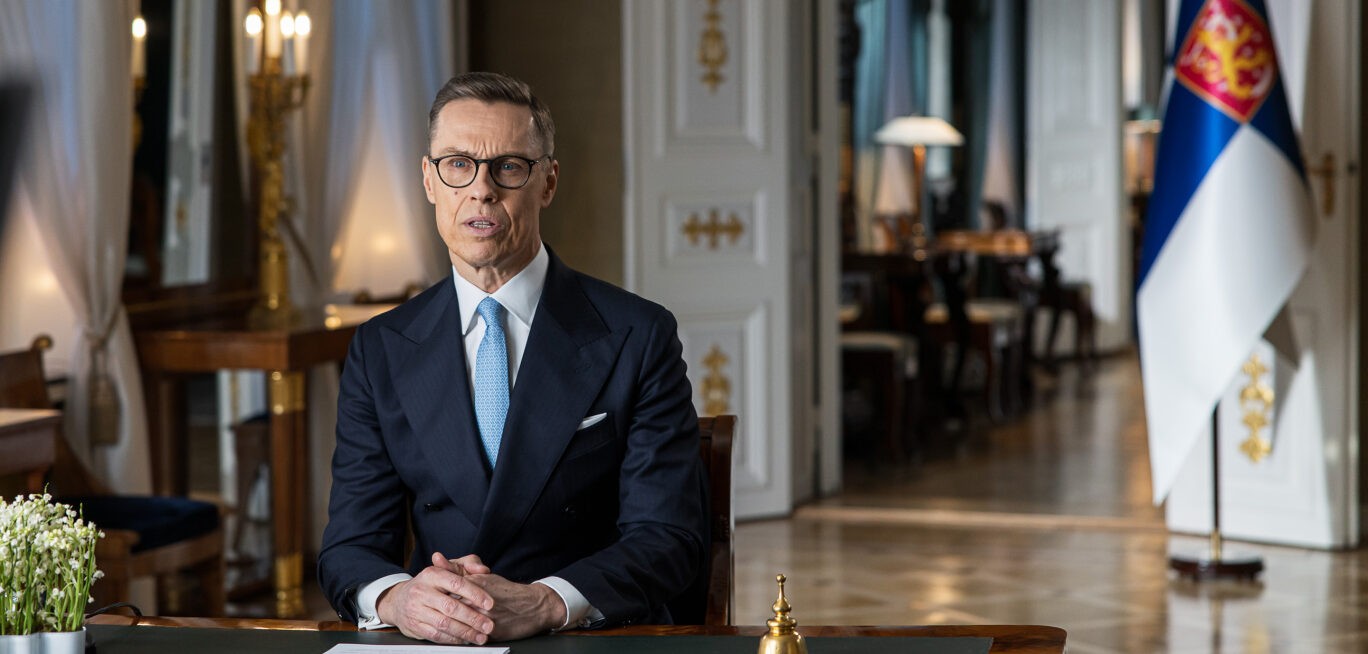
Finnish President Alexander Stubb, who was visiting India when the announcement was made Thursday, told reporters the change was “not about Finland facing any acute or sudden security threat. It is about ensuring that we can participate fully in NATO’s nuclear planning.”
He said Finland did not want a nuclear weapon on its territory but was aligning itself with the existing posture of its Nordic NATO neighbours, for whom no equivalent legislative ban existed. Finland’s right-wing coalition government, which holds a parliamentary majority, said a vote on the proposed changes to the Nuclear Energy Act and the criminal code is expected in early April, and that if adopted it hoped the new policy could enter into force as soon as possible.
Read Also: Ukraine And Russia Complete 500-Each Geneva POW Swap
The legislative change would not mean nuclear weapons would be stationed in Finland in peacetime. The proposed amendment would allow the transport, delivery, or possession of a nuclear weapon in Finland for defence purposes, an opening that, in practice, means NATO allies could pre-position or transit nuclear-capable assets through Finnish territory during a crisis without violating domestic law. Finland’s joining of NATO in April 2023 created a structural inconsistency: as a full NATO member, Finland participates in the alliance’s Nuclear Planning Group but could not legally host or transit nuclear assets, placing it in a legally anomalous position relative to the collective defence obligations it had accepted.
Sweden’s doctrine, as stated by Prime Minister Ulf Kristersson, is to station no permanent foreign troops or nuclear weapons on its soil in peacetime — but Kristersson said, “If we were to find ourselves in a completely different situation, that particular formulation would not apply.”
Sweden, which joined NATO in March 2024, does not have a legislative equivalent of Finland’s 1987 prohibition. Kristersson confirmed Stockholm had begun talks with France and the United Kingdom on nuclear deterrence arrangements, reflecting the same broader reassessment driving Helsinki’s decision. Denmark and Norway similarly maintain peacetime nuclear-free policies without codifying them in statute, meaning Finland’s situation under its 1987 Act was distinctive among the Nordic NATO states.
The Finnish shift sits inside the accelerating European nuclear debate that Macron’s Île Longue speech formalized. Macron outlined a form of forward deterrence in which European partners willing to engage more deeply could be associated more closely with France’s deterrent posture, including the potential dispersal of nuclear-capable French air assets onto allied territory during a crisis, while keeping the nuclear release decision entirely in French hands. France and Germany announced the formation of a joint nuclear steering group the same week.
Read Also: Trump Insists On Hand-Picking Iran’s Next Leadership
Russia called Macron’s announcement “an extremely destabilising development” that posed a potential threat to Moscow, with Peskov arguing that French and British nuclear forces should be counted in any future strategic balance negotiations.
The debate has been given additional impetus by persistent uncertainty about the reliability of the US nuclear umbrella under Trump, whose public statements about NATO’s Article 5 collective defence commitment have been consistently ambiguous. European capitals that three years ago would have regarded the hosting of French or British nuclear assets as politically unthinkable are now treating it as a legitimate planning question. The European Commission said Friday it was finalising a white paper on European defence that will include a dedicated section on nuclear deterrence — the first time the EU’s executive body has formally addressed the question.
Russia has its own historical record of nuclear posturing toward the Nordic states. When Finland and Sweden applied to join NATO in 2022, former Russian President Dmitry Medvedev warned that Russia would “seriously reinforce its group of ground forces and air defences and deploy significant naval forces in the Gulf of Finland” in response, saying the Baltic’s non-nuclear status could no longer be discussed if the two countries joined the alliance.
Friday’s warning from Peskov represents a specific iteration of that standing threat, applied to the legislative removal of a prohibition that was itself a product of Finland’s Cold War-era Finlandisation policy, the practice of maintaining formal neutrality and restraining criticism of the Soviet Union as a condition of preserving Finnish sovereignty.
Finland’s accession to NATO in 2023 ended Finlandisation formally. Thursday’s Nuclear Energy Act amendment, if passed in April as scheduled, would end it legally as well.