
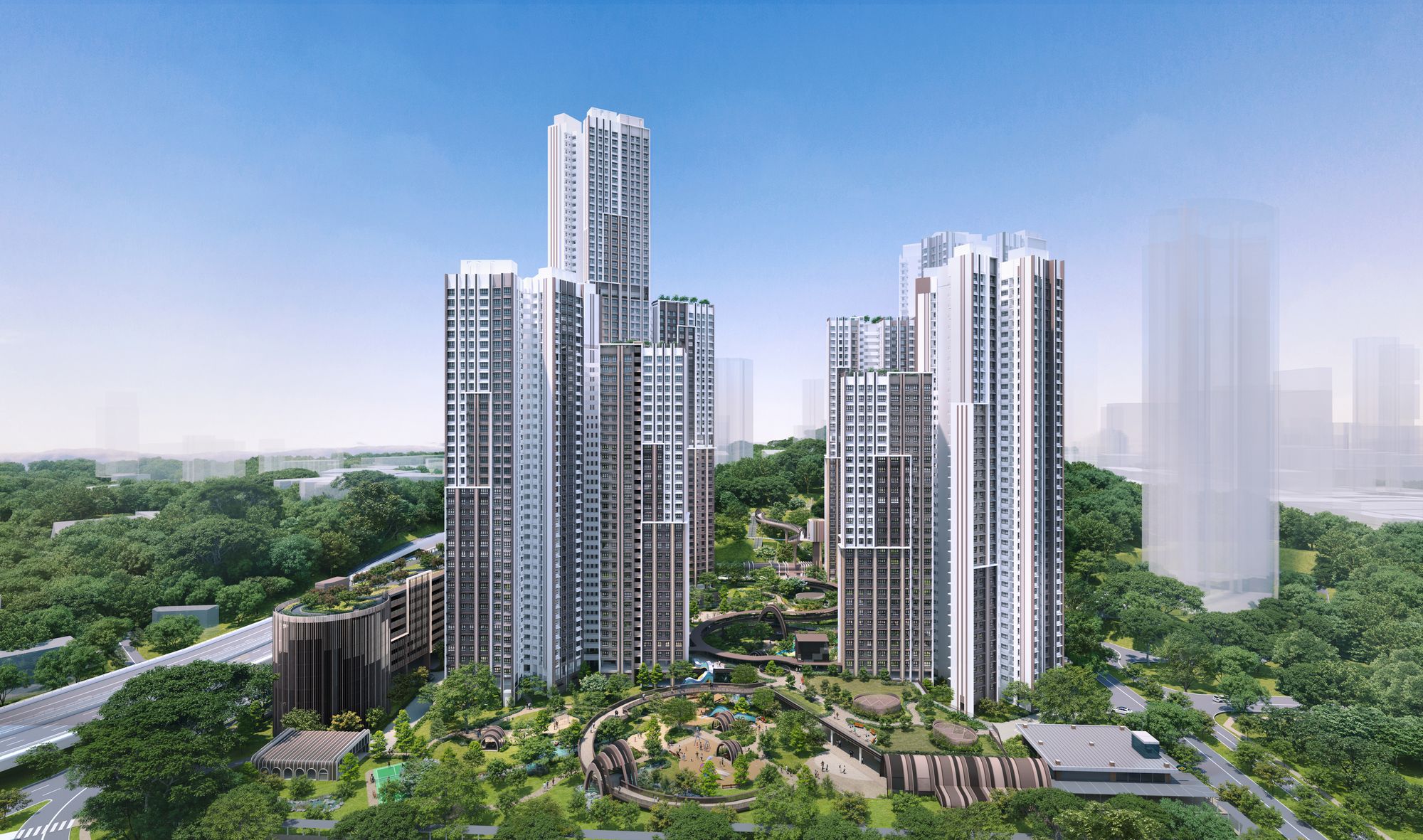
Singapore will squeeze 50 percent more apartments into its next generation of public housing towers by pushing residential blocks beyond 60 stories, exploiting relaxed aviation rules to address land scarcity in one of the world’s most densely populated countries.
A project at Pearl’s Hill in the Outram district will rise more than 10 stories higher than The Pinnacle@Duxton, the current record holder, and pack in roughly 1,700 units when construction finishes in the coming years.
National Development Minister Chee Hong Tat told Parliament on Wednesday that building upward forms a central piece of the government’s strategy to expand housing supply without consuming more land.
“A 60-story block can provide 50 percent more flats compared to a 40-story block, the height of most of our tallest HDB blocks today,” Chee said in remarks outlining ministry spending plans for the year ahead. HDB refers to the Housing and Development Board, which develops public housing across the city-state.
The shift follows an August decision by the Civil Aviation Authority to revise regulations governing building heights near airports, allowing residential projects to climb 15 stories higher than previous limits permitted. That change opened possibilities for denser construction in areas where aviation safety concerns had previously capped development.
Chee said the government would pursue taller blocks “carefully and sensitively” and only where conditions allow, suggesting that not all future projects will reach similar heights. He did not elaborate on what criteria would determine where ultra-tall residential construction proceeds.
Pearl’s Hill marks the first public housing development on the site in four decades. Authorities announced plans in 2023 to build around 6,000 public and private homes in the area over the next decade.
The location sits at the base of Pearl’s Hill City Park next to Outram Park MRT station, placing residents within walking distance of transit and green space.
The 1,700 flats will include two-room Flexi, three-room and four-room units, along with more than 140 public rental apartments. Design elements will incorporate water features and tree canopies inspired by traditional Chinese landscape art depicting mountains and flowing water, according to The Straits Times.
Read also: Shares Of Airlines Rebounce As Middle Eastern Flights Resume
Chee said residential blocks would vary in height “like the mountain ridges in a painting,” suggesting an aesthetic approach that breaks from the uniform tower clusters seen in some older HDB estates.
Singapore has long grappled with limited land. The country measures roughly 730 square kilometers, roughly half the size of greater London, and accommodates more than five million people. Public housing accounts for about 80 percent of the resident population, making HDB flats the dominant form of accommodation.
Demand has outpaced supply in recent years, pushing prices higher and lengthening wait times for new units. The government has responded by accelerating construction and exploring ways to intensify land use without sprawling into green spaces or reclaiming more coastline.
Building taller presents engineering and logistical challenges. Wind loads increase with height, requiring stronger structural supports. Elevator systems become more complex. Fire safety and evacuation procedures must account for longer vertical distances. Construction costs rise as buildings climb.
Whether residents will embrace ultra-tall public housing remains to be seen. The Pinnacle@Duxton, completed in 2009, drew mixed reactions. Some praised its sky bridges and views. Others complained about wind, noise and the impersonal scale of living in structures housing thousands.
Pearl’s Hill will test whether lessons learned from that project can be applied to push heights even further while maintaining livability. The government has not released construction timelines or pricing details for the units.
Read more: Police Review Claims Andrew Shared Trade Secrets With Epstein
Singapore’s approach contrasts with cities like Hong Kong, where private developers have built far taller residential towers but public housing typically rises to lower heights. The decision to pursue record-breaking public housing reflects the government’s view that state-led development can deliver density without sacrificing quality.
Chee’s remarks suggested the ministry sees vertical expansion as essential to meeting housing targets without compromising other land uses. Singapore reserves portions of its territory for military training, water catchment, nature reserves and industrial zones, leaving residential development to compete for space with commercial projects and infrastructure.
The aviation rule change that enabled taller construction came after years of analysis by civil aviation authorities balancing safety concerns against development pressures. Aircraft approach paths, building locations and technological advances in navigation systems all factored into the decision to raise height limits.
Not all areas will benefit equally. Proximity to runways and flight corridors will continue to restrict development in some neighborhoods. But in districts like Outram, where flight paths allow more clearance, the new rules create room for significant densification.