
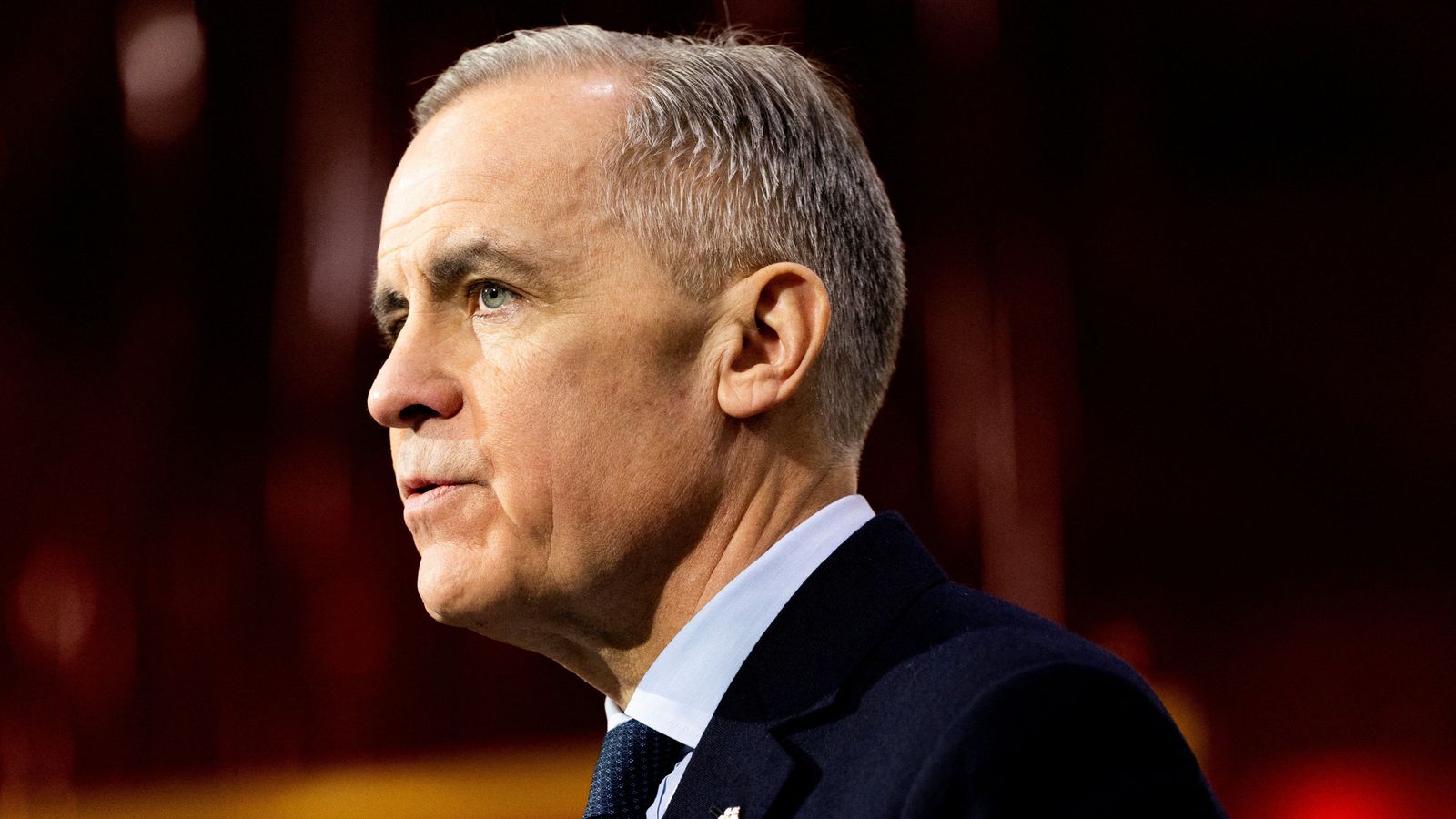
Pressure is building across the Commonwealth for formal action to remove Andrew Mountbatten-Windsor from the British royal line of succession, after Canada’s Prime Minister publicly urged the United Kingdom to consider legislative steps that would permanently block the former prince from ever ascending to the throne.
The call from Canadian Prime Minister Mark Carney represents one of the most direct interventions by a Commonwealth leader in the ongoing controversy surrounding Andrew’s position within the monarchy. Speaking to reporters during an official visit to Tokyo, Carney argued that the gravity of the allegations linked to the former Duke of York demanded a clear constitutional response, even though Andrew now sits far from the immediate path to the crown.
Read Also: Green Card Holders Face New Rules On Loans, Border Checks
Mountbatten-Windsor, who once held the title of Duke of York, was arrested last month on suspicion of misconduct in public office following accusations that he shared confidential material with the late financier Jeffrey Epstein, a convicted sex offender whose global network of associations has been the subject of extensive investigations for years.
Andrew has previously denied any wrongdoing connected to Epstein. He has not publicly addressed the specific allegations connected to the release of a large cache of Epstein-related documents earlier this year, despite repeated requests for comment from media organizations.
Carney’s remarks reflect growing concern among political leaders across countries that share the British monarch as head of state. While the matter remains primarily within the jurisdiction of the United Kingdom, constitutional practice requires consultation with Commonwealth realms when changes are made to the royal succession.
Speaking candidly to journalists, Carney described the situation as one that raised issues of principle for the monarchy and the institutions connected to it.
Even though Andrew currently stands eighth in the order of succession, Carney argued that proximity to the throne was not the central issue. The symbolic weight of the royal line, he suggested, means that individuals connected to it must meet standards consistent with public trust.
The former prince’s status within the monarchy has already been significantly diminished. In October, amid sustained criticism over his longstanding association with Epstein, Andrew was stripped of his royal titles. The move effectively ended his formal public role within the royal family, although it did not alter his constitutional position in the line of succession.
That distinction has now become the focus of political debate.
Carney’s intervention follows similar statements from leaders in other Commonwealth countries, indicating that momentum may be building for a coordinated response.
Australia’s Prime Minister Anthony Albanese confirmed last month that his government would support any initiative from the United Kingdom aimed at removing Mountbatten-Windsor from the succession order. In correspondence with British Prime Minister Sir Keir Starmer, Albanese made clear that Canberra viewed the allegations against Andrew with seriousness.
In his message, Albanese stated that Australia would agree to any proposal to exclude the former prince from the royal succession, emphasizing that the claims surrounding him were of a grave nature and had generated significant concern among the Australian public.
New Zealand has expressed a similar position. Prime Minister Christopher Luxon told reporters that fundamental legal principles must apply to all individuals regardless of status.
Luxon noted that once the investigation into Andrew’s conduct is concluded, the United Kingdom would be entitled to decide whether constitutional action is appropriate. Should London move in that direction, he said, New Zealand would support the decision.
These statements highlight the unusual constitutional framework surrounding the British monarchy. Although the royal family resides in the United Kingdom, the monarch simultaneously serves as head of state for several independent countries across the Commonwealth.
Changes to the rules governing succession therefore require the agreement of those states.
In Britain, the government of Prime Minister Sir Keir Starmer has confirmed that it is examining the legal options required to formally remove Andrew from the line of succession. Any such step would require the passage of legislation through Parliament.
British Defence Minister Luke Pollard indicated that the government had already begun discussions on the issue. Speaking on Radio 4’s political programme Any Questions, Pollard said ministers had been working closely with Buckingham Palace to consider mechanisms that would ensure the former prince could never inherit the throne.
Pollard argued that such action would be justified regardless of the eventual outcome of the ongoing police investigation. In his view, the constitutional risks associated with maintaining Andrew’s place in the succession outweigh the uncertainties surrounding the legal process.
If pursued, the proposal would require a formal Act of Parliament. Both the House of Commons and the House of Lords would need to approve the legislation before it could become law. Once passed, the bill would require royal assent from King Charles III—Andrew’s elder brother—to take effect.
The process does not end there. Because the monarch is head of state in multiple Commonwealth realms, the governments of those countries would also need to support the change for it to be recognized across the constitutional framework that governs the monarchy.
At present, fourteen countries fall into this category, including Canada, Australia, and New Zealand.
Read Also: Trump Hosts Twelve Latin American Leaders In Miami Summit
While complex, the process would not be without precedent. The last time a member of the royal family was removed from the line of succession through parliamentary action occurred in 1936, when Edward VIII abdicated the throne. Following his abdication, legislation was enacted to remove both Edward and his descendants from the succession.
That episode remains one of the most significant constitutional moments in modern British royal history.
The current debate surrounding Andrew is unfolding in a very different context, shaped less by questions of personal marriage and more by issues of legal accountability and institutional reputation.
Buckingham Palace has not publicly commented on the discussions reportedly taking place within government circles. As is customary, the palace has maintained a position of public neutrality on matters involving potential legislation affecting the monarchy.
Whether the United Kingdom ultimately proceeds with formal action remains uncertain. Yet the growing chorus of support from Commonwealth leaders suggests that the issue is no longer confined to domestic British debate.
Instead, it has become a question about how the modern monarchy manages accountability, legitimacy, and public trust in an era when its constitutional role spans multiple democratic nations.