
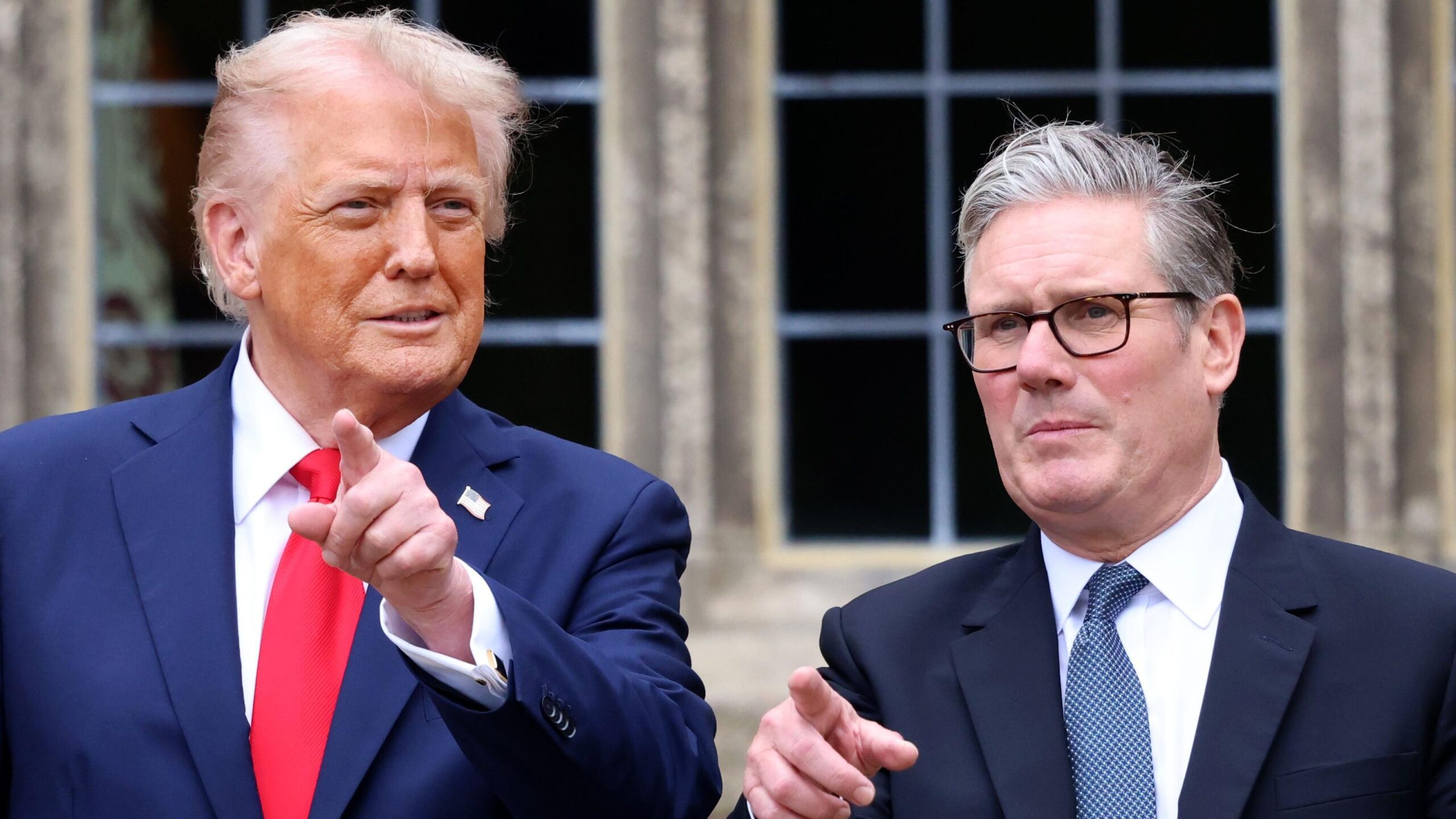
Prime Minister Keir Starmer spoke with President Donald Trump by telephone on Sunday afternoon in the first direct communication between the two leaders since Trump publicly labelled Britain “our once great ally” and declared he would “remember” what he called the United Kingdom’s failure to join the war against Iran from the outset.
The conversation was described by Downing Street in carefully limited terms that acknowledged ongoing cooperation without engaging Trump’s insults or signalling any shift in Britain’s refusal to participate in offensive operations.
The official readout from Downing Street said the two leaders discussed the latest situation in the Middle East and UK-US military cooperation through the use of RAF bases in support of the collective self-defence of partners in the region, and that Starmer shared his heartfelt condolences with Trump and the American people following the deaths of six US soldiers. They looked forward to speaking again soon.
The statement made no reference to Trump’s Truth Social post from the previous day, in which he wrote: “We don’t need people that join Wars after we’ve already won!” The statement’s deliberate silence on Trump’s remarks was itself a diplomatic signal, that Downing Street had chosen to absorb the public humiliation and prioritise the functional relationship over a formal rebuttal.
Foreign Secretary Yvette Cooper told Sunday with Laura Kuenssberg that Starmer was “right to stand up for Britain’s interests” and that the UK government would not agree with the American president on every issue.
“It is our job as the UK government to decide what’s in the UK national interest, and that doesn’t mean simply agreeing with other countries or outsourcing our foreign policy to other countries,” Cooper said. Writing in the Sunday Mirror, Starmer said the country needed “seriousness, not political games” at a moment of international crisis, and dismissed opposition criticism as attempts to “undermine Britain on the world stage.”
Read Also: Europe Splits Over Iran War’s Legality
Conservative leader Kemi Badenoch accused him of being “too scared to make foreign interventions” and said the UK was “in this war whether Keir Starmer likes it or not.” Liberal Democrat leader Sir Ed Davey took the opposite position, urging Starmer to stand firm against what he called Trump’s bullying and warning against getting drawn further into an illegal and damaging war.
The call took place against a backdrop of rapidly developing events that gave it a particular urgency. Iran’s Assembly of Experts confirmed on Sunday that it had elected a new supreme leader by an overwhelming majority, with member Hosseinali Eshkevari of Gilan province announcing: “The name of Khamenei will continue. The vote has been cast and will be announced soon,” confirming the selection without yet releasing the name, though Iran International’s reporting and the IRGC’s official communications both pointed to Mojtaba Khamenei, the late supreme leader’s 55-year-old son.
Trump told ABC News in a separate interview that Iran’s new leader would require American approval to remain in power.
“He’s going to have to get approval from us. If he doesn’t get approval from us he’s not going to last long. We want to make sure that we don’t have to go back every ten years,” Trump said, language that effectively extended Washington’s claimed authority to veto sovereign political succession in Tehran.
Read Also: Warning Of More Strikes As US B-1 Bomber Touches Down In UK
The chief of Britain’s armed forces, Admiral Tony Radakin, rejected criticism that the military had been ill-prepared for the Iran conflict, saying the UK was operating in “probably the most dangerous period” in decades. The Ministry of Defence confirmed it had placed HMS Prince of Wales on accelerated deployment readiness, though no final decision had been taken on whether to dispatch the carrier to the region. Trump’s Saturday rejection of the offer, “we don’t need them any longer,” did not preclude a later reversal, and defence analysts said a British carrier group operating alongside US and French naval assets in the eastern Mediterranean would have both practical and symbolic value regardless of Trump’s public posturing.
The structural tension in the UK-US relationship runs deeper than the immediate row over Iran. Britain’s refusal to allow the United States to use RAF Fairford and Diego Garcia for offensive strikes on February 28 was grounded in legal advice that participation in a preventive war without UN Security Council authorisation would constitute an internationally wrongful act implicating the UK under international law. That legal judgment — which Starmer has consistently defended as principled and correct — is simultaneously the reason the special relationship is under strain and the reason most British constitutional lawyers, and a majority of the British public, believe the prime minister was right.
The 56 per cent approval rating Starmer’s initial decision received in a Survation poll published Friday represents the clearest evidence yet that his political instinct and his legal judgment were aligned. Trump’s anger, by contrast, reflects a president who believes that alliance loyalty should override legal scruple — a view Starmer has politely but consistently declined to adopt.