
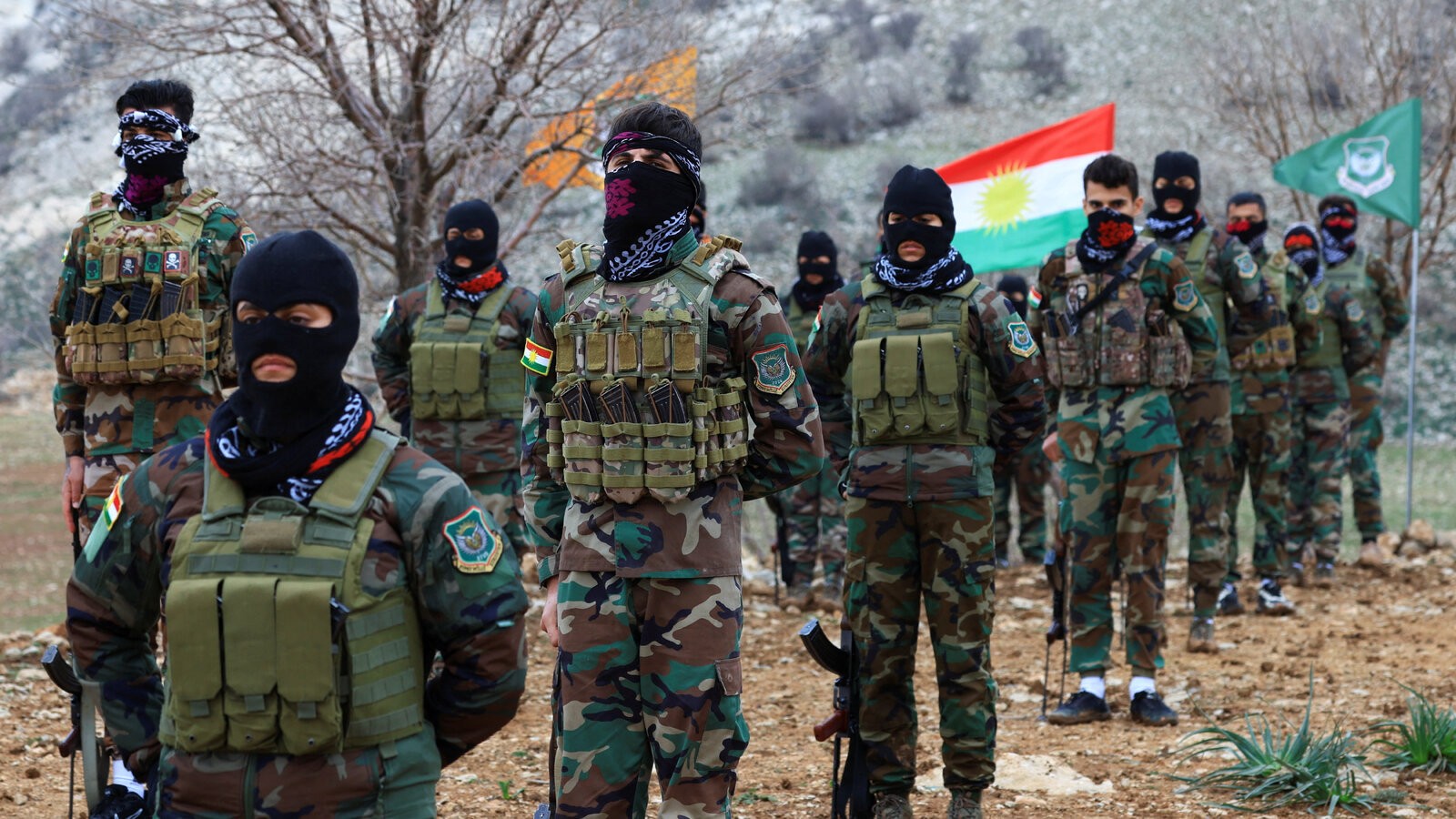
Kurdish residents of northeast Syria issued a direct public warning to Iranian Kurds on Sunday against aligning with the United States in any ground operation inside Iran.
They drew on their own traumatic experience of US abandonment in January 2026, when Washington backed Syria’s new central government and watched as the Kurdish-led Syrian Democratic Forces lost 80 per cent of the territory they had spent a decade bleeding for.
“I hope that the Kurds of Iran will not ally themselves with America, because they will abandon them,” Saad Ali, a 45-year-old resident of the northeastern Syrian Kurdish city of Qamishli, told Reuters. “Tomorrow, if an agreement is made between them and the Iranians, they will eliminate you. Do not make our mistakes.”
Ahmed Barakat, head of the Kurdish Progressive Democratic Party in Syria, urged Iranian Kurds to exercise “extreme caution,” saying he believed that “accepting the invitation of the United States and being considered the spearhead in confronting or weakening the Iranian regime is not, at present, in the best interest of the Kurds of Iran.”
A third resident of Qamishli, Amjad Kardo, 26, said Iranian Kurdish leaders should refuse to act without “firm, signed guarantees” regarding the future of Kurdish regions inside Iran. “We Kurds here in Syria have had a negative experience with the Americans, and their abandonment of Kurdish resistance movements,” he said.
The warning came as the Coalition of Political Forces of Iranian Kurdistan, a formal alliance of five major groups, the Democratic Party of Iranian Kurdistan, the Kurdistan Freedom Party, the Kurdistan Free Life Party, the Organisation of Iranian Kurdistan Struggle, and the Komala of the Toilers of Kurdistan, formed on February 22, six days before Operation Epic Fury began — was reported by Reuters and Axios to be training and repositioning hundreds of fighters along the Iraq-Iran border in preparation for a cross-border ground operation.
Read Also: Europe Splits Over Iran War’s Legality
Three sources with knowledge of the matter told Reuters that the coalition had been consulting the United States on whether and how to attack Iranian security forces in western Iran. Two US and Israeli officials confirmed to Axios that the operation was being jointly backed by the CIA and the Mossad, with the idea originating from Israeli Prime Minister Benjamin Netanyahu and Mossad before the CIA joined at a later stage.
The goal, according to two sources cited by Reuters, was to create space for Iranians opposed to the Islamic Republic to rise up following the killing of Supreme Leader Ali Khamenei and other senior officials in the opening strikes. A senior Iranian Kurdish official told CNN: “We believe we have a big chance now,” adding that the factions expected US and Israeli air support for any ground advance. Secretary of State Marco Rubio told Congress in a closed-door briefing: “We’re not arming the Kurds. But you never know with the Israelis.”
White House press secretary Karoline Leavitt said Trump had not agreed to any plan for supporting a Kurdish offensive. The CIA and Mossad declined to comment. An Iranian Kurdish source told Reuters that leaders had requested written guarantees from the United States regarding the political future of Kurdish regions inside Iran, a direct echo of the Syrian Kurds’ warning, without disclosing what guarantees, if any, had been offered in return.
Trump’s own position shifted publicly over the course of four days. On Thursday he told Reuters it would be “wonderful” if Kurdish forces crossed from northern Iraq into Iran, declining to say whether the US would offer air support. On Saturday he told reporters aboard Air Force One that he did not want Kurdish fighters going into Iran, a reversal that Kurdish officials privately described as consistent with the pattern of American ambiguity their Syrian counterparts had warned them about.
Read Also: No More Regional Strikes Unless US Bases Attack — Iran
Chatham House analyst Neil Quilliam told Al Jazeera the plan was an afterthought that had “not featured in any major planning to support any broader endgame,” adding that it revealed the US-Israeli campaign against Iran had been “poorly thought out.” He warned it might cause more internal conflict in Iran than it resolved.
The geopolitical risks of a Kurdish ground operation extended well beyond Iran’s borders. Turkey, which lists the Kurdistan Workers’ Party as a terrorist organisation and has spent decades fighting Kurdish separatism along its own southeastern border, said through its foreign ministry that it would coordinate with Iran to crush any Kurdish uprising, and that it viewed the potential operation as a direct threat to Ankara’s security interests.
Iran threatened on March 6 to target all facilities of the Kurdistan Region of Iraq if Kurdish militants were allowed to enter Iran across the border, a warning directed at Iraqi Kurdish leaders Masoud Barzani of the Kurdistan Democratic Party and Bafel Talabani of the Patriotic Union of Kurdistan, both of whom received calls from Trump on the Sunday the war began and both of whom expressed reservations about facilitating a ground incursion, describing it as “very dangerous.” Iran’s foreign minister Abbas Araghchi raised the same concern directly with Iraqi Prime Minister Mohammed Shia al-Sudani.
The historical pattern the Syrian Kurds invoked has repeated across a century of Kurdish political engagement with great powers. In 1975, the United States abruptly withdrew support from Iraqi Kurdish forces following the Algiers Agreement between Iraq and Iran, an abandonment Henry Kissinger later acknowledged with the remark that covert action should not be confused with missionary work. In 1991, the US encouraged a Kurdish uprising against Saddam Hussein following the Gulf War and then declined to protect the rebels when Saddam’s forces crushed the revolt, killing tens of thousands.
In 2019, Trump ordered a withdrawal of US troops from northeast Syria that opened the door to a Turkish military offensive against the same Kurdish forces that had destroyed the Islamic State’s territorial caliphate. In January 2026, the same forces lost the territory they had held since 2015 when Washington backed Damascus’s new central government.
The question of whether the US would repeat that pattern a fifth time with Iran’s Kurds was, as of Sunday, unanswered.