
Iran’s clerical elite gathered votes to select a new supreme leader but delayed announcing the choice nine days into a war that has left the country’s capital choking on toxic smoke from burning fuel depots and its leadership vulnerable to threats from Washington.
Three members of the Assembly of Experts said Sunday the body had chosen Ayatollah Ali Khamenei’s successor, though the name remained undisclosed hours later. Hossein Redaei, one member, said wartime conditions made a public gathering inappropriate but confirmed the selection process had concluded.
The succession unfolds as Israeli warplanes struck five oil facilities around Tehran overnight, killing at least four people and blanketing the city of 10 million in acrid haze that authorities warned could be toxic.
Windows shattered across neighborhoods from the force of explosions that ignited fuel reserves still burning more than 12 hours later.
Read also: Cooper Backs Starmer In UK’s Response To Iran Crisis
“The blaze has been burning for more than 12 hours, the air has become unbreathable. I can’t even go out to do the daily shopping,” a 35-year-old Tehran resident said in a text message. “At first, I supported this war. After Khamenei’s death, I celebrated with my friends: we drank wine and we danced. But since yesterday… people say there’s not even any gasoline left at the gas stations.”
The governor told state media that fuel distribution had been “temporarily interrupted” in the capital. A dark pall blocked out the sun while residents stayed indoors, many unable to close windows blown out by the strikes.
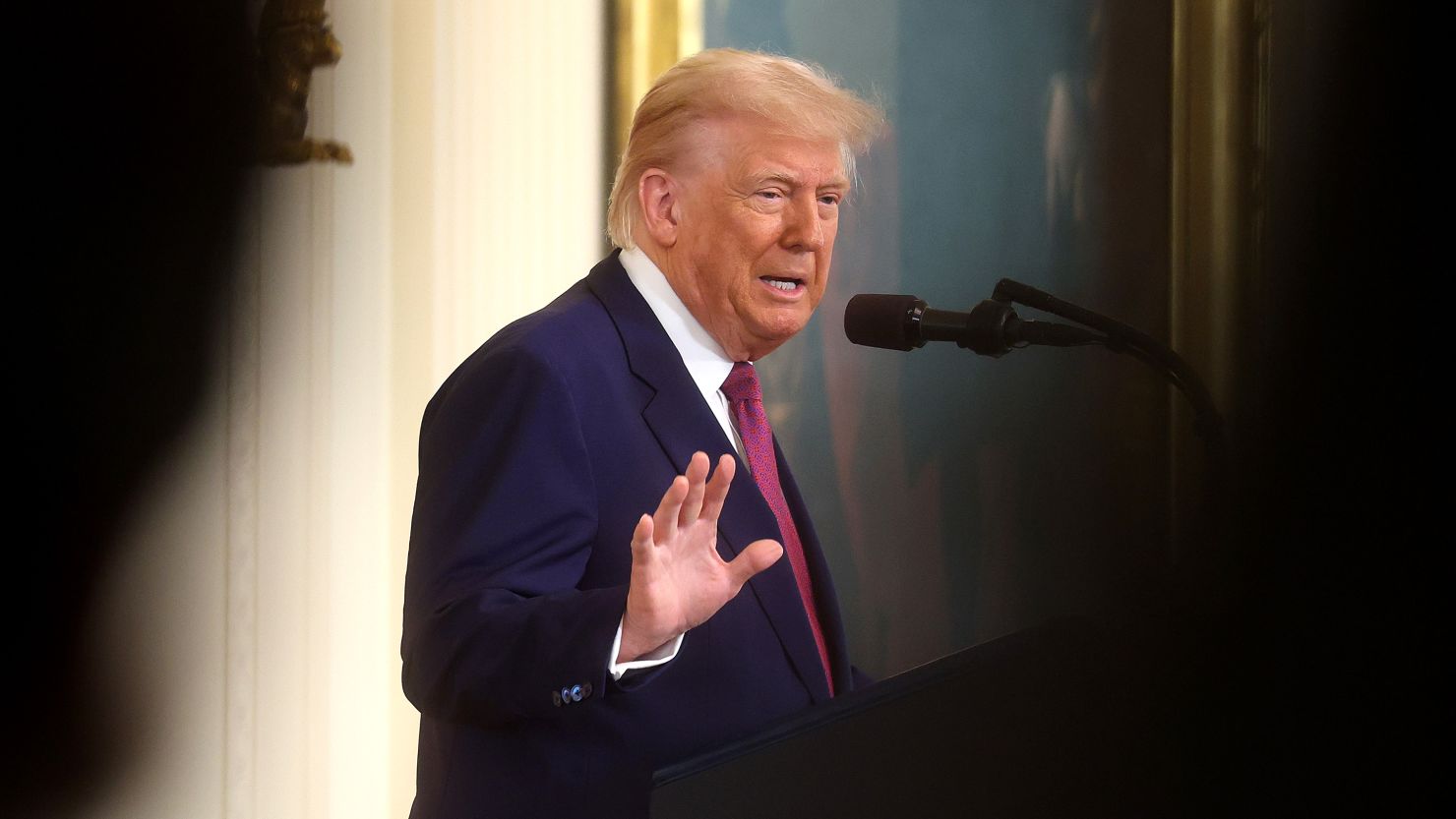
President Donald Trump inserted himself into Iran’s succession deliberations Sunday, declaring that whoever emerges as supreme leader must secure his approval or face a short tenure. “He’s going to have to get approval from us,” Trump told ABC News. “If he doesn’t get approval from us he’s not going to last long.”
Foreign Minister Abbas Araghchi rejected the demand earlier in the day, saying the decision belonged to Iran alone and that the country would “allow nobody to interfere in our domestic affairs.” Speaking on NBC’s “Meet the Press,” he called on Trump to “apologize to people of the region” for the expanding conflict.
Mojtaba Khamenei, the slain leader’s 56-year-old son, has emerged as a leading candidate. Trump dismissed him last week as an unacceptable “lightweight,” though analysts note the younger Khamenei’s close ties to the Revolutionary Guards and his role managing his father’s office position him as a natural successor who would ensure policy continuity.
Read more: Tensions Increase In Cyprus After Drone Strikes British Base
Israel’s military warned any new supreme leader that “we will not hesitate to target you,” underscoring the vulnerability of Iran’s leadership structure nine days into fighting that began when American and Israeli forces killed Ayatollah Khamenei in airstrikes.
The overnight operations extended beyond Tehran. Israeli jets hit a hotel in central Beirut targeting suspected Iranian commanders, while attacks struck fuel tanks at Kuwait’s international airport and damaged a water desalination plant in Bahrain.
Saudi Arabia reported two dead and 12 wounded from what it described as a “projectile” in Al-Kharj province. The kingdom said it intercepted drones headed for targets including Riyadh’s diplomatic quarter.
Iran’s Revolutionary Guards said they possess supplies to sustain drone and missile campaigns across the Middle East for up to six months.
Spokesman Ali Mohammad Naini said Tehran had deployed only first- and second-generation missiles so far but would use “advanced and less-used long-range missiles” in coming days.
Several blasts echoed over Tel Aviv after Israel’s military detected incoming missiles from Iran. Emergency services said six people were wounded in central Israel. Two Israeli soldiers died in fighting in southern Lebanon, the military said.
Iran’s health ministry put civilian casualties at 1,200 dead and roughly 10,000 wounded, figures that could not be independently verified. Lebanon’s health minister said at least 394 people had been killed since Israeli strikes expanded there a week ago, including 83 children and 42 women.
Trump attended the return of six American service members killed in a drone strike on a US base in Kuwait last Sunday. He again refused to rule out deploying ground troops to Iran but insisted the war was nearly won despite ongoing Iranian missile and drone attacks.
Bahrain’s King Hamad bin Issa Al Khalifa delivered a rare speech condemning what he called “unprecedented aggression” from Iran’s strikes, saying they “cannot be justified under any excuse.”
Analysts warned no clear path exists to end a conflict US and Israeli officials suggest could last a month or longer. Trump has proposed rebuilding Iran’s economy if Tehran installs a leader Washington finds acceptable, though he has not specified criteria beyond rejecting Mojtaba Khamenei.
China and Russia have remained largely silent despite close ties with Iran. Chinese Foreign Minister Wang Yi said the war “should never have happened,” telling reporters in Beijing that “the world cannot return to the law of the jungle.”
Pope Leo XIV prayed Sunday “that the roar of the bombs may cease, the weapons may fall silent, and a space for dialogue may open.”
The Assembly of Experts, comprising 88 senior clerics, traditionally meets to select supreme leaders through deliberations that can take days or weeks. The wartime acceleration of that process reflects pressure to restore clear authority while Iranian forces engage across multiple fronts and the country’s infrastructure sustains damage from sustained airstrikes.
Choosing a successor during active combat carries risks. A new leader must command respect among Revolutionary Guards commanders coordinating military operations, clerical networks managing domestic governance, and intelligence services tracking threats to regime survival. Installing someone perceived as weak or illegitimate could fracture decision-making at a moment when unity matters most.