
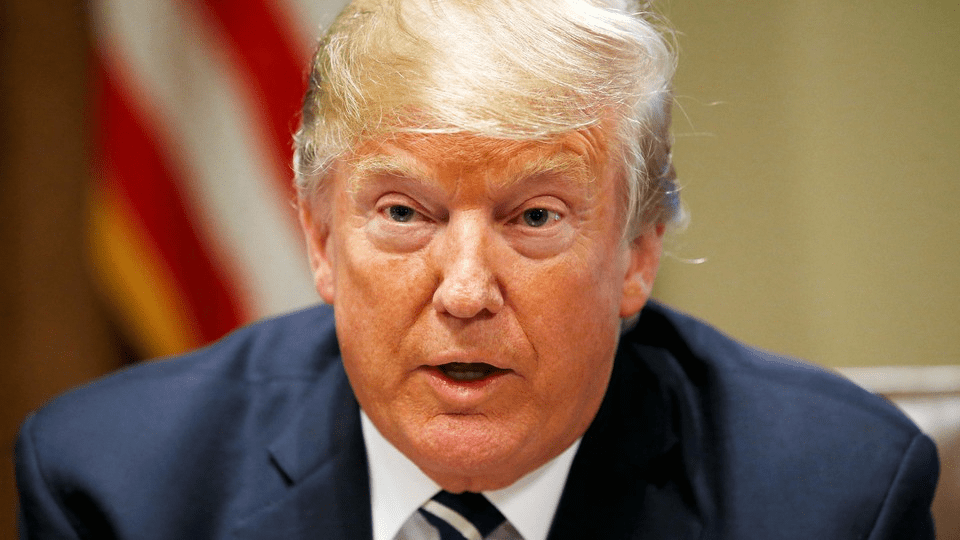
Donald Trump said Monday he would waive certain oil-related sanctions to help cool crude prices rattled by the ongoing US-Israeli military campaign against Iran, without identifying which countries would benefit or specifying which restrictions would be lifted.
“We’re also waiving certain oil-related sanctions to reduce prices,” Trump told reporters following phone calls with Russian President Vladimir Putin and Chinese President Xi Jinping — conversations that set the immediate context for the announcement, given that Russia is among the world’s largest oil exporters and China its most significant buyer.
Trump added that Washington could consider keeping the sanctions relief in place permanently if the Iran conflict reached a conclusion sooner than expected — a signal that the waivers were tied as much to the war’s trajectory as to any standalone economic calculation.
Read also: Farage Makes Investment In Bitcoin Treasury Company
The announcement landed against a volatile market backdrop. Oil prices had swung sharply in both directions over the previous 24 hours, with crude tumbling and equities recovering after Trump suggested the Iran operation could end earlier than anticipated. Energy markets have been on edge since the strikes began, with crude price spikes generating alarm among importing nations across Asia. South Korea activated a $68 billion market stabilisation fund, Japan was reported to be weighing draws on its national oil reserves, and fuel queues were reported as far afield as Vietnam, Myanmar and the Philippines.
The administration had already been moving in this direction. Treasury Secretary Scott Bessent said last week that Washington was considering broader relief on Russian oil sanctions, a day after the US government temporarily authorised India to purchase Russian crude from vessels caught under various sanctions regimes. That authorisation runs through April 3.
Russia stands to gain considerably from any sustained easing of restrictions. Moscow’s oil and gas revenues fell to a five-year low in January as Western sanctions, imposed in response to its invasion of Ukraine, continued to bite. Inflation has climbed, growth has slowed, and the financial strain of sustaining a four-year war has pushed the Russian economy into a prolonged stutter. The addition of Lukoil and Rosneft — the country’s two largest oil producers — to Washington’s sanctions blacklist in late October 2025 tightened the squeeze further.
Read more: NATO Launches Arctic War Drills With Emphasis On Preparedness
Some analysts, however, argue that Trump’s broader interventions in the region have inadvertently strengthened Moscow’s hand. The military campaign against Iran and the ousting of Venezuelan President Nicolás Maduro in January have together removed two sources of discounted crude from global markets, pushing major importers toward Russian supply at a moment when Washington is simultaneously trying to limit the revenues funding the Kremlin’s war effort. Russia, analysts noted, has used the moment to reinforce its argument to China that seaborne energy supplies remain vulnerable to American disruption — and that overland pipelines and road connections from Russia represent the only reliably insulated alternative.
Trump described his call with Putin as “positive” on the question of ending the Ukraine war, though no specific progress was reported. Any durable easing of energy sanctions would require Washington to square a difficult circle: alleviating pressure on global oil markets while avoiding a significant rehabilitation of Russian finances that could sustain the conflict it has been trying to bring to a close.
No formal executive order or Treasury guidance detailing the scope of the sanctions waivers had been issued as of Monday.