
Iran’s military command warned on Wednesday that global oil prices could reach $200 a barrel if the United States and Israel continue striking Iranian energy infrastructure, as three more vessels came under attack in the effectively blockaded Strait of Hormuz and the International Energy Agency moved toward an emergency release of strategic petroleum reserves to counter what analysts are calling the worst supply disruption in the history of global oil markets.
Ebrahim Zolfaqari, spokesperson for Iran’s military command, addressed the warning directly at Washington. “Get ready for oil to be $200 a barrel, because the oil price depends on regional security which you have destabilised,” he said on state television. Zolfaqari also announced that Iran would target banks conducting business with the United States or Israel, advising civilians across the Middle East to stay at least 1,000 metres from such financial institutions. The warning came shortly after Israeli strikes hit the offices of a bank in Tehran overnight, an attack that has not been independently verified.
Brent crude futures have been trading close to $99 per barrel, with West Texas Intermediate hovering near $96 — gains that reflect a near-90 percent collapse in tanker traffic through the Strait of Hormuz since the war began on February 28. Goldman Sachs has warned the market may be approaching “demand destruction” territory, meaning prices would have to rise fast enough to suppress consumption before supply and demand could rebalance. Saudi Aramco chief executive Amin Nasser said on Tuesday the conflict would have “catastrophic consequences” for global energy markets if the blockade persisted.
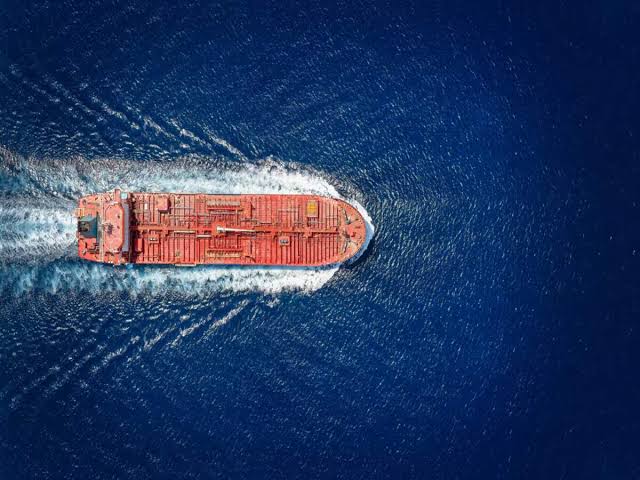
The Strait of Hormuz, which is 21 miles wide at its narrowest point, carries approximately 20 million barrels of oil per day — roughly one-fifth of global seaborne crude supply — as well as large volumes of liquefied natural gas, the majority of it destined for Asian markets. In early March, Iran allowed only Chinese-flagged vessels to transit the strait, citing Beijing’s supportive posture since the war began. At least five tankers have been damaged, two crew members killed, and approximately 150 ships left stranded in anchorage near the strait’s approaches. On Wednesday, three more vessels came under attack, adding to a toll that shipping analysts at Rapidan Energy have described as the largest oil supply disruption in recorded history.
The mine-laying question has added a new and dangerous dimension to the crisis. CNN and CBS reported on Tuesday, citing US intelligence sources, that Iran had begun deploying mines in the strait in recent days, with Iranian forces potentially capable of laying hundreds more. President Donald Trump responded on Truth Social, saying his administration had “no reports” of mines but warned that if any had been placed and were not immediately removed, “the military consequences to Iran will be at a level never seen before.” Trump had earlier threatened to strike Iran “twenty times harder” if the country moved to block freedom of navigation, declaring: “Death, fire, and fury will reign upon them.” Iranian security official Ali Larijani replied via social media that Tehran was not afraid of “empty threats.”
The IEA convened an extraordinary session of its member countries on Tuesday to assess the case for releasing emergency stockpiles. The agency’s more than 30 members collectively hold approximately 1.2 billion barrels of government-controlled oil in reserve, with an additional 600 million barrels in obligated industry stocks.
Italy’s energy minister said member states had committed to showing solidarity through the use of stockpiled reserves to compensate for the shortfall, but the IEA concluded Tuesday’s session without announcing a concrete release decision. G7 finance ministers have been in parallel emergency discussions, with a proposed coordinated release of up to 400 million barrels described by one analyst as potentially the largest such intervention in history, dwarfing all previous SPR actions.
Read Also: Oil Field-Bound Drones Intercepted By Saudi Defense Forces
Alternative supply routes are providing only partial relief. Saudi Aramco has diverted some crude shipments through the Yanbu pipeline to the Red Sea coast, but that route cannot fully replace volumes normally exported through the strait. Kuwait, Iraq, and the UAE have all reduced output because their Gulf terminals cannot safely export. Major shipping operators, including Maersk, have rerouted entire fleets around the Cape of Good Hope, adding ten to fourteen days to transit times and millions of dollars in additional fuel costs per voyage.
Militarily, Iran demonstrated on Wednesday that its capacity to retaliate remains substantially intact. The IRGC confirmed a 37th wave of missile attacks, targeting positions in Israel and US installations across the Gulf. Israeli strikes have hit a refinery in Tehran, damaging four oil storage sites and production transfer infrastructure. Iran’s armed forces said they would respond in kind to any further strikes on Iranian energy assets.
A new diplomatic front has opened in parallel with the combat. France announced it would deploy approximately a dozen naval vessels — including the Charles de Gaulle aircraft carrier strike group and two helicopter carriers — to the Mediterranean, Red Sea, and potentially the Strait of Hormuz itself. President Emmanuel Macron, speaking from Cyprus after drones were intercepted near the island, described the deployment as defensive and proposed an international maritime escort mission to shepherd commercial tankers through the strait once the intensity of combat subsided. The proposal has received no formal response from Washington, Tehran, or the other Gulf states most directly affected.
Read Also: Trump To Ease Oil Penalties As Iran Conflict Shakes Markets
The raw human cost of the blockade is becoming visible. In Tehran, residents have described adapting to nightly air raids that have driven hundreds of thousands of people out of the capital and blanketed the city in contaminated rainfall from burning oil infrastructure.
“There were bombings last night but I did not get scared like before. Life goes on,” Farshid, 52, told Reuters by telephone from the city.
Meanwhile, a senior Israeli official told Reuters that Israeli leaders now privately accept that Iran’s ruling political structure could survive the war, a significant internal recalibration of early assumptions about the campaign’s probable outcomes.
Two other Israeli officials said there was no indication that Washington was close to winding down operations. Trump told the New York Post on Monday that he was “nowhere near” ordering ground troops into Iran, and pushed back against speculation about a military push to seize Tehran’s uranium stockpile.
The IEA has indicated it will present a detailed analysis of the costs and risks of a coordinated stock release at its next consultation with member states. No date has been confirmed for that meeting.