
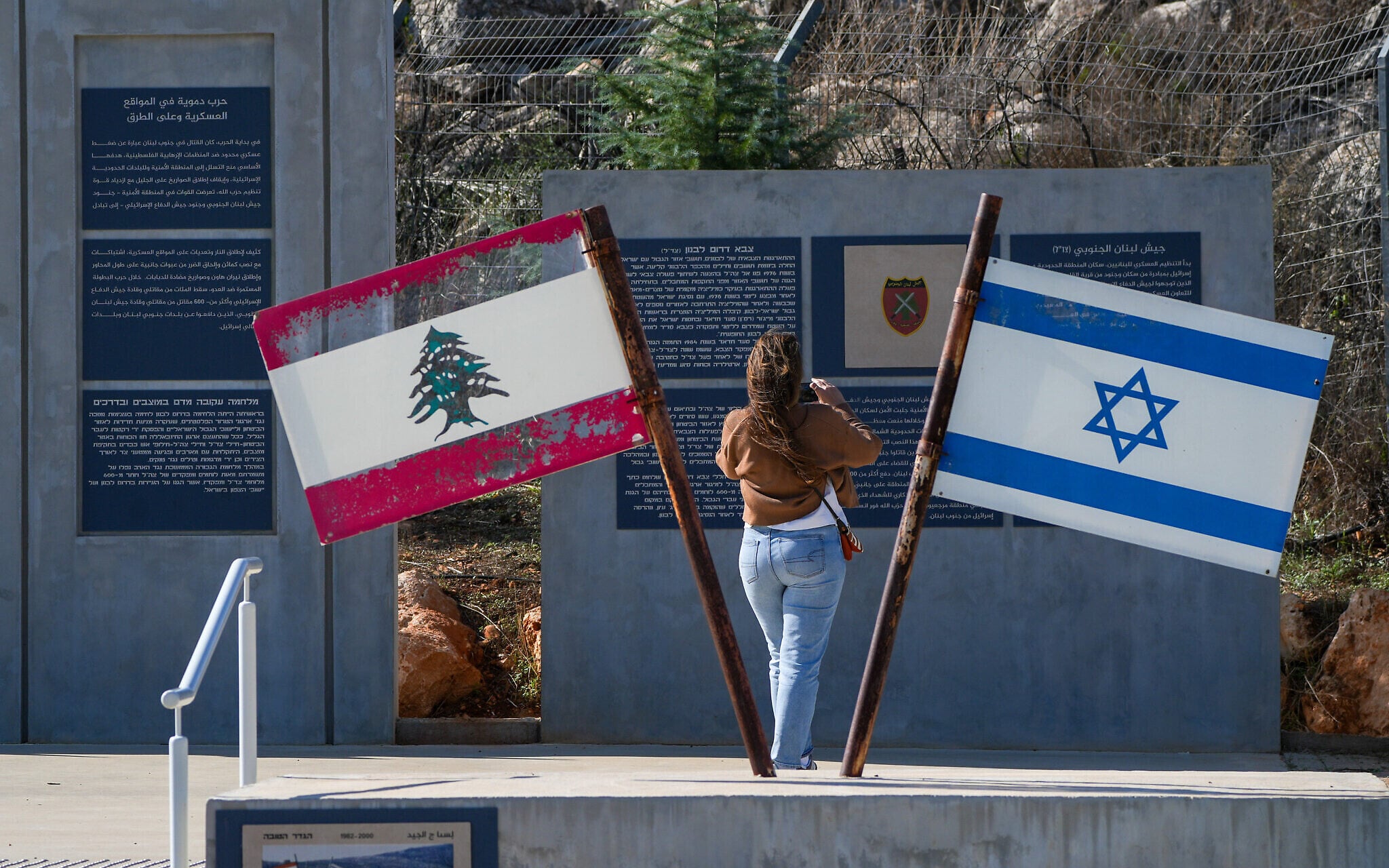
Israel and Lebanon are expected to hold direct negotiations in the coming days in what would be their first formal diplomatic contact since Lebanon was drawn into the Middle East war on March 2, Israeli newspaper Haaretz reported on Saturday, citing two sources with knowledge of the matter, a development that would constitute the most significant diplomatic breakthrough of a conflict that has killed more than 800 people in Lebanon and displaced more than 800,000 from their homes.
US President Donald Trump’s son-in-law Jared Kushner will be involved in the talks, which may be held in Paris or Cyprus, with Israeli Prime Minister Benjamin Netanyahu’s confidant Ron Dermer leading the Israeli delegation, Haaretz said.
The negotiations are expected to focus on ending the fighting in Lebanon and disarming Hezbollah. A second source said Cyprus was currently seen as the more likely venue. French President Emmanuel Macron said on Saturday that he was ready to facilitate the discussions and host them in Paris if that was the parties’ preference. The Cypriot presidency, responding to a direct query from Haaretz, said: “If there are specific developments, we will issue a public and transparent announcement. At the moment, there is nothing to comment on.” The Israeli government did not issue an immediate comment on the report.
Three Lebanese officials confirmed to Reuters that Beirut was forming a delegation for the talks, though no date had been set. One of the officials said Lebanon still required clarity on the framework, specifically on whether Israel was prepared to accept Lebanese President Joseph Aoun’s precondition of a full ceasefire before negotiations began.
Lebanese Prime Minister Nawaf Salam characterised the Lebanese people as “hostages” to the conflict and renewed his call for an immediate ceasefire, saying Beirut was willing to engage diplomatically provided the conditions for meaningful negotiation were in place.
The proposed talks would be an extraordinary diplomatic departure. Lebanon and Israel have formally been in a state of war since Israel’s establishment in 1948, and the two countries have no diplomatic relations. Their only recent formal contact was conducted through the United Nations and through US mediators during the 2022 maritime border delimitation agreement, a technical deal brokered by the Biden administration that covered offshore economic zones rather than political or security matters. The current proposal would move the two countries into direct political negotiations about the fundamental security arrangement in southern Lebanon for the first time.
The context makes that step both more and less plausible than it would be in peacetime. More plausible because the Lebanese state, under President Aoun, a former army commander and a political figure with known reservations about Hezbollah’s armed status, and Prime Minister Salam has taken the unusually assertive step of formally banning Hezbollah’s military activities within Lebanese territory.
Israel’s military has meanwhile signalled through its own channels that it wants to seize the entire area south of the Litani River, the northern boundary established by UN Security Council Resolution 1701 in 2006, and senior Israeli officials have indicated that any settlement would require the Lebanese Armed Forces to deploy at full strength to the south and take effective control of the area from Hezbollah. The alignment between those Israeli demands and Aoun’s stated goal of establishing state authority over all Lebanese territory, including areas currently controlled by Hezbollah, creates an unusual degree of at least surface convergence.
Read Also: Israel Bombs Hezbollah’s Bank Network Across Beirut
Less plausible because Hezbollah, whose consent is effectively required for any arrangement that involves its disarmament, has made no indication it would accept the terms under discussion.
Hezbollah Secretary-General Naim Qassem said on Friday that the group was prepared for a “long confrontation” with Israel and that any settlement required three elements: a full halt to Israeli attacks, an Israeli military withdrawal from all Lebanese territory, and the release of Lebanese prisoners held in Israel. He described the conflict as “an existential battle.” The Lebanese government’s decision last week to formally prohibit Hezbollah’s military activities inside Lebanese territory was rejected by the group, which continued firing rockets at Israel regardless.
The UN Secretary-General António Guterres, who visited Beirut on Saturday to launch a humanitarian flash appeal for $325 million to support Lebanon’s displaced population, issued his most direct plea yet for a negotiated resolution.
Read Also: Lebanon’s Aoun Calls For Israel Talks, Blasts Hezbollah Betrayal
“The south risks becoming a wasteland. Southern Beirut, which is under sweeping evacuation orders by Israel, risks being bombed to oblivion,” Guterres said at a Beirut news conference. “There is no military solution, only diplomacy.” He said UN peacekeepers from UNIFIL remained in position in southern Lebanon and could serve as a stabilising presence to support negotiations, if both parties chose to pursue that path.
The scale of the humanitarian emergency that any talks would need to address is immense. Israel’s military has issued evacuation orders covering approximately fourteen percent of Lebanese territory since the current phase of fighting began. The Lebanese government’s cumulative death toll surpassed 800 on Saturday.
Israel has carried out approximately 1,100 strikes on Hezbollah targets in Lebanon since March 2, and has cut major supply roads in the south including the bridge over the Litani River connecting Zrariyeh and Tayr Falsay, severing a key movement route for both civilians and aid convoys. Twelve medical workers, including doctors, nurses, and paramedics, were killed in an Israeli strike on a healthcare centre in Burj Qalawiya in the Bint Jbeil district on Friday, the largest single killing of medical staff in the current conflict.
An Israeli senior official told Reuters on Friday that the military campaign against Hezbollah would likely be intensified and continue even after the Iran strikes were de-escalated or concluded, an indication that from Israel’s perspective, the Lebanon and Iran fronts are being managed on separate timelines rather than as a single co-ordinated operation.
No date for the Israel-Lebanon talks has been confirmed by any official from either government. The Haaretz report cited sources with knowledge of the planned meeting but did not indicate that formal invitations had been issued, accepted, or delivered through official diplomatic channels. Dermer has not publicly commented on his reported role. The White House has not confirmed Kushner’s involvement.