
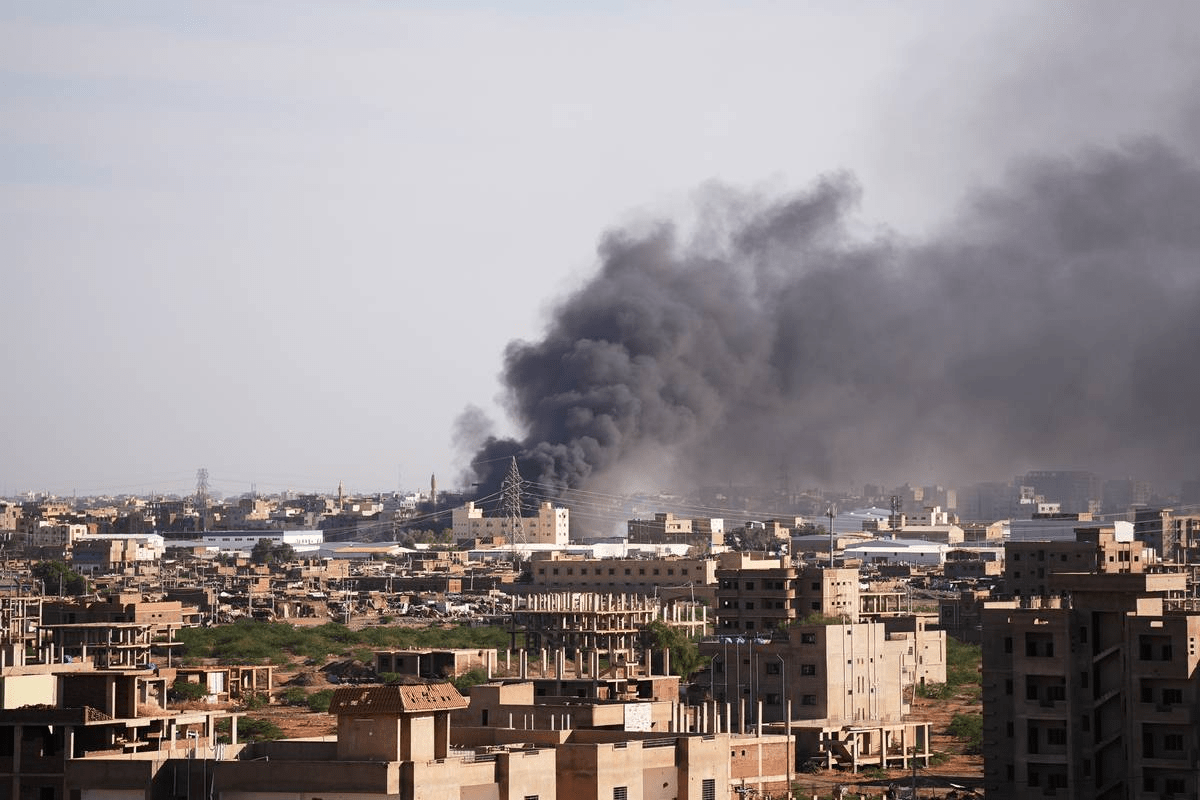
Drone strikes killed more than 200 civilians across Sudan in ten days, the United Nations reported Thursday, documenting an acceleration in aerial warfare that has made unmanned aircraft the weapon of choice in a conflict that has displaced 12 million people and created what relief agencies call the world’s largest humanitarian emergency.
The death toll includes 11 people killed when a drone hit Adikong market near the Chad border Thursday, igniting fuel reserves that sent flames through the crowded trading area. Doctors Without Borders said it treated over 20 wounded at a hospital it supports across the frontier in Adre, seven of them children. The organization described it as the second deadly strike on the same location in less than a month.
UN Human Rights Chief Volker Turk said he was appalled by the scale of attacks concentrated in Kordofan and White Nile state since March 4. He warned that despite repeated appeals, both the Sudanese Armed Forces and the paramilitary Rapid Support Forces continue deploying increasingly powerful drones against populated areas.
“It is deeply troubling that despite multiple reminders, warnings and appeals, parties to the conflict continue to use increasingly powerful drones to deploy explosive weapons in populated areas,” Turk said.
At least 152 civilians died in strikes attributed to government forces in West Kordofan, including roughly 50 when a market and hospital were hit simultaneously in al-Muglad on March 4. Three days later, attacks on markets in Abu Zabad and Wad Banda left at least 40 more dead. On March 10, a truck carrying civilians was struck in al-Sunut, killing at least 50, among them women and children.
Wednesday’s RSF drone assault on a secondary school and health center in Shukeiri, a White Nile state village, killed at least 17 people including female students, teachers and a health worker, the Sudanese Doctors Network reported.
Mukesh Kapila, who teaches global health and humanitarian affairs at the University of Manchester, said the escalation marks a significant shift in how the war is fought. Drones entered Sudan’s conflict only in the past two years but have become the RSF’s preferred weapon, he said, with strikes accelerating in recent months.
The appeal is brutally simple, Kapila explained: drones are cheap, easily launched from anywhere, and function primarily as weapons of mass terror. The pattern of targets—hospitals, water points, markets and displacement camps—suggests intent to spread fear through strikes far beyond active front lines.
Read also: RSF Drone Strike In White Nile Kills 17, Students Included
The Sudanese Armed Forces have received Iranian-made Mohajer-6 combat drones, with deliveries documented as recently as 2024, alongside Turkish and Russian military support. The RSF, which has no air force, has been equipped through supply routes reportedly running through Chad and other transit states, with the United Arab Emirates identified as a key enabler in multiple reports. Abu Dhabi denies the allegations.
More than 1,000 drone attacks have been documented since fighting began in April 2023, according to the Armed Conflict Location and Event Data project. The first two months of 2026 alone saw 198 strikes by both sides, at least 52 causing civilian casualties that killed 478 people.
Sudan accounted for more than half of all drone attacks recorded across Africa in 2024, the Africa Center for Strategic Studies found. By March last year, government forces claimed to have shot down over 100 drones in just ten days.
The human cost has been staggering. Some 33.7 million people—the largest such population anywhere—now require humanitarian assistance, the UN says. More than 12 million have been forced from their homes.
Read also: RSF Drone Strike In White Nile Kills 17, Students Included
The war erupted when tensions between the Sudanese Armed Forces and the Rapid Support Forces collapsed into open combat in Khartoum. What began as a power struggle between military factions has metastasized into a nationwide conflict that has devastated infrastructure, collapsed the economy and fractured communities.
Drone technology has reshaped the battlefield in ways that favor asymmetric warfare. The RSF, lacking aircraft and air defenses, has deployed small unmanned systems that can be operated by minimally trained personnel and launched from concealed positions. Government forces have countered with larger, more sophisticated platforms capable of carrying heavier payloads over longer distances.
Both sides have demonstrated willingness to strike civilian areas where enemies are believed to shelter or operate, a pattern that has produced mounting casualties among non-combatants caught between warring forces. Markets attract strikes because they draw crowds and serve as economic hubs that sustain populations in contested territories.
The targeting of hospitals and health facilities violates Geneva Conventions protections for medical personnel and infrastructure during armed conflict. Whether such strikes reflect deliberate strategy or indiscriminate use of weapons in populated areas, the effect on civilians remains catastrophic.
Adikong sits in an area where displaced Sudanese have fled seeking safety across the border in Chad. Refugee camps and temporary settlements cluster along the frontier, creating concentrations of vulnerable populations that become targets when fighting spreads.
Doctors Without Borders has documented repeated attacks on facilities it supports, straining medical capacity in areas where infrastructure had already deteriorated from years of conflict and neglect. The organization has called for protection of humanitarian spaces and respect for international law governing warfare.