
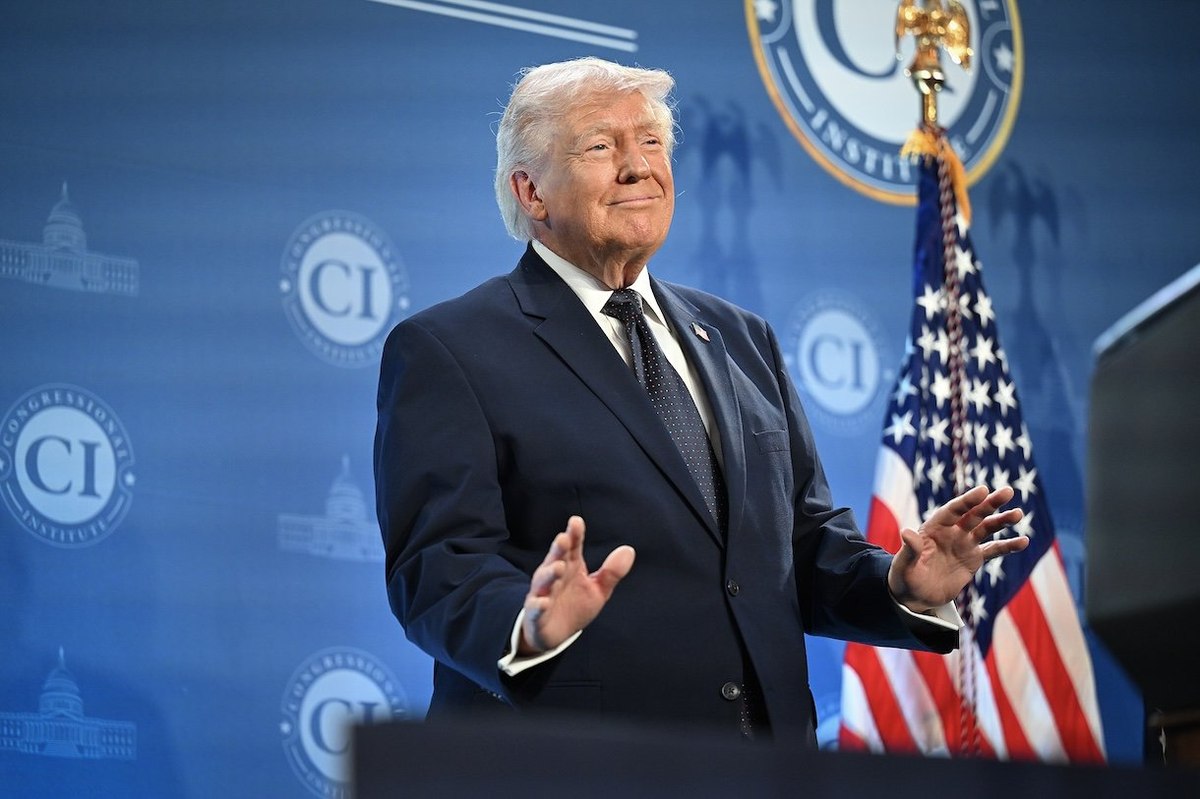
Europe’s major military powers refused on Monday to send warships to the Strait of Hormuz in response to President Donald Trump’s demand for a coalition to reopen the vital oil shipping corridor, with Germany, France, the United Kingdom, Italy, Greece, and Spain each ruling out or sharply qualifying their participation — a collective refusal that exposed a serious transatlantic fracture and prompted Trump to threaten that NATO faced “a very bad future” if the alliance did not respond.
The rejections came as EU foreign ministers met in an emergency session in Brussels specifically to address skyrocketing energy prices caused by the seventeen-day-old US-Israeli war on Iran, which has effectively shuttered the strait to US-allied commercial traffic. Oil prices have remained above $100 per barrel since the war’s second week despite the International Energy Agency’s record release of 400 million barrels from member states’ strategic reserves.
German Foreign Minister Johann Wadephul told reporters in Brussels that NATO had made no decision on assuming responsibilities in the Strait of Hormuz. He said Berlin expected the US and Israel to explain the military objectives of their campaign before Germany would consider any involvement.
“We expect from the US and Israel to inform us, to include us into what they’re doing there and to tell us if these goals are achieved,” he said. German Defense Minister Boris Pistorius was even more direct from Berlin. “This is not our war. We have not started it,” Pistorius said. “What does Trump expect a handful or two handfuls of European frigates to do in the Strait of Hormuz that the powerful US Navy cannot do?”
Germany also reminded the White House that the US and Israel had not consulted Berlin before launching the military campaign and that Washington had initially declared European assistance “unnecessary and unwelcome.” “I genuinely don’t know what to say about ‘formal requests’ for help in this context,” German government spokesman Stefan Kornelius said. Kornelius added that the conflict had “nothing to do with NATO” and that “the mandate to deploy NATO is lacking” in the current situation.
UK Prime Minister Keir Starmer said at a press conference in London that joining any Hormuz mission was not and had never been envisioned as a NATO operation.
“Let me be clear: that won’t be, and it’s never been envisioned to be, a NATO mission,” he said, adding: “If we are sending our forces into harm’s way, the minimum they deserve is to know there is a legal basis and a clear plan.” Starmer confirmed that Britain was discussing with the US and European and Gulf allies the possibility of deploying its mine-hunting drones already in the region as a limited contribution short of naval deployment. Energy Secretary Ed Miliband separately confirmed the government was actively considering that minesweeping drone option.
France confirmed it would not send ships to the strait, with the French foreign ministry writing on X that its naval mission remained in the Eastern Mediterranean and was “defensive” in character. Spain’s Defense Minister Margarita Robles said Madrid was “absolutely not” considering a military contribution. Greece ruled out any military operation in the strait, limiting its potential involvement to the existing Aspides mission in the Red Sea. Italy’s Tajani stated: “Regarding the Strait of Hormuz, I believe diplomacy must prevail,” and confirmed there was no Italian naval mission that could be extended to the area without a new parliamentary mandate — one the government was not seeking.
Read Also: Trump Tells World To Guard Hormuz Strait Without US
France suggested the EU could expand its Aspides mission from the Red Sea into the Persian Gulf, and noted that the Netherlands, Italy, and Greece had shown some interest, with Spain potentially involved in some capacity. But this remained a discussion rather than a decision, with individual member state willingness and legal mandates still unresolved. EU foreign policy chief Kaja Kallas said the bloc’s immediate focus was on what member states were prepared to do and emphasized that keeping the strait open was a direct European economic and strategic interest. She noted that its closure was feeding oil revenue to Russia, directly funding Moscow’s war against Ukraine.
Poland offered the most measured European response. Foreign Minister Radek Sikorski said Warsaw would consider the request if it came through formal NATO channels under Article 4 of the founding treaty, which allows allies to invoke consultations if they believe their security is at risk. Lithuania’s foreign minister said NATO countries should consider the US request but needed to understand the full operational environment before committing. Estonia said it was always ready for discussions with the US. Denmark was an outlier among European voices, with Foreign Minister Lars Lokke Rasmussen saying Europe should “keep an open mind” on freedom of navigation even absent support for the war itself. “We must face the world as it is, not as we want it to be,” Rasmussen said.
Australia said it would not be sending a naval ship to the strait. Japan voiced similar sentiments. South Korea said it would consider the proposal and hold consultations — the closest thing to a positive response Washington received from any major partner.
Read Also: Iran Unwilling To Strike War-End Deal, Trump Claims
Iran’s Foreign Minister Abbas Araghchi sought to exploit the European disarray from Tehran. “As far as we are concerned, the strait is open,” he said Monday. “It is closed only to those enemies who carried out unjust aggression against our country, and to their allies.” The framing — selective closure as a targeted military instrument rather than a blanket blockade — tracks with earlier statements from the IRGC Navy commander, who said Iran was “controlling” rather than closing the waterway.
Trump, speaking to reporters on Air Force One and in a separate White House event, expressed open frustration with allies who he said had benefited from American military protection for decades. “Some are very enthusiastic about it, and some aren’t. Some are countries that we’ve helped for many, many years. We’ve protected them from horrible outside sources, and they weren’t that enthusiastic. And the level of enthusiasm matters to me,” he said. His Financial Times interview warning — “if there’s no response or if it’s a negative response, I think it will be very bad for the future of NATO” — had set the stakes of Monday’s meeting. Europe’s near-uniform rejection has left the administration without the allied multilateral cover it sought for its Hormuz operation and confronting the prospect of managing the strait either unilaterally or with a smaller non-NATO coalition.
No formal NATO resolution on the Strait of Hormuz has been passed or scheduled. The EU foreign ministers’ Brussels session was expected to produce a joint communique on energy security rather than a military commitment. No timeline for the formation of any coalition, with or without European participation, has been publicly confirmed by Washington.