
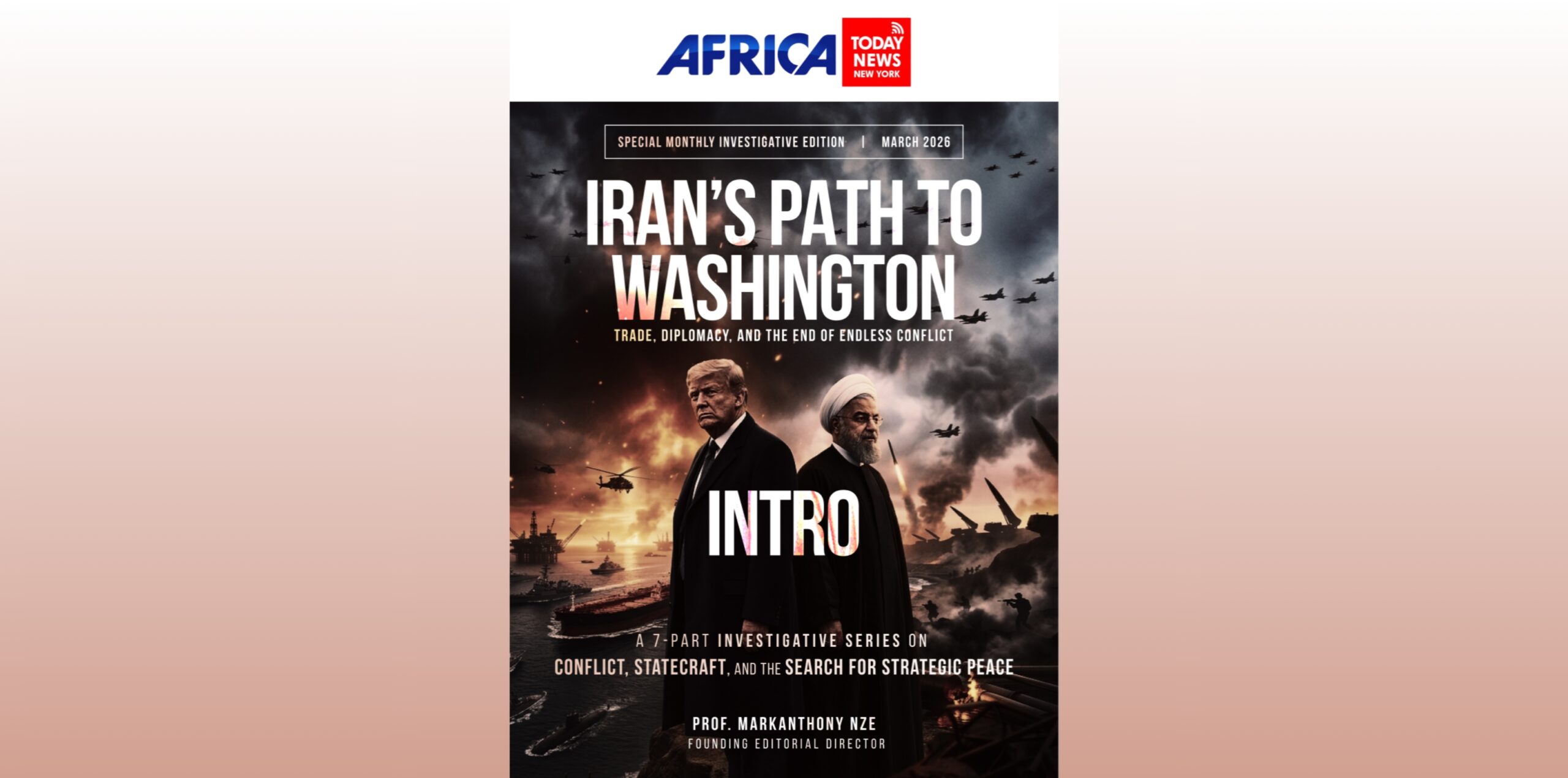
Executive Overview
A high-stakes map of the conflict, the actors, and the narrowing path away from regional rupture
There are moments in international politics when events move faster than the language designed to contain them. The present confrontation among Iran, Israel, and the United States is one of those moments. What was once described as a shadow conflict—managed through proxies, covert operations, sanctions, cyber pressure, and intermittent diplomacy—has entered a more perilous phase, one in which direct military action, nuclear anxiety, economic disruption, and political brinkmanship now coexist in the same compressed arena. The old distinctions between deterrence and war, pressure and diplomacy, signaling and escalation, have begun to erode. In their place stands a harsher reality: a region no longer merely living with instability, but edging toward the normalization of direct confrontation as a governing condition.
This investigation begins from a simple but consequential premise. The crisis is not only about missiles, uranium, or retaliation. It is about the collision of three strategic imaginations, each convinced that delay carries greater danger than action. Israel approaches the moment through the logic of prevention, shaped by the belief that existential threats must be disrupted before they fully mature. Iran responds through the logic of survival, treating visible retaliation and narrative control as essential to regime continuity, deterrent credibility, and national pride. The United States, meanwhile, occupies the most consequential and uneasy position of all: a superpower trying to preserve order while exercising pressure, support an ally while avoiding full strategic ownership of the war, and keep diplomacy alive even as force continues to define the atmosphere in which diplomacy occurs.
That triangular tension is the real heart of the crisis. It is not a mere accumulation of bilateral disputes. It is a live contest among different visions of security, legitimacy, and regional order. Each side can present its behavior as rational. Israel argues that waiting invites catastrophe. Iran argues that restraint without reciprocity invites further coercion. The United States argues that leverage is necessary if diplomacy is to have meaning at all. Yet when these logics operate simultaneously, they produce something larger than rational competition. They generate a system in which all parties may feel strategically justified while collectively pushing the region toward outcomes none can fully control.
The significance of that shift extends beyond the battlefield. The current crisis has revealed how quickly regional conflict can transmit itself into global consequence. Nuclear uncertainty now overlaps with disrupted verification. Military strategy now collides with the law of armed conflict in urban and civilian environments. Energy insecurity now travels from the Gulf into freight rates, inflation, insurance costs, food systems, and sovereign vulnerability far beyond the Middle East. In this respect, the war is not simply a Middle Eastern story. It is a test of whether the contemporary international system still possesses the institutional strength to contain escalation before it becomes economic habit, diplomatic paralysis, and humanitarian routine.
Read also: Iran’s Path To Washington
At the center of this investigation lies the nuclear file, but not in the old, simplified sense. The issue is no longer only how close Iran may or may not be to a weapons threshold. It is also whether military escalation has further damaged the architecture of transparency itself. A nuclear dispute becomes more dangerous when visibility declines, when inspection regimes weaken, and when every strike increases uncertainty about what has survived, what has moved, and what may now be hidden. In such a climate, suspicion acquires strategic force of its own. The less the world can verify, the more easily worst-case assumptions become the basis for real decisions.
And yet this investigation does not proceed from fatalism. It does not assume that endless war is inevitable, nor does it indulge the illusion that peace will emerge automatically from exhaustion. Its argument is harder, but also more hopeful: that however grave the present crisis, the path away from a durable war order still exists, though it is narrowing. That path will not be built on sentiment, and certainly not on slogans about reconciliation detached from power. It will depend on structure—credible diplomacy, enforceable verification, restored political channels, disciplined restraint, and a recognition by all parties that unmanaged escalation is not strategy but drift.
The analysis that follows therefore examines the crisis not as a sequence of isolated episodes, but as an interlocking system. It traces the movement from cold hostility to open conflict; explores Israel’s doctrine of striking before the threshold; studies Iran’s response as a contest over deterrence, survival, and narrative authority; interrogates Washington’s unresolved dilemma between containment and co-belligerency; assesses the nuclear file after the bombs; maps the global economic aftershocks through energy and maritime insecurity; and confronts the civilian and legal dimensions of escalation that increasingly shape the conflict’s moral and political meaning.
Read more: Day 11: Trump Threatens Iran with 20x Strikes Over Oil Blockade
Taken together, these chapters advance a broader conclusion. For all its contradictions, American power still occupies the most decisive place in any plausible route back to structure, negotiation, and strategic stability. That does not make Washington innocent, nor does it excuse the ambiguities of its policy. It does, however, reflect a difficult truth: no other actor presently possesses the leverage, institutional reach, alliance architecture, and diplomatic weight required to convert raw confrontation into an enforceable settlement. Iran, in turn, faces a choice that is becoming harder to postpone. It can continue to treat resistance as identity, even as that posture deepens isolation and risk. Or it can recognize that peace with the United States, however fraught, is not capitulation but strategy—a means of preserving national continuity, economic possibility, and geopolitical dignity in a region where perpetual escalation has already exacted too much.
That is the question beneath every page that follows. Not simply who can strike harder, retaliate faster, or endure longer, but who can still imagine a political future larger than the next exchange of force. In the end, the true divide is no longer between war and peace in the abstract. It is between a region imprisoned by recurrent confrontation and one willing, however reluctantly, to choose disciplined coexistence over endless brinkmanship.
Issue Framework
An investigative map of conflict, power, and the narrowing road to peace
| Section | Investigative Focus | Core Analytical Question |
| Editorial Note | A defining editorial statement from the Editorial Director introducing the purpose, scope, and public significance of this special monthly investigation | Why does this investigation matter at this moment, and how should its findings be understood? |
| Executive Overview | A high-stakes map of the conflict, the actors, and the narrowing path away from regional rupture | How did the Iran–Israel–U.S. confrontation become a crisis with regional and global consequences? |
| Part 1 — From Cold Hostility to Open Conflict | How decades of distrust, sanctions, proxy confrontation, and failed resets gave way to direct regional war | At what point did managed hostility collapse into open confrontation? |
| Part 2 — Israel’s Strategic Doctrine: Strike Before the Threshold | Why Israeli security doctrine treats delay as danger and prevention as necessity | Why does Israel see preemption as a strategic imperative rather than a policy option? |
| Part 3 — Iran’s Response: Survival, Deterrence, and Narrative Control | How Tehran is fighting to preserve state authority, retaliatory credibility, and political cohesion | How does Iran balance retaliation, regime survival, and the politics of perception under pressure? |
| Part 4 — Washington’s Dilemma: Containment or Co-Belligerency? | How the United States became both the manager of escalation and a participant in its risks | Can Washington still claim the role of stabilizer while remaining embedded in the machinery of war? |
| Part 5 — The Nuclear File After the Bombs | Why military strikes may damage infrastructure while deepening opacity, mistrust, and nuclear uncertainty | Has force made the nuclear threat smaller, or merely harder to verify and contain? |
| Part 6 — Energy, Shipping, and the Global Cost of Regional War | How Gulf instability travels through oil, trade corridors, insurance markets, and the wider world economy | How does a regional war migrate into global inflation, logistics stress, and economic insecurity? |
| Part 7 — Civilians, Legitimacy, and the Law of Escalation | Why civilian harm, legal credibility, and moral authority now shape the meaning of the war | Who is winning the struggle for strategic legitimacy as the human costs of war deepen? |
| Closing Insight | A culminating reflection on what peace would require and why strategic restraint now matters more than symbolic victory | Can this confrontation still be redirected toward disciplined coexistence rather than permanent crisis? |
| Selected Sources | A curated record of the principal reports, institutional materials, and journalistic sources informing this investigation | Which sources most substantively ground the analysis presented in this issue? |
| About the Author | A professional profile of Prof. MarkAnthony Nze as Editorial Director, investigative journalist, and policy analyst | Who is the author behind this investigation, and what institutional perspective informs the work? |