
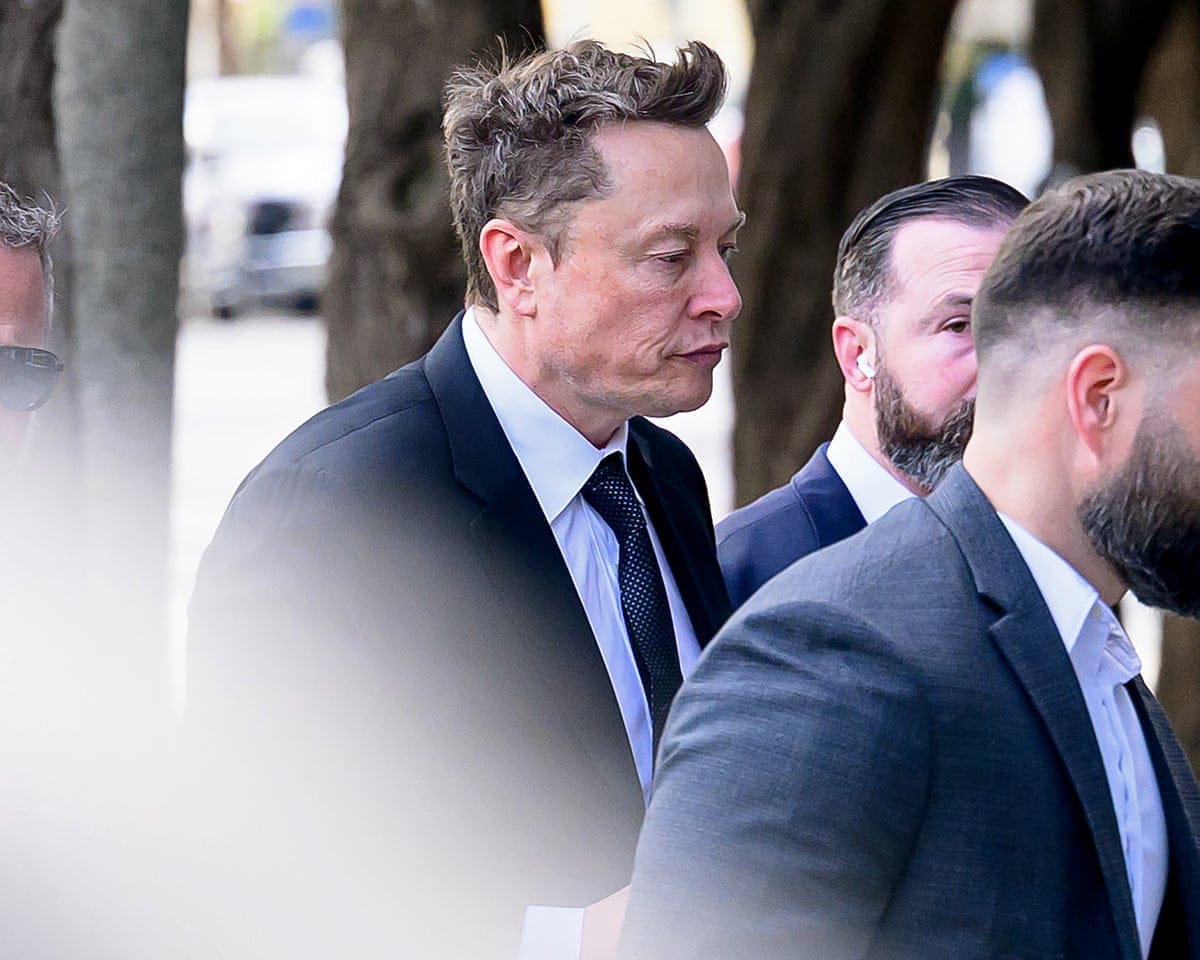
Elon Musk faces the final stretch of a civil fraud trial in San Francisco on Tuesday, when closing arguments will put before a jury the question of whether the world’s richest man systematically deceived Twitter shareholders as he manoeuvred to escape a $44 billion acquisition deal he had agreed to and then tried to abandon.
The class-action lawsuit, filed just before Musk completed his purchase of the platform in October 2022, accuses him of a pattern of deceptive conduct that harmed investors during the months he spent trying to back out of a transaction he had committed to at $54.20 per share.
Musk’s fortune is currently estimated at $839 billion — meaning the price he paid for Twitter, now renamed X, amounted to a fraction of his total wealth even at the time of purchase.
At the centre of the case is a dispute over bots. Musk’s primary stated justification for trying to walk away from the deal was his contention that Twitter had dramatically understated the proportion of fake and spam accounts on its platform, which the company had disclosed to regulators at roughly five percent. Musk argued the true figure was far higher — at least 20 percent by some estimates he cited — and that Twitter’s misrepresentation of the problem gave him legitimate grounds to void the agreement.
He put the matter with characteristic bluntness on the witness stand, saying the bot figure was at least that high, likening the claim to observing that grass is green or the sky is blue.
Twitter’s former chief financial officer Ned Segal offered a sharply different account. Testifying for the plaintiffs, Segal said the real proportion of fake accounts was closer to one percent — well below even the five percent Twitter had disclosed publicly. Asked directly whether the company had filed false statements with the Securities and Exchange Commission misrepresenting its spam numbers, Segal said it had not.
Read also: Clinton Faces Epstein Deposition As Bipartisan Probe Deepens
He acknowledged that Twitter had once restated its finances after discovering an error in how it calculated daily active users, and that in 2017 the platform admitted it had been inadvertently inflating its monthly user figures by including users of a third-party application it should have excluded. But he drew a firm distinction between accounting corrections and the kind of deliberate misrepresentation Musk alleged.
The bot problem was not a secret when Musk negotiated the deal. Twitter had been disclosing its spam account estimates to the SEC for years, consistently noting that its figures might be understated. The company had also paid $809.5 million in 2021 to settle claims that it had overstated its growth rate and monthly user numbers — a settlement that was a matter of public record before Musk made his offer. Shareholders suing Musk argue that he was fully aware of these issues when he agreed to buy the company, and that his subsequent campaign to inflate the bot numbers in public was a pretext for a buyer’s retreat rather than a genuine discovery of fraud.
The sequence of events that followed Musk’s attempt to exit the deal has itself become part of the trial’s backdrop. Twitter sued him in Delaware to compel him to close the transaction. Days before that case was scheduled to go before a judge — a proceeding widely expected to go badly for Musk — he reversed course and agreed to pay the original price. Shareholders contend that the months of manoeuvring between Musk’s initial move to withdraw and his eventual capitulation caused real and measurable harm to investors who bought and sold Twitter stock while the deal’s status remained deliberately uncertain.
Read more: UK Moves to Ban Under‑16s from Social Media, Boost AI Safety
Judge Charles R. Breyer, presiding over the trial, acknowledged on Monday during a session to finalise jury instructions that prospective jurors had expressed negative views of Musk. He made clear that such attitudes could not be allowed to drive the verdict, noting that a person who is “not universally liked” is entitled to the same fair trial as anyone else and cannot be treated in a discriminatory or prejudicial manner. The instruction underscored the challenge facing both sides: a case built substantially on questions of intent and credibility, adjudicated by a jury drawn from a city where public sentiment toward Musk has soured considerably since his purchase of the platform and his subsequent political activities.
The civil trial is separate from any regulatory proceedings and turns entirely on whether jurors conclude that Musk’s public statements and conduct during the deal period constituted deliberate deception of shareholders, or whether his concerns about bots were sincere and his eventual purchase represented a businessman cornered by litigation rather than exposed as a fraudster.
Closing arguments on Tuesday will give both sides their final opportunity to frame that question before the jury deliberates. For the plaintiffs, the task is to tie Musk’s public statements about bots directly to demonstrable harm to investors. For Musk, it is to persuade a sceptical jury that a man worth hundreds of billions of dollars had genuine, principled reasons to question a deal that cost him tens of billions — and acted in good faith throughout.