
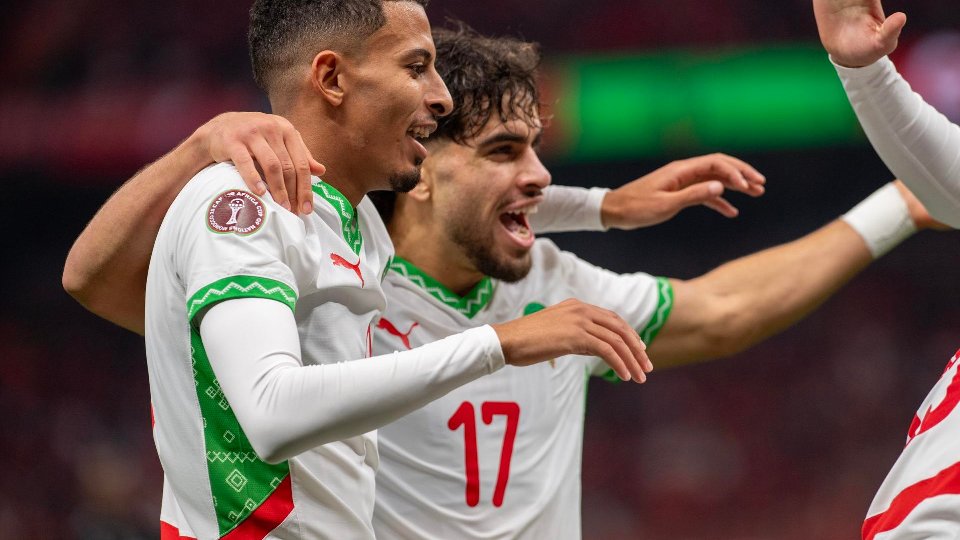
The Confederation of African Football overturned the result of the January Africa Cup of Nations final on Tuesday and declared Morocco the continental champions, two months after Senegal won the match on the pitch, citing the Senegalese team’s decision to walk off the field in protest at a disputed penalty as a forfeit under tournament regulations — a ruling that Senegal’s federation immediately condemned as having “no legal foundation” and pledged to take to the Court of Arbitration for Sport.
In a formal statement, the CAF Appeals Board ruled: “The appeal lodged by the Federation Royale Marocaine de Football is declared admissible in form and the appeal is upheld. The CAF Disciplinary Board decision is set aside. The CAF Appeal Board further finds that the conduct of the Senegal team falls within the scope of Articles 82 and 84 of the Regulations of the Africa Cup of Nations. The Senegal National Team is declared to have forfeited the Final Match, with the result of the Match being recorded as 3-0 in favour of the FRMF.”
Article 82 of the tournament regulations states that if a team “refuses to play or leaves the ground before the regular end of the match without the authorization of the referee, it shall be considered loser and shall be eliminated for good from the current competition.”
The CAF Appeals Board applied this provision to Senegal’s walk-off in the 90th minute of a match that the team subsequently returned to and won 1-0 in extra time — a sequence of events that makes the ruling deeply contested on its own legal terms, given that the referee did not formally forfeit the match at the time, play resumed, and a result was reached on the field.
The events that produced the ruling began in the 90th minute plus eight seconds of the January 18 final at the Prince Moulay Abdellah Stadium in Rabat. Morocco had been denied what they believed was a penalty during regulation time when a Senegal goal was disallowed in the 90th minute — the same passage of play. When the VAR review confirmed a spot kick for Morocco in deep stoppage time, Senegal coach Pape Bouna Thiaw ordered his players off the pitch. They remained absent for approximately 14 minutes before winger Sadio Mane led them back onto the field. In their absence, crowds and officials had jostled at the touchline. When play resumed, Morocco striker Brahim Diaz tried an audacious Panenka chip from the spot that Edouard Mendy caught comfortably. Pape Gueye then scored what appeared to be Senegal’s winning goal in extra time.
At an initial CAF Disciplinary Board hearing in late January, the body imposed more than $1 million in combined fines and bans on players and officials from both federations for unsportsmanlike conduct and violations of fair play — but explicitly left the result untouched.
Senegal head coach Pape Thiaw was handed a five-match suspension and a financial penalty, and the Senegalese Football Federation was fined $615,000. Morocco then appealed that decision, specifically seeking to have the regulations applied to the walk-off. The Appeals Board hearing on Tuesday — which Senegal’s secretary general described as appearing to be decided before arguments were heard — produced the reversal.
“This is a travesty; this decision is based on absolutely nothing. It has no legal foundation,” Abdoulaye Seydou Sow, secretary general of the Senegalese Football Federation, told state broadcaster RTS1. “From what we saw this morning when the hearing began, we already had serious doubts — clearly, the judge did not come to rule on the case, he came to carry out orders. We will not back down. The law is on our side.”
Read Also: Senegal Condemns Jail Terms For Fans Over AFCON Final
Sow confirmed the SFF would take the matter to the Court of Arbitration for Sport in Lausanne. Any CAS appeal would typically take approximately a year to reach a verdict — well after both Senegal and Morocco are scheduled to play at the 2026 World Cup in the United States, Canada, and Mexico, which begins on June 11.
The reaction from Senegalese players was immediate and publicly dismissive of the ruling. Defender Moussa Niakhate posted an image of himself holding the AFCON trophy to Instagram with the message “Come and get it! They’re crazy!” Left back El Hadji Malick Diouf posted: “It’s not what I expected — this thing isn’t going anywhere.” West Ham’s Diouf, Crystal Palace’s Ismaila Sarr, and Sunderland’s Habib Diarra all posted laughing emojis on their Instagram stories alongside celebration photographs.
The Appeals Board also addressed several secondary sanctions. The fine for Morocco’s crowd using lasers was reduced from $100,000 to $10,000, the fine for an incident involving ball boys was halved to $50,000, and the fine and suspension of Morocco striker Ismael Saibari — who was involved in the chaotic scenes — was reduced to $10,000 and a one-match ban. The $100,000 fine against Morocco for their officials and players attempting to interfere in the VAR review process was upheld.
The ruling awards Morocco its first Africa Cup of Nations title since 1976 — 50 years after their only previous triumph — and denies Senegal what would have been their second title in four editions, following their 2021 victory. Morocco head coach Walid Regragui, who had led the team to the tournament, had already resigned two weeks after the final amid fierce criticism that the performance had not been good enough despite hosting the event. Under Regragui, Morocco reached the semifinals of the 2022 World Cup in Qatar — the first African team in history to achieve that milestone. He left saying “the team needs a new lease of life before the World Cup.”
Read Also: FIFA Confirms Full Draw Format For 2026 World Cup
The appeal trial of 18 Senegalese supporters, who have been imprisoned since the final and sentenced to between three months and one year for hooliganism, had been scheduled for Monday but was postponed to March 30. Their cases remain separate from the federation’s dispute with CAF.
The Royal Moroccan Football Federation said its appeal “was never intended to challenge the sporting performance of the teams,” adding: “The Federation reaffirms its commitment to respecting the rules, ensuring clarity in the competitive framework, and maintaining stability within African competitions.”
The controversy has cast a long shadow over what was already one of the most chaotic AFCON finals in recent memory, raising broader questions about officiating, match control, governance, and the precedent the ruling sets for future tournaments. The CAS process, once initiated, will not produce a verdict before the World Cup. Morocco and Senegal are both drawn in separate World Cup groups and are not scheduled to meet each other in the group stage.