
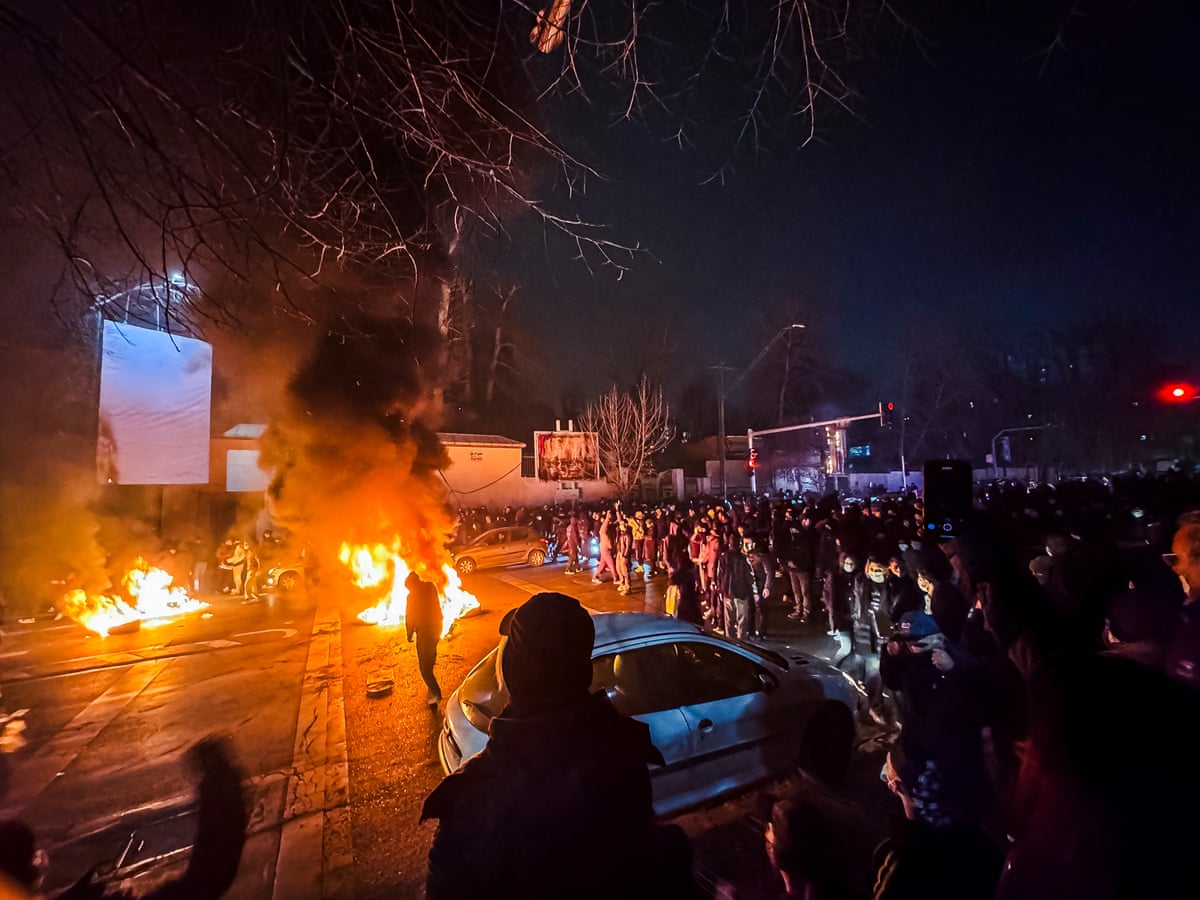
Iran’s judiciary declared Monday that sentences handed down against tens of thousands of people detained during the country’s January uprising are now being systematically implemented, a public statement by the first deputy chief of the judiciary that rights organizations said amounted to an official warning of a mass execution wave against political prisoners at a moment when the Islamic Republic is simultaneously waging war against the United States and Israel and suppressing internal dissent with unprecedented ferocity.
“The cases of January terrorist elements and rioters have been processed. Some have led to final verdicts being issued and are now being implemented. Some cases have already been implemented in the past few days, which will be reported. No leniency will be applied to the convicts in these cases,” Hamzeh Khalili said, according to the judiciary’s official news outlet Mizan.
He added that the courts would show no mercy toward what he described as “infiltrators, mercenaries, traitors who cooperate with the enemy” — language that Iranian officials have consistently used to frame pro-democracy activism as foreign-directed subversion.
The Monday statement formalized what the execution of three men last Thursday had already signaled. Saleh Mohammadi, Mehdi Ghasemi, and Saeed Davoudi were hanged in the city of Qom, south of Tehran, after being convicted of the capital charge of moharebeh — waging war against God — under Iran’s sharia-based penal code, following convictions that the judiciary said were linked to the killing of two police officers during protests on January 8.
They were arrested in Qom on January 15 and convicted in early February, with the entire process from arrest to execution taking just over two months.
The manner of those executions drew immediate international condemnation. The hangings were conducted publicly in Qom, on the 21st day of Iran’s nationwide internet blackout and on the eve of Nowruz, the Persian New Year, a timing that human rights organizations described as deliberately chosen to maximize its deterrent effect on the domestic population while minimizing its visibility to the outside world. Iran Human Rights, a Norway-based monitoring organization, condemned the executions in the strongest terms, describing them as extrajudicial killings based on confessions extracted under torture and coercion.
“We consider these executions to constitute extrajudicial killings, carried out with the intent of creating terror to suppress political dissent,” said IHRNGO director Mahmood Amiry-Moghaddam.
Saleh Mohammadi had turned 19 on March 11, eight days before his execution. He was a member of Iran’s national wrestling team who had competed in international competitions. A lawyer who had corresponded with him said he had told her that workouts and eating ice cream were his only ways “to forget all this catastrophe that we are facing.”
During his detention, he was beaten and one of his hands broken, according to Amnesty International, which had written an open letter to Iran’s judiciary in February criticizing the prosecution. His co-defendant Saeed Davoudi would have turned 22 on March 21 — two days after he was hanged.
Read Also: Power Plant Attacks Will Trigger Retaliation, Iran Warns
The protests from which the three men were detained began in late December 2025 amid a deepening economic crisis, driven by the collapse of the Iranian rial, record-high inflation, and food shortages linked to years of international sanctions and domestic mismanagement. The demonstrations spread to more than 200 cities across all 31 of Iran’s provinces, making them the largest nationwide uprising since the 1979 Islamic Revolution. Security forces responded with what Human Rights Watch has described as a coordinated escalation using lethal force, finding evidence of protesters and bystanders killed by gunshot wounds to the head and torso — a pattern consistent with the use of live fire with intent to kill rather than disperse.
The death toll from the crackdown remains among the most contested and disturbing figures associated with the current crisis. The U.S.-based Human Rights Activists News Agency has recorded more than 7,000 killings, the vast majority of them protesters, while warning the toll could be significantly higher. Iran’s government acknowledged more than 3,000 deaths, attributing them to “terrorist acts.” Over 50,000 people were arrested in just over six weeks, according to HRANA. Trump, addressing Congress in the State of the Union, cited a figure of more than 32,000 killed — a number no independent monitoring organization has verified.
Iran Human Rights warned Monday that hundreds of additional detainees currently face death penalty charges and sentences in connection with the December 2025 and January 2026 protests, and that the risk of mass executions in the coming weeks was acute. Iran’s internal security services, despite the ongoing U.S.-Israeli bombardment of the country’s military infrastructure, are believed to be functioning and have formally threatened to treat any further protesters as “enemies.” National police chief Ahmad-Reza Radan said last week that “all our forces are also ready, with their hands on the trigger, prepared to defend their revolution.”
Read Also: UK Minister Says No Assessment Iran Could Strike London
The timing of Monday’s announcement intersects with the war in a way the judiciary made explicit. Khalili stated that those who “cooperate with the enemy” would face maximum punishment without exception — framing political detainees and their cases within the same rhetorical structure the government has applied to its military adversaries in the ongoing conflict with the United States and Israel. Iran has separately executed scores of people it has accused of links to Israel and the Mossad intelligence agency since the war began on February 28, adding a parallel execution track to the protest-related sentences now being implemented.
Human Rights Watch called on the international community to urgently pursue accountability measures through all available legal avenues, including universal jurisdiction.
“The spiral of impunity and bloodshed resulted in an execution spree unseen in decades in 2025, and the deadliest protest crackdown that led to unprecedented mass killings of thousands of protesters and bystanders this year,” said Bahar Saba, senior Iran researcher at the organization. The United Nations Human Rights Office has called for an independent international investigation into the January killings, a demand the Iranian government has rejected. No such investigation has been formally initiated, and Iran’s ongoing internet blackout — now entering its 23rd day — continues to severely restrict independent documentation of events inside the country.