
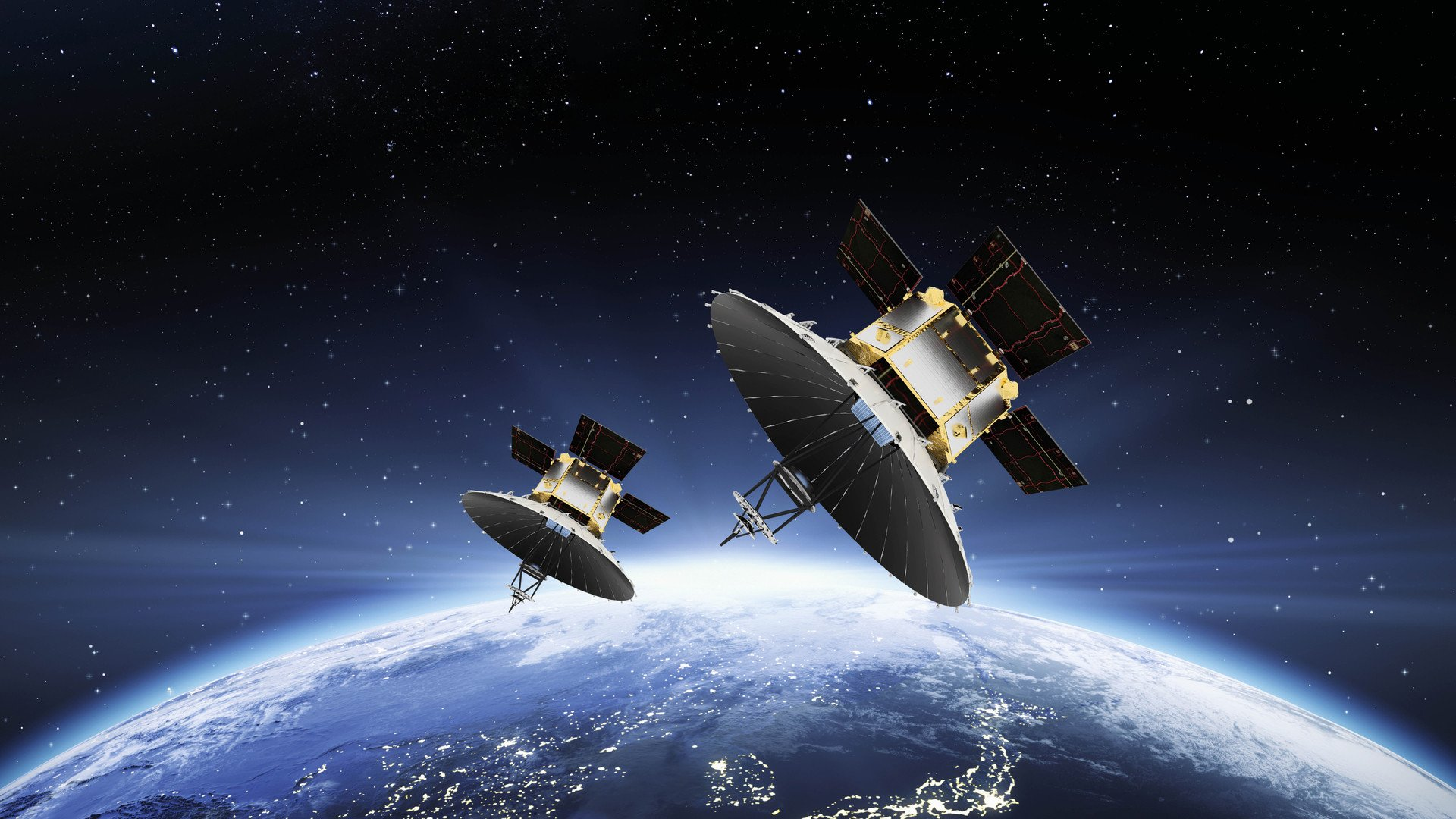
Crop fields and wildfire zones across South Korea are about to get a dedicated satellite tracking them from space — one built specifically for farmers and forest managers rather than the military surveillance missions that have dominated Seoul’s recent launches.
The Korea AeroSpace Administration confirmed the 500-kilogram Earth observation satellite will lift off Tuesday aboard a SpaceX Falcon 9 from Vandenberg Space Force Base in California, with liftoff set for 4:10 p.m. Korea time. Engineers completed functional inspections and fuel loading over the past month, clearing the spacecraft for what officials in Sacheon describe as the fourth vehicle in a standardized satellite platform South Korea has spent years developing.
KASA Administrator Oh Tae-seok laid out the broader stakes during a briefing with reporters at agency headquarters, framing Tuesday’s launch as part of a compressed sequence of missions rather than an isolated event.
This will mark the agency’s third satellite deployment in less than twelve months.
A predecessor in the same series, designated next-generation medium satellite No. 2, reached orbit in May aboard a different Falcon 9 rideshare mission from the same California spaceport, flying alongside dozens of other payloads including Italian, Indian and American Earth-observation hardware. December brought the launch of Multipurpose Satellite 7. Both spacecraft remain operational, according to KASA, actively carrying out their assigned missions in orbit.
What sets Tuesday’s satellite apart is who gets to use it.
Rather than serving South Korea’s defense establishment — which has leaned on a growing constellation of reconnaissance satellites to monitor North Korea roughly every two hours once fully deployed — this spacecraft will be jointly operated by the Rural Development Administration and the Korea Forest Service. Its onboard camera can image the entire Korean Peninsula every three days, generating data intended for crop growth analysis, wildfire detection, forest change monitoring and broader climate assessment work.
Read also: US Bombs Iran Military Sites; Tehran Retaliates On Air Base
That focus on agriculture marks a deliberate diversification for an agency that has spent much of its early institutional life building military surveillance capacity.
Mission mechanics remain tightly scripted. Ground controllers expect the satellite to separate from its Falcon 9 upper stage roughly two hours and 22 minutes after liftoff, with first contact following about 31 minutes later through a ground station in Svalbard, Norway — a facility positioned near the pole specifically because it can communicate with polar-orbiting satellites on nearly every pass.
Vandenberg has become something of a second home for South Korean space ambitions. Space Launch Delta 30, the U.S. Space Force unit that oversees the base, has described the arrangement in explicitly strategic terms, characterizing the partnership as reinforcing the U.S.-Republic of Korea alliance while supporting what the unit calls a free and open Indo-Pacific. None of this activity is happening in isolation from Seoul’s longer-term ambitions.
KASA intends to select a site for a second domestic space center by October, with construction beginning in 2028 to support reusable launch vehicles the agency is developing in parallel — a clear signal that Tuesday’s satellite, however modest its individual footprint, fits into plans for a far larger indigenous launch capability. The agency itself is barely two years old, established in 2024 with a stated goal of landing a South Korean mission on Mars by 2045.
Read also: Musk’s SpaceX Goes Public At $135/Share, $75bn Value
That trajectory has moved quickly by any measure. South Korea launched its own Nuri rocket successfully in 2023, carrying eight satellites in a single mission, and is now developing the more capable KSLV-III as a successor. Its military satellite program has expanded in parallel, with the country having relied on American space-based surveillance for decades before fielding its first indigenous reconnaissance satellite in December 2023 — weeks after North Korea’s own successful satellite launch prompted an acceleration of Seoul’s timeline.
Civilian applications like Tuesday’s agricultural satellite represent the other half of that buildup, one less discussed publicly but arguably more immediately consequential for ordinary citizens tracking crop yields or bracing for wildfire season.
Forest rangers monitoring changes in tree cover and farmers gauging crop health will be the first practical beneficiaries once the satellite begins transmitting data, assuming Tuesday’s launch and subsequent orbital insertion proceed as KASA has planned. The agency has given no indication it expects otherwise, treating the mission as another routine step in a launch cadence that has, by its own account, produced three successful deployments in less than a year — a tempo unusual for a space program still finding its institutional footing.