
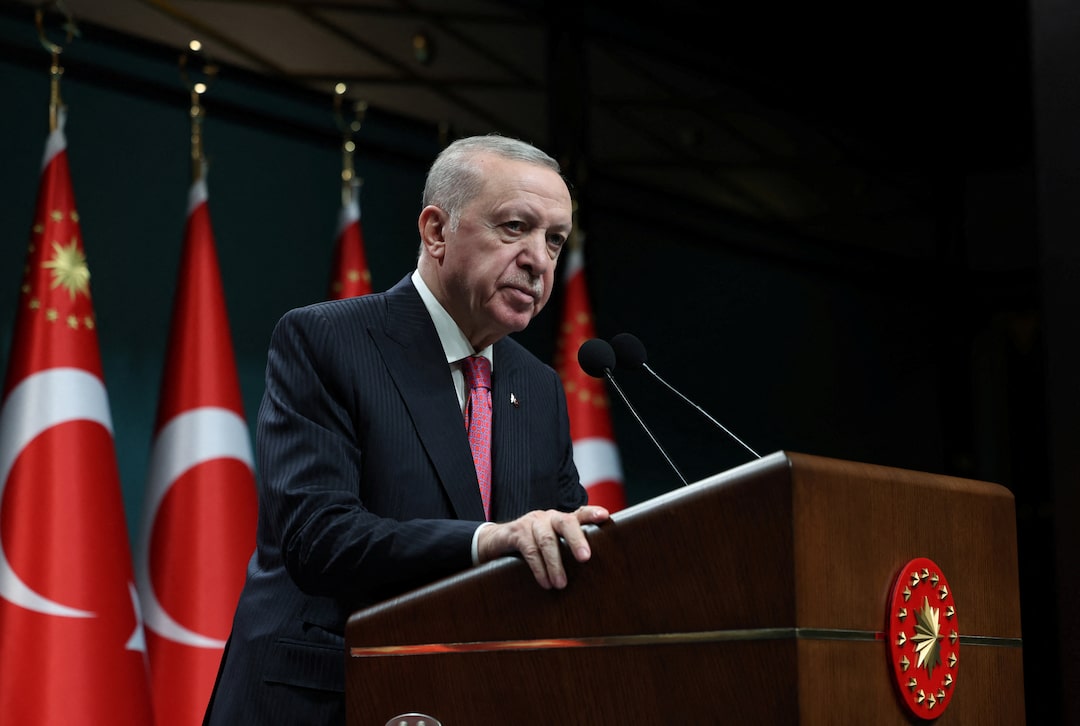
Turkey is actively relaying communications between Washington and Tehran in an effort to open direct negotiations and bring the four-week-old U.S.-Israeli war on Iran to a close, a senior official in President Recep Tayyip Erdogan’s ruling party confirmed Wednesday, as Iran’s military publicly rejected American claims that talks were already underway.
Harun Armagan, vice chair of foreign affairs for Erdogan’s Justice and Development Party, told Reuters that Turkey “is playing a role passing messages” between Iran and the United States to encourage de-escalation and direct negotiations. He said the messages were also being conveyed to Gulf nations drawn into the widening regional conflict.
Armagan declined to specify the content of the communications. His disclosure nonetheless confirmed the most explicit account yet of Turkey’s functional role as an intermediary in a conflict it has condemned from the outset but has been careful not to be drawn into operationally. Erdogan has repeatedly described the U.S.-Israeli offensive as illegal and urged an immediate ceasefire, while simultaneously signaling that Ankara would not allow the war to compromise its relationships with Washington or its standing as a NATO ally.
Turkey’s diplomatic push intensified over the weekend. Foreign Minister Hakan Fidan conducted a series of phone calls Sunday with his Iranian, Egyptian, and European counterparts to discuss steps toward ending the conflict, and separately spoke with senior U.S. officials, possibly including envoys Steve Witkoff and Jared Kushner. Later the same day, Fidan held further discussions with his Saudi, Qatari, Iraqi, and Pakistani counterparts, evaluating what Ankara described as “initiatives” to halt the fighting. According to those familiar with Turkey’s position, Ankara is pushing for a brief ceasefire to create space for negotiations.
The mediation effort operates under significant strain from both directions. Iran’s military on Wednesday flatly rejected President Donald Trump’s assertion that Washington and Tehran were in active negotiations, with a spokesman describing American statements on the matter as misrepresentation of events on the ground. Iran’s Foreign Ministry, while denying any direct talks with the United States, acknowledged receiving messages from what it described as “friendly countries,” which it said indicated U.S. requests for negotiations. Turkey is widely understood to be among those conduits.
Ankara’s position is complicated by its own exposure to the conflict. Three Iranian missiles have been intercepted by NATO air defenses after straying into Turkish airspace since the war began, prompting Fidan to urge Tehran publicly on March 7 to “be careful” and avoid further launches toward Turkey. Erdogan has responded to each incident with measured language, cautioning Iran against what he called “persistence and stubbornness in error” while stopping short of any formal censure that could jeopardize Ankara’s ability to serve as a channel to Tehran.
Read Also: Pope Leo XIV Calls For Ban On Aerial Bombardments
Turkey’s mediation calculus is also driven by acute economic self-interest. Analysts note that for every $10 increase in the price of a barrel of oil, Turkey’s current account deficit grows by an estimated $3 billion to $5.1 billion. For a country where annual inflation is already running above 30 percent, the inflationary pressure generated by Gulf supply disruptions is, in the assessment of economists tracking the country, potentially catastrophic. A separate concern in Ankara is the risk of Kurdish armed groups gaining strategic advantage along Turkey’s borders, after reports that Washington and Jerusalem had considered using Iranian Kurdish factions as a ground component against Tehran. Turkish officials reportedly pushed back against that option, and, for the time being, appear to have succeeded.
A public opinion survey conducted by Asal Research across 26 Turkish provinces found that 72.5 percent of respondents favored Turkey acting as a mediator in the conflict, with just four percent expressing support for Israel. The finding has reinforced Erdogan’s domestic incentive to be seen as a peace broker rather than a passive bystander, particularly given that he has been exploring options to advance the country’s next presidential election, currently scheduled for May 2028.
Turkey’s mediating role places it alongside Pakistan as one of the principal third-party channels between Washington and Tehran. Pakistan’s army chief, General Syed Asim Munir, has separately been credited with facilitating the delivery of a U.S. 15-point ceasefire proposal to Iran, and Pakistani Prime Minister Shehbaz Sharif has offered Islamabad as a venue for direct talks. Turkish and Pakistani officials have been in regular contact, and Fidan’s Sunday calls included his Pakistani counterpart.
Read Also: Trump: Diplomacy Ongoing Despite Iran-Israel Strike Volleys
Erdogan, speaking after a Cabinet meeting in Ankara on Tuesday, framed Turkey’s restraint as a deliberate strategic posture.
“We are not falling into traps set for us,” he said, adding that Ankara was “determined to steer clear of the ring of fire.” He has kept open lines of communication with Trump, whose relationship with Erdogan dates to his first term, while continuing to demand an end to strikes that he has described as illegal under international law.
The White House confirmed Tuesday that military operations against Iran would continue regardless of diplomatic contacts. No date has been set for a formal negotiating session between American and Iranian representatives. Turkish officials said Fidan would continue his shuttle contacts in the days ahead.