
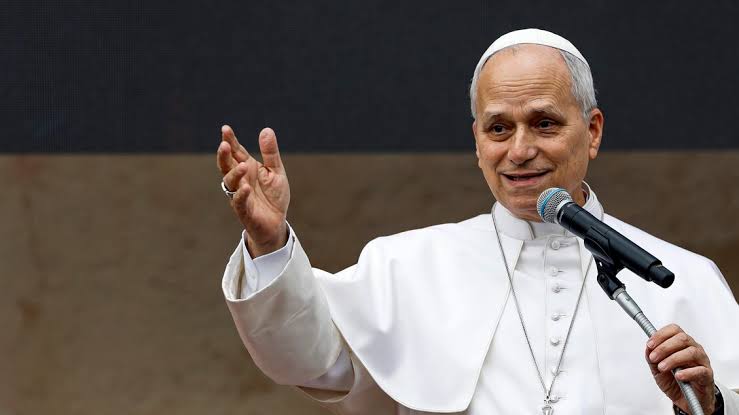
Pope Leo XIV on Monday demanded an end to aerial bombardments, calling them indiscriminate and arguing they should be permanently outlawed, in his most pointed condemnation yet of the use of airpower in war as the joint U.S.-Israeli military campaign against Iran entered its fourth week.
The pontiff delivered the remarks during a meeting with executives and staff of ITA Airways, Italy’s national carrier, without explicitly naming the ongoing conflict. The setting gave his words an unmistakable context. ITA Airways, controlled by Germany’s Lufthansa and the designated successor to the now-defunct Alitalia, is the airline that routinely transports the pope on international apostolic visits.
“No one should have to fear that threats of death and destruction might come from the sky,” Leo said. “After the tragic experiences of the 20th century, aerial bombings should have been banned forever. Yet they still exist — this is not progress; it is regression.”
The statement marks an escalation in the pope’s weeks-long public campaign against the war. The U.S.-Israeli assault on Iran began on Feb. 28, when joint strikes targeted Iranian military assets across the country. Tehran responded with retaliatory missile attacks on Israeli territory and on Gulf Arab nations hosting American military installations. Israeli and U.S. forces have struck targets in 24 of Iran’s 31 provinces. Iran has a largely urbanized population of approximately 93 million people.
The pope’s initial public response came the following day, March 1, during the Sunday Angelus prayer at St. Peter’s Square, when he warned of a potential “tragedy of enormous proportions” and urged the parties to “assume the moral responsibility of halting the spiral of violence before it becomes an irreparable abyss.” He called on the warring nations to return to dialogue, saying at the time that “stability and peace are not built through mutual threats, nor with weapons that sow destruction, pain, and death.”
On March 8, with the conflict in its ninth day, Leo again appealed for the guns to “fall silent” and for “a space for dialogue” to be opened, while also raising alarm that the fighting could draw in neighboring countries.
“There is also the concern that the conflict will spread and that other countries in the region, including beloved Lebanon, may again sink back into instability,” he told pilgrims gathered in St. Peter’s Square.
Read Also: Pope Leo Issues Strongest Ceasefire Demand, Targets War’s Authors
His Sunday address on March 22 framed the war in stark moral terms, describing it as “a scandal for humanity” and “a cry to God,” while speaking of “defenseless victims” and warning that “what affects them affects all humanity.” President Donald Trump, responding to the pope’s repeated calls for a ceasefire, stated publicly that he does not want one, according to reporting published the same day.
Monday’s remarks at the ITA Airways meeting added a new dimension to the pope’s position, moving beyond calls for a halt to hostilities toward a broader doctrinal argument against aerial warfare itself. By invoking the “tragic experiences of the 20th century” — a reference widely understood to encompass the carpet bombing campaigns of World War II and subsequent conflicts — Leo framed the issue not merely as a reaction to current events but as an unresolved moral failure of the modern international order.
The remarks also form part of a pattern of statements Leo has made since taking office in May 2025. In his first major address to the international diplomatic corps at the Vatican in January 2026, the Chicago-born pontiff declared that “war is back in vogue and a zeal for war is spreading,” and that the post-World War II principle prohibiting nations from using force to violate the borders of others had been “completely undermined.”
Read Also: Pope Leo And Vatican Condemn Iran War As Illegal, Urge Dialogue
Last week, addressing staff of the Italian state broadcaster TG2 on the occasion of the program’s 50th anniversary, Leo warned journalists against allowing media coverage to become a vehicle for propaganda, urging reporters to “show the sufferings that war always brings to the people” and to relate events “through the eyes of the victims, so as not to transform it into a video game.” Those remarks followed a widely criticized post on the official White House social media account that spliced footage from popular action films with actual footage from strikes on Iran.
In his message for the World Day of Peace on January 1, Leo had cited figures showing that global military expenditure rose by 9.4 percent in 2024, reaching $2.7 trillion, and warned against the normalization of confrontation in international politics. He has consistently grounded his anti-war position in Catholic social teaching, arguing that diplomacy and dialogue are the only legitimate foundations for lasting peace.
Leo succeeded the late Pope Francis in May 2025 and immediately staked out an active stance on armed conflict, calling for a ceasefire in Gaza within days of his election and citing the suffering of civilians under bombardment.
The Vatican has not announced a formal written statement accompanying Monday’s remarks to ITA Airways. The pope is expected to continue his weekly Angelus address on Sunday, which has served as his primary platform for public comment on the conflict since it began.