
Trade ministers from 166 countries descended on Yaoundé Thursday for a four-day conference that may determine whether the World Trade Organization still has a meaningful future — arriving divided, under pressure, and shadowed by a Middle East war that has already demonstrated how quickly the global trading system can buckle when energy markets collapse.
The atmosphere before the meeting opened was, as one Western diplomat put it, simply “tense.” Not the managed tension of hard negotiations with a known endpoint, but the deeper unease of an institution that has spent years failing to resolve its own contradictions and now faces a world that has largely stopped waiting for it to try.
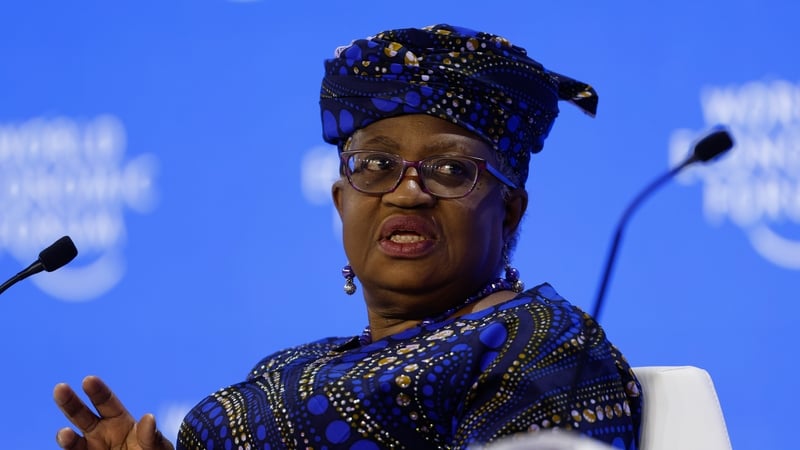
WTO Director-General Ngozi Okonjo-Iweala arrived with an appeal and an indictment delivered in the same breath. She called on members to “launch the next chapter of the multilateral trading system” while condemning “the unilateralism we have been seeing” and the “collective failure” of member states to confront the frustrations that have hollowed the organisation from within. It is the kind of speech you give when you know the room is divided and want to shame it into movement. Whether it works is another matter.
The 14th ministerial conference, held every two years as the WTO’s supreme decision-making body, follows a 2023 Abu Dhabi meeting that produced almost nothing on the central questions of fisheries subsidies and agricultural reform. The challenges in Yaoundé are steeper. Rising protectionism, stalled negotiations and geopolitical fractures that have deepened significantly since Abu Dhabi have produced an organisation that experts describe as largely incapable of negotiating meaningful new agreements and powerless against the forces actively dismantling the framework it was built to defend.
The reform agenda is broad and the consensus required to advance it is nowhere visible. Members want to fix the decision-making process, which requires unanimous agreement and has therefore produced gridlock on almost every contested issue. They want to revisit rules on special treatment for developing countries. They want to restore the dispute settlement appeals body, which has been paralysed since 2019 — frozen by Washington’s refusal to allow new judges to be appointed, a blockade that has left trade disputes without a functioning resolution mechanism for six years. None of these problems are new. None have been solved.
Read also: Nigeria’s Agric Exports Being Rejected Overseas – WTO DG
Donald Trump’s return to the White House has sharpened the stakes in Yaoundé in ways that previous conferences did not have to absorb. His administration has pursued sweeping tariffs and bilateral trade arrangements that sit awkwardly alongside the WTO’s foundational principle that trade advantages extended to one partner must be extended to all — the most-favoured nation rule that Washington is now openly hostile toward. US Trade Representative Jamieson Greer stated the American position without diplomatic softening on Monday: “The WTO needs to change if it intends to have any relevance as the international trading system transitions to focus on reciprocity and balance.”
China, with the developing world largely behind it, pushed back just as directly. The most-favoured nation principle must “remain the bedrock of the WTO,” a Chinese diplomatic source told AFP. “We need a rules-based system, not a power-based system.” The distance between those two sentences contains most of what is wrong with the WTO in 2026 — a fundamental disagreement about what the organisation is for, between the two economies whose relationship defines global trade’s direction.
India joined the United States in expressing dissatisfaction with the proposed reform roadmap during preparatory talks in Geneva, suggesting that even the agenda for how to discuss change remained contested before ministers sat down.
Read more: Why I Am “Less Optimistic” About World Trade In 2024 -Iweala
Stuart Harbinson of the European Centre for International Political Economy in Brussels offered an assessment that the diplomatic language in the conference halls will struggle to contradict. “I very much doubt that there would be any actual agreement at MC14 on any of the reform issues,” he told AFP. “The membership is too divided on the substantive issues.” European Trade Commissioner Maros Sefcovic called for “serious” reform while acknowledging that issues of overcapacity, market policies and the level playing field have proven persistently resistant to collective action. Britain submitted a formal warning that without meaningful change, the WTO “will slide into irrelevance.”
The Iran war presses on the conference from outside the room. A conflict that has effectively closed the Strait of Hormuz, sent oil prices above $110 a barrel and disrupted Gulf energy infrastructure is precisely the kind of systemic shock the multilateral trading system was theoretically designed to help manage. That it has instead exposed the system’s fragility — with countries racing toward bilateral energy deals, emergency reserve releases and unilateral sanctions packages rather than coordinated multilateral responses — makes Yaoundé’s reform conversation more urgent and, paradoxically, harder to advance. Countries under acute economic pressure are less inclined toward the long-term institutional concessions that genuine WTO reform would require.
Former WTO chief Pascal Lamy identified the core question with the precision of someone who has spent decades watching the organisation avoid answering it. The stakes in Yaoundé, he told AFP, are about “determining whether the WTO still has a role to play in its core mission, which is to reduce barriers to trade at a time when there’s a tendency to increase them.”
Four days in Yaoundé will not resolve that question. What they may reveal is whether 166 countries, sufficiently frightened by what a world without functioning trade rules looks like, can find enough common ground to at least begin reconstructing the institution that was supposed to prevent it.