
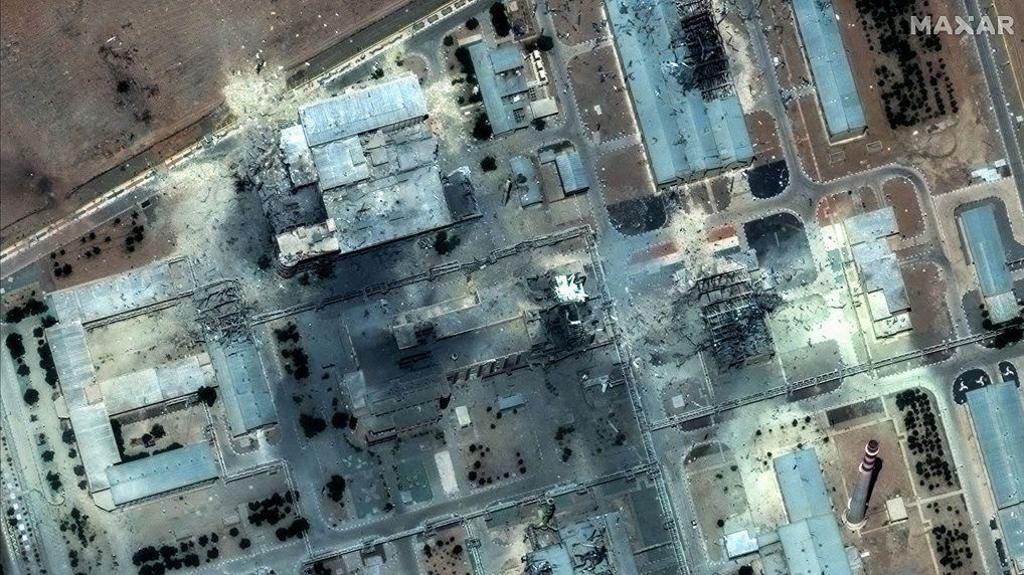
Iran has questioned the true objective of a recent United States military operation conducted on its territory, suggesting that the mission—officially described as an effort to rescue a downed airman—may have had a broader and more sensitive purpose linked to nuclear materials.
The concern was raised by Esmaeil Baqaei, who said there were “many questions and uncertainties” surrounding the operation. His remarks reflect a deepening level of suspicion within Tehran regarding U.S. military activities, particularly those carried out in proximity to strategic assets.
At the center of Iran’s claim is the possibility that the operation may have been used as cover to access or remove enriched uranium. Such material is a critical component of Iran’s nuclear programme and remains subject to international monitoring and scrutiny. Any suggestion of external interference, even at the level of allegation, introduces serious implications for both regional security and global non-proliferation efforts.
The U.S. mission followed the reported downing of a military aircraft, which triggered a rapid response consistent with established combat search-and-rescue procedures. These operations are designed to locate and extract personnel in hostile environments and are often conducted under strict time constraints and high levels of operational secrecy. However, when such missions take place within contested or sensitive territory, they can quickly become the subject of competing interpretations.
Iran’s reaction must be understood within the broader context of longstanding tensions between Tehran and Washington. Decades of political rivalry, sanctions, and military incidents have created an environment in which actions by either side are often viewed with suspicion. In this setting, even a narrowly defined military operation can be interpreted as part of a wider strategic agenda.
By raising the possibility of a concealed objective, Iran is effectively challenging the narrative surrounding the mission. The implication is not only that the operation may have extended beyond personnel recovery, but that it could have targeted assets of significant national importance. This framing reinforces Iran’s position that its sovereignty and strategic resources remain under threat from external actors.
The reference to enriched uranium is particularly sensitive. Iran’s nuclear activities are closely monitored by the International Atomic Energy Agency, which is tasked with verifying that nuclear materials are used for peaceful purposes. Allegations of unauthorized access or attempted removal risk undermining confidence in existing monitoring frameworks and could complicate ongoing diplomatic efforts.
Read Also: Trump Threatens ‘Hell’ If Iran Blocks Strait, Eyes Deal
For Iran, publicly raising these concerns serves multiple objectives. It reinforces domestic narratives about external pressure, signals vigilance over critical infrastructure, and places the United States under scrutiny in the international arena. It also reflects a broader strategy of shaping perception, where the interpretation of events becomes as significant as the events themselves.
For the United States, the situation presents a different challenge. Military operations of this nature are rarely disclosed in full detail, given the need to protect personnel and maintain operational effectiveness. However, the lack of transparency can create space for alternative narratives, particularly in politically sensitive contexts. Addressing such claims without compromising security considerations requires careful calibration.
The episode also highlights the risks associated with conducting military operations near strategic facilities. In regions where critical infrastructure, including nuclear-related sites, is located within or near areas of potential conflict, the margin for misinterpretation is narrow. Actions intended for one purpose may be perceived as serving another, increasing the likelihood of escalation.
From a broader policy perspective, the development underscores the importance of trust and communication in managing tensions between rival states. In the absence of reliable channels for clarification, competing narratives can take hold quickly, shaping responses and influencing decision-making. This dynamic is particularly pronounced in situations involving sensitive assets such as nuclear materials.
The implications extend beyond bilateral relations. For the international community, including observers across Africa, the situation raises questions about the stability of global security frameworks. Allegations involving nuclear assets, even if unproven, can affect perceptions of risk, influence diplomatic alignments, and place additional pressure on monitoring institutions.
Read Also: Pepsi Pulls UK Festival Sponsorship Over Kanye Controversy
As the situation continues to unfold, the focus will remain on how both sides manage the narrative and whether further clarification emerges. Iran’s decision to publicly question the operation suggests that it intends to keep the issue in focus, while the United States is likely to maintain a cautious approach to disclosure.
What is clear is that the incident has added another layer of complexity to an already strained relationship. It illustrates how military actions, strategic assets, and political narratives intersect, creating a landscape where interpretation plays a central role. In such an environment, managing perceptions becomes as important as managing events on the ground.