
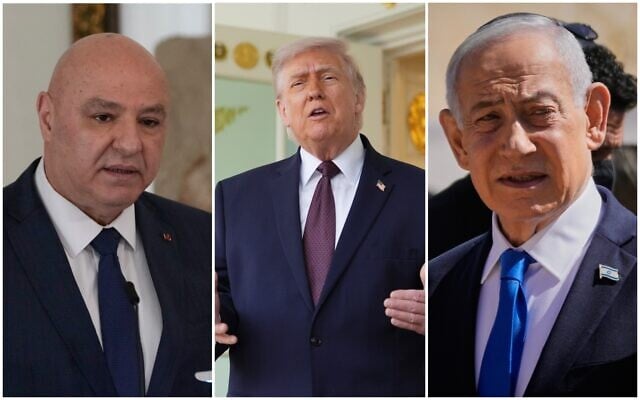
U.S. President Donald Trump said talks between Israel and Lebanon would begin on Thursday, signalling a potential diplomatic opening after months of escalating violence, though key details about the negotiations remain unclear.
The announcement, made in a late-night social media post, offered little on who would participate or where the discussions would be held. Trump said he was seeking to create “a little breathing room” between the two sides, noting it had been decades since their leaders last engaged directly.
If the talks proceed, they would mark a rare moment of formal engagement between two countries that have not maintained sustained high-level dialogue for more than 30 years.
The move follows a trilateral meeting involving U.S., Israeli and Lebanese officials earlier this week, described by participants as a step toward launching direct negotiations. That meeting, the first of its kind since the early 1990s, focused on setting the groundwork for a broader diplomatic process.
Washington is pushing for discussions that go beyond temporary arrangements.
U.S. officials have indicated that any new framework should aim at a wider agreement rather than simply restoring previous ceasefire terms. They have also insisted that any deal to halt hostilities must be negotiated directly between Israel and Lebanon, with the United States acting as intermediary, rather than through indirect or parallel channels.
That approach reflects frustration with earlier efforts that failed to hold.
In November 2024, Israel and Hezbollah agreed to a ceasefire after nearly a year of cross-border fighting. The conflict had been triggered by a large-scale attack on Israel by the Palestinian group Hamas in October 2023, which set off a wider regional confrontation. The truce proved short-lived.
Hostilities resumed in March when Hezbollah launched attacks into Israeli territory, drawing Lebanon deeper into a broader regional war that had already intensified following joint U.S. and Israeli strikes on Iran in late February. Those strikes killed Iran’s Supreme Leader, Ali Khamenei, dramatically escalating tensions across the region.
Read also: S. Africa Picks Ex-Apartheid Negotiator For US Envoy Role
Since then, Israel has carried out repeated strikes against Hezbollah positions, initially concentrated in southern Lebanon but later extending to the capital, Beirut.
The expansion of those operations has had a severe humanitarian impact.
More than one million people have been displaced, according to regional authorities, as bombardments spread beyond border areas into densely populated urban centres. Data cited by the Qatar News Agency, based on figures from Lebanon’s health ministry, put the death toll at 2,164 with 7,061 injured as of April 15.
The violence in Lebanon has also complicated parallel diplomatic efforts involving Iran.
Tehran has linked progress in its own negotiations with Washington to developments on the ground in Lebanon, insisting that any pathway toward a broader settlement must include an end to Israeli attacks there. Iran’s parliamentary leadership has also called for the release of frozen assets as a condition for advancing talks.
Read more: NYC Protest Over Israel Arms Sales Leads To Mass Arrests
Those demands have contributed to a stalemate.
Recent discussions between U.S. and Iranian officials, held in Islamabad, ended without agreement, although Trump has indicated that further talks could resume within days. A temporary two-week ceasefire announced earlier in April reduced direct confrontation between Washington and Tehran, but its scope remained unclear, particularly regarding whether it extended to the Israel-Lebanon front.
Against this backdrop, the proposed Israel-Lebanon talks could serve as a test of whether limited diplomatic engagement can contain a wider conflict.
However, substantial differences between the two sides remain unresolved.
Israel has said any lasting agreement must include the disarmament of non-state armed groups operating in Lebanon and the dismantling of their infrastructure, with Hezbollah at the centre of those demands. Lebanese authorities, for their part, have emphasised the need to fully implement the terms of the 2024 ceasefire, which included provisions for Israeli withdrawal from Lebanese territory.
Those positions leave little immediate room for compromise.
Even so, the decision to open talks, if confirmed, represents a shift from the recent pattern of escalation. It suggests that despite ongoing military operations and entrenched political disagreements, there is at least a tentative willingness among the parties involved to explore a diplomatic track.